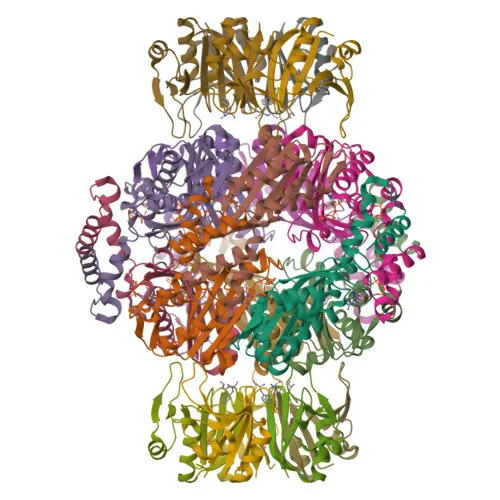
Polyclonal Antibodies
Anti-GCH1 Polyclonal Antibody for WB, IF/ICC, ELISA - P30793
Item Number : CM0017572
Price varies based on specs and customizations
- Application
- WB, IF/ICC, ELISA
- Cross Reactivity
- Human, Mouse, Rat
- Protein Weight
- 28kDa

Shipping:
Contact us to get shipping details Enjoy On-time Dispatch Guarantee.
Why Choose Us
Easy ordering process, quality products, and dedicated support for your business success.
Core Product Specifications and Parameters
| Parameter | Value |
|---|---|
| Product Name | GCH1 Rabbit pAb |
| Remarks/Alias | GCH; DYT5; DYT14; DYT5a; GTPCH1; HPABH4B; GTP-CH-1; GCH1 |
| Species | Human |
| GeneID (Human) | 2643 |
| GeneID | 2643 |
| Immunogen | Recombinant fusion protein containing a sequence corresponding to amino acids 55-250 of human GCH1 (NP_000152.1). |
| Source | Rabbit |
| Category | Polyclonal Antibodies |
| Application | WB, IF/ICC, ELISA |
| Cross Reactivity | Human, Mouse, Rat |
| SWISS | P30793 |
| Protein Weight | 28kDa |
| Shipping | Ice bag |
Biological Background: GCH1 Function and Localization
- GCH1 encodes GTP cyclohydrolase 1 (GTP-CH-I), the rate-limiting enzyme in the biosynthesis of tetrahydrobiopterin (BH4), an essential cofactor for aromatic amino acid hydroxylases and nitric oxide synthases.
- The functional isoform (GCH-1) catalyzes the conversion of GTP to dihydroneopterin triphosphate, while the roles of enzymatically inactive splice variants remain poorly understood.
- GCH1 positively regulates nitric oxide synthesis in endothelial cells and may be involved in dopamine synthesis, linking it to both vascular and neurotransmitter biology.
- The protein may modify pain sensitivity and persistence, suggesting a role in nociceptive pathways.
- Subcellular localization includes both the cytoplasm and the nucleus, indicating potential separate compartmentalized functions.
- In epidermis, GCH1 is predominantly expressed in basal undifferentiated keratinocytes and in subsets of melanocytes, hinting at tissue-specific regulation.
- The enzyme is an allosteric GTP-binding protein, requires zinc for activity, and is regulated by phosphorylation.
- Disease-associated variants cause DOPA-responsive dystonia (DYT5), atypical parkinsonism, and hyperphenylalaninemia, underscoring its clinical importance.
Experimental Guidance and Technical Tips
- The immunogen corresponds to a central region (aa 55–250) of human GCH1, which may react with functional isoform GCH-1 but validation against other splice variants is recommended.
- For SDS-PAGE under reducing conditions, the predicted molecular weight is approximately 28 kDa; however, endogenous migration may vary due to post-translational modifications.
- When performing immunofluorescence, consider dual staining with cytoplasmic and nuclear markers, as GCH1 is reported in both compartments.
- For ELISA applications, consider using the antibody in a capture or detection format with appropriate controls, and optimize coating conditions.
- Cross-reactivity with mouse and rat has been documented; verify performance in your specific sample matrix.
CamelBio: Your One-Stop Sourcing Bridge
CamelBio is a dedicated one-stop partner for diagnostic manufacturers, research laboratories, and institutes, supplying validated IVD raw materials from discovery to commercialization. We offer this anti-GCH1 polyclonal antibody alongside optimized matched pairs, monoclonal alternatives, bulk ancillary reagents, and custom sourcing for rare targets in neurotransmitter and pain research areas. Our portfolio ensures seamless integration into your assay development workflows, backed by technical consultation at every stage.
REQUEST A QUOTE
Our professional team will reply to you within one business day. Please feel free to contact us!