Polyclonal Antibodies
Anti-GCDH Rabbit Polyclonal Antibody for WB, IHC-P, ELISA - Q92947
Item Number : CM0028258
Price varies based on specs and customizations
- Application
- WB, IHC-P, ELISA
- Cross Reactivity
- Human, Mouse, Rat
- Protein Weight
- 48kDa

Shipping:
Contact us to get shipping details Enjoy On-time Dispatch Guarantee.
Why Choose Us
Easy ordering process, quality products, and dedicated support for your business success.
Core Product Specifications and Parameters
| Parameter | Value |
|---|---|
| Product Name | GCDH Rabbit pAb |
| Remarks/Alias | GCD; ACAD5; GCDH |
| Species | Human |
| GeneID (Human) | 2639 |
| GeneID | 2639 |
| Immunogen | Recombinant fusion protein containing a sequence corresponding to amino acids 149-438 of human GCDH (NP_000150.1). |
| Source | Rabbit |
| Category | Polyclonal Antibodies |
| Application | WB, IHC-P, ELISA |
| Cross Reactivity | Human, Mouse, Rat |
| SWISS | Q92947 |
| Protein Weight | 48kDa |
| Shipping | Ice bag |
Biological Background: GCDH Function and Localization
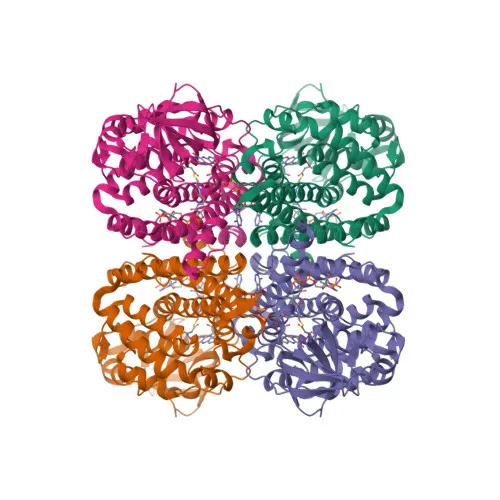
- The GCDH (glutaryl-CoA dehydrogenase) protein, also known as GCD or ACAD5, catalyzes the oxidative decarboxylation of glutaryl-CoA to crotonyl-CoA and CO₂ in the mitochondrial matrix. This reaction is a key step in the degradation of L-lysine, L-hydroxylysine, and L-tryptophan.
- As an acyl-CoA dehydrogenase family member, GCDH uses electron transfer flavoprotein (ETF) as its electron acceptor, and its activity is essential for proper amino acid catabolism.
- Isoform Short of GCDH, generated by alternative splicing, is catalytically inactive, suggesting regulatory complexity. Both long and short isoforms are expressed in fibroblasts and liver.
- GCDH localizes to the mitochondrial matrix, consistent with its role in fatty acid and amino acid oxidation pathways.
- The protein is a flavoprotein binding FAD as a cofactor, and its deficiency causes glutaric aciduria type I, a severe metabolic disorder marked by neurological damage and organic acid accumulation.
- Post-translational modifications include acetylation, which may modulate its activity or stability.
Experimental Guidance and Technical Tips
- The immunogen used is a recombinant fusion protein spanning amino acids 149-438 of human GCDH (NP_000150.1). This region covers part of the catalytic domain, likely generating antibodies recognizing both long and short isoforms if the epitope is present in both.
- For Western blotting, a band around 48 kDa is expected based on the predicted molecular weight; however, observed mobility may vary due to post-translational modifications or isoform differences. Validate the molecular weight against known controls in your sample system.
- The antibody is reported to react with human, mouse, and rat samples. For other species, sequence homology should be checked before use, and cross-reactivity should be verified experimentally.
- When performing IHC-P, antigen retrieval conditions (e.g., citrate buffer pH 6.0 or EDTA buffer pH 9.0) and antibody dilutions should be optimized for the tissue type and fixation method under investigation.
- As a polyclonal antibody, potential lot-to-lot variability should be considered; each new lot may require re-optimization of assay conditions.
CamelBio: Your One-Stop Sourcing Bridge
CamelBio offers a comprehensive portfolio of IVD raw materials, including this high-quality anti-GCDH polyclonal antibody, suitable for research into amino acid metabolism and inherited metabolic disorders like glutaric aciduria. Our supply capabilities extend to validated antibody pairs, bulk ancillary reagents, and rare target raw-material sourcing—all accessible through a single, convenient bridge. Partner with CamelBio to streamline your diagnostic development with reliable, one-stop access to critical immunoreagents.
REQUEST A QUOTE
Our professional team will reply to you within one business day. Please feel free to contact us!