Polyclonal Antibodies
Anti-GBA3 Rabbit Polyclonal Antibody for WB, IF/ICC, ELISA - Q9H227
Item Number : CM0025999
Price varies based on specs and customizations
- Application
- WB, IF/ICC, ELISA
- Cross Reactivity
- Human, Mouse
- Protein Weight
- 54kDa

Shipping:
Contact us to get shipping details Enjoy On-time Dispatch Guarantee.
Why Choose Us
Easy ordering process, quality products, and dedicated support for your business success.
Core Product Specifications and Parameters
| Parameter | Value |
|---|---|
| Product Name | GBA3 Rabbit pAb |
| Remarks/Alias | CBG; GLUC; KLRP; CBGL1; GBA3 |
| Species | Human |
| GeneID | 57733 |
| Immunogen | Recombinant fusion protein containing a sequence corresponding to amino acids 1-162 of human GBA3 (NP_001121904.1) |
| Source | Rabbit |
| Category | Polyclonal Antibodies |
| Application | WB, IF/ICC, ELISA |
| Cross Reactivity | Human, Mouse |
| SWISS | Q9H227 |
| Protein Weight | 54kDa |
| Shipping | Ice bag |
Biological Background: Cytosolic beta-glucosidase Function and Localization
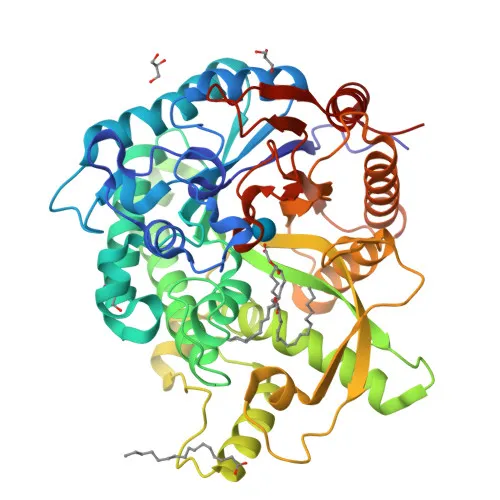
- Protein identity: GBA3 encodes cytosolic beta-glucosidase (also known as CBG, CBGL1, KLrP), a neutral glycosidase involved in glycosylceramide catabolism. Related references: PMID:11389701, PMID:11784319, PMID:17595169
- Glucosylceramidase activity: GBA3 exhibits significant glucosylceramidase activity in vitro, though its physiological relevance in vivo is debated. Related references: PMID:17595169, PMID:26724485, PMID:20728381
- Broad substrate specificity: It hydrolyzes galactosylceramides (GalCers), glucosylsphingosines (GlcSphs), and galactosylsphingosines (GalSphs), and can act on dietary glycosides such as phytoestrogens, flavonols, flavones, flavanones, and cyanogens, suggesting a role in xenobiotic metabolism. Related references: PMID:11784319, PMID:17595169
- Transxylosylase activity: In vitro, GBA3 can use xylosylated ceramides as donors to transfer xylose to cholesterol. Related references: PMID:33361282
- Involvement in N-glycan catabolism: GBA3 may participate in the catabolism of cytosolic sialyl free N-glycans. Related references: PMID:26193330
- Subcellular localization: Found in the cytoplasm, specifically in the cytosol.
- Tissue specificity: Expressed in liver, small intestine, colon, spleen, and kidney; protein levels confirmed in small intestine. Down-regulated in renal cell carcinomas and hepatocellular carcinomas.
- Keywords: 3D-structure, Alternative splicing, Cytoplasm, Glycosidase, Hydrolase, Lipid metabolism, Proteomics identification, Reference proteome.
Experimental Guidance and Technical Tips
- The immunogen corresponds to amino acids 1-162 of human GBA3, encompassing the N-terminal region. This region may be conserved across isoforms; consider verifying detection in relevant samples.
- For Western blot (WB), a band around 54 kDa is expected. Use appropriate positive controls such as lysates from small intestine, liver, or kidney, where GBA3 expression is reported.
- The antibody is reported to cross-react with mouse; perform validation if mouse models are used. For immunofluorescence/ICC, cytosolic staining should be anticipated.
- When using ELISA, optimize the coating antigen and antibody dilutions to ensure specificity, especially given GBA3's sequence similarity to other glucosidases.
CamelBio: Your One-Stop Sourcing Bridge
CamelBio offers diagnostic manufacturers and research labs a comprehensive portfolio of IVD raw materials, including validated antibodies, recombinant proteins, and ancillary reagents. This GBA3 antibody is ideal for studying glycosylceramide metabolism and related disorders. Beyond this product, we provide custom sourcing for rare targets and bulk supply to support your assay development and clinical transition needs.
REQUEST A QUOTE
Our professional team will reply to you within one business day. Please feel free to contact us!