Polyclonal Antibodies
Anti-GART Rabbit Polyclonal Antibody for WB, IF/ICC, ELISA - P22102
Item Number : CM0030504
Price varies based on specs and customizations
- Application
- WB, IF/ICC, ELISA
- Cross Reactivity
- Human, Mouse, Rat
- Protein Weight
- 108kDa

Shipping:
Contact us to get shipping details Enjoy On-time Dispatch Guarantee.
Why Choose Us
Easy ordering process, quality products, and dedicated support for your business success.
Core Product Specifications and Parameters
| Parameter | Specification |
|---|---|
| Product Name | GART Rabbit pAb |
| Remarks/Alias | AIRS; GARS; PAIS; PGFT; PRGS; GARTF; GART |
| Species | Human |
| GeneID | 2618 (Human) |
| Immunogen | Recombinant fusion protein containing a sequence corresponding to amino acids 1-320 of human GART (NP_000810.1) |
| Source | Rabbit |
| Category | Polyclonal Antibodies |
| Application | WB, IF/ICC, ELISA |
| Cross Reactivity | Human, Mouse, Rat |
| SWISS | P22102 |
| Protein Weight | 108kDa |
| Shipping | Ice bag |
Biological Background: GART Function and Localization
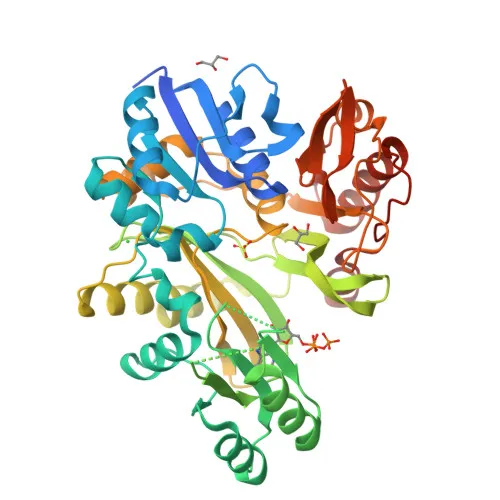
- GART encodes a trifunctional enzyme that catalyzes three sequential reactions in the de novo inosine monophosphate (IMP) biosynthetic pathway, essential for purine nucleotide production.
- The enzyme's activities correspond to its aliases: glycinamide ribonucleotide synthetase (GARS), aminoimidazole ribonucleotide synthetase (AIRS), and phosphoribosylglycinamide formyltransferase (PGFT).
- Alternative splicing of GART transcripts yields multiple isoforms, potentially modulating enzymatic function or localization.
- The protein undergoes post-translational modifications such as acetylation and phosphorylation, which may regulate its activity or interactions.
- GART requires ATP binding and divalent metal ions (Mg²⁺ or Mn²⁺) for catalysis, as indicated by its metal-binding domains.
- Proteomics studies have identified GART expression across various human tissues, consistent with its fundamental role in nucleotide metabolism.
Experimental Guidance and Technical Tips
- The immunogen (amino acids 1–320 of human GART) targets the N-terminal region, which may be conserved in mouse and rat, as reflected by the reported cross-reactivity.
- For Western blotting (WB), expect a band at ~108 kDa; use a low-percentage SDS-PAGE gel (e.g., 8%) and optimized transfer conditions for high-molecular-weight proteins.
- In immunofluorescence/immunocytochemistry (IF/ICC), validate antibody specificity by comparing staining patterns with known subcellular distribution of GART, if available.
- For ELISA applications, standard titration of the antibody against recombinant protein or lysates is recommended to determine optimal working dilutions.
- As a polyclonal antibody, performance may vary between lots; include appropriate controls and validate each new lot in your assay system.
- Upon receipt, store the antibody at the recommended temperature (typically -20°C to -80°C) after shipment on ice to maintain stability.
CamelBio: Your One-Stop Sourcing Bridge
CamelBio provides a streamlined sourcing ecosystem for IVD raw materials, connecting diagnostic developers and research labs with high-quality reagents like this anti-GART polyclonal antibody for purine biosynthesis research. Our catalog includes validated monoclonal and polyclonal antibodies, matched antibody pairs, and bulk ancillary reagents to accelerate your assay development. For specialized needs, we facilitate the procurement of rare-target antibodies and custom raw-material solutions, supporting your workflow from discovery to clinical application.
REQUEST A QUOTE
Our professional team will reply to you within one business day. Please feel free to contact us!