Polyclonal Antibodies
Anti-GALE (UDP-glucose 4-epimerase) Polyclonal Antibody for WB, IHC-P, ELISA - Q14376
Item Number : CM0030391
Price varies based on specs and customizations
- Application
- WB, IHC-P, ELISA
- Cross Reactivity
- Human, Mouse, Rat
- Protein Weight
- 38kDa

Shipping:
Contact us to get shipping details Enjoy On-time Dispatch Guarantee.
Why Choose Us
Easy ordering process, quality products, and dedicated support for your business success.
Core Product Specifications and Parameters
| Parameter | Value |
|---|---|
| Product Name | GALE Rabbit pAb |
| Remarks/Alias | SDR1E1; GALE |
| Species | Human |
| GeneID (Human) | 2582 |
| GeneID | 2582 |
| Immunogen | Recombinant fusion protein containing a sequence corresponding to amino acids 129-348 of human GALE (NP_001121093.1) |
| Source | Rabbit |
| Category | Polyclonal Antibodies |
| Application | WB, IHC-P, ELISA |
| Cross Reactivity | Human, Mouse, Rat |
| SWISS | Q14376 |
| Protein Weight | 38kDa |
| Shipping | Ice bag |
Biological Background: GALE Function and Localization
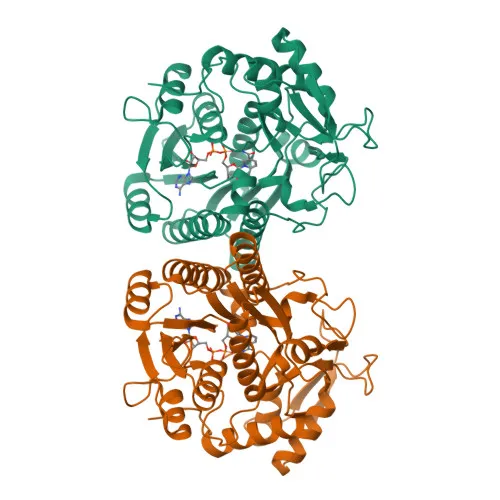
- GALE encodes UDP-glucose 4-epimerase, also known as galactowaldenase, which catalyzes the reversible epimerization of UDP-glucose to UDP-galactose and UDP-N-acetylglucosamine to UDP-N-acetylgalactosamine.
- The UDP-glucose/UDP-galactose interconversion is a key step in the Leloir pathway, enabling the catabolism of dietary galactose and the endogenous biosynthesis of UDP-galactose when exogenous sources are limited.
- The enzyme also contributes to glycoprotein and glycolipid synthesis by providing essential UDP-sugar substrates, highlighting its importance in cellular glycosylation processes.
- Alternative splicing of GALE produces multiple isoforms, and mutations in this gene are associated with galactosemia type III, a disease variant affecting galactose metabolism.
- The protein belongs to the short-chain dehydrogenase/reductase (SDR) family and requires NAD+ as a cofactor for its epimerase activity.
- UniProt keywords include carbohydrate metabolism, galactose metabolism, and isomerase activity, underscoring its role in sugar nucleotide interconversion.
Experimental Guidance and Technical Tips
- The immunogen corresponds to amino acids 129-348 of human GALE, an internal region that may provide specific recognition of the native protein in multiple species.
- For Western blotting, consider the predicted molecular weight of 38 kDa and validate band specificity using appropriate positive and negative controls.
- In immunohistochemistry (paraffin-embedded sections), antigen retrieval conditions and antibody dilution should be optimized for each tissue type to account for potential epitope masking.
- Cross-reactivity with mouse and rat GALE is reported; sequence alignment may help predict performance in other species.
- ELISA and other applications may benefit from checkerboard titrations to determine optimal antibody and antigen concentrations.
CamelBio: Your One-Stop Sourcing Bridge
CamelBio provides diagnostic manufacturers and researchers with streamlined access to high-quality IVD raw materials, including this GALE polyclonal antibody for galactose metabolism and glycosylation studies. Our one-stop sourcing model covers validated antibody pairs, bulk ancillary reagents, and custom supply solutions to support your assay development from concept to clinic. Contact us to explore how we can fulfill your rare-target raw material needs and accelerate your diagnostic projects.
Product Datasheet
Anti-GALE (UDP-glucose 4-epimerase) Polyclonal Antibody for WB, IHC-P, ELISA - Q14376
REQUEST A QUOTE
Our professional team will reply to you within one business day. Please feel free to contact us!