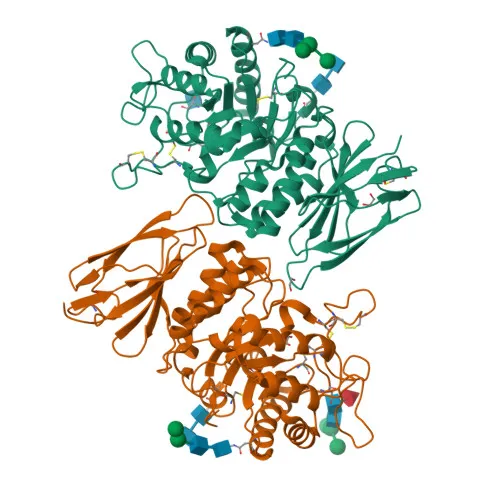
Polyclonal Antibodies
Anti-Galactosidase alpha (GLA) Polyclonal Antibody for WB, ELISA - P06280
Item Number : CM0018286
Price varies based on specs and customizations
- Application
- WB, ELISA
- Cross Reactivity
- Human
- Protein Weight
- 49kDa

Shipping:
Contact us to get shipping details Enjoy On-time Dispatch Guarantee.
Why Choose Us
Easy ordering process, quality products, and dedicated support for your business success.
Core Product Specifications and Parameters
| Parameter | Value |
|---|---|
| Product Name | Galactosidase alpha (GLA) Rabbit pAb |
| Remarks/Alias | GALA; Galactosidase alpha (GLA) |
| Species | Human |
| GeneID (Human) | 2717 |
| GeneID | 2717 |
| Immunogen | Recombinant protein (Recombinant fusion protein containing a sequence corresponding to amino acids 150-429 of human Galactosidase alpha (GLA) (NP_000160.1)) |
| Source | Rabbit |
| Category | Polyclonal Antibodies |
| Application | WB, ELISA |
| Cross Reactivity | Human |
| SWISS | P06280 |
| Protein Weight | 49kDa |
| Shipping | Ice bag |
Biological Background: Alpha-galactosidase A (GLA) Function and Localization
- The GLA gene encodes alpha-galactosidase A, also referred to as alpha-D-galactosidase A, galactosylgalactosylglucosylceramidase GLA, and melibiase.
- Alpha-galactosidase A is a lysosomal enzyme that catalyzes the hydrolysis of glycosphingolipids, playing a critical role in lipid metabolism and lysosomal degradation.
- It specifically cleaves terminal alpha-galactose residues from substrates such as globotriaosylceramide (Gb3) and other glycoconjugates.
- The enzyme localizes to the lysosome, where it functions optimally at an acidic pH.
- Mutations in GLA are linked to Fabry disease, an X-linked lysosomal storage disorder characterized by the accumulation of glycosphingolipids (keyword: Disease variant).
- Post-translational modifications include N-linked glycosylation and disulfide bond formation, which are important for enzyme stability and activity (keywords: Glycoprotein, Disulfide bond).
- The protein is synthesized with a signal peptide that directs it to the endoplasmic reticulum for subsequent processing and trafficking to the lysosome.
Experimental Guidance and Technical Tips
- The immunogen corresponds to amino acids 150–429 of human GLA, encompassing most of the catalytic domain; this antibody may recognize both mature and denatured forms, and is suitable for WB and ELISA.
- For Western blotting, a band at approximately 49 kDa (glycosylated form) is expected; proper lysate preparation and reducing conditions may be important.
- For ELISA, consider using recombinant GLA protein or cellular extracts as standards/antigens, and validate detection in your specific assay format.
- Due to lysosomal localization, cell or tissue fractionation may aid in signal enrichment.
- Cross-reactivity with other species has not been extensively tested; validation is advised if using non-human samples.
CamelBio: Your One-Stop Sourcing Bridge
At CamelBio, we bridge the gap between diagnostic developers and high-quality raw materials. This anti-GLA polyclonal antibody supports research in lysosomal storage disorders like Fabry disease, and we provide a complete portfolio of IVD raw materials, including validated antibody pairs, optimized monoclonal/polyclonal antibodies, and bulk ancillary reagents. For rare targets such as GLA, our sourcing expertise ensures reliable access to the critical components you need for your IVD assay development.
Product Datasheet
Anti-Galactosidase alpha (GLA) Polyclonal Antibody for WB, ELISA - P06280
REQUEST A QUOTE
Our professional team will reply to you within one business day. Please feel free to contact us!