Monoclonal Antibodies
Anti-Galactosidase alpha (GLA) Monoclonal Antibody for WB, ELISA - P06280
Item Number : CM0008550
Price varies based on specs and customizations
- Application
- WB, ELISA
- Cross Reactivity
- Human, Mouse, Rat
- Protein Weight
- 49kDa

Shipping:
Contact us to get shipping details Enjoy On-time Dispatch Guarantee.
Why Choose Us
Easy ordering process, quality products, and dedicated support for your business success.
Core Product Specifications and Parameters
| Parameter | Value |
|---|---|
| Product Name | Galactosidase alpha (GLA) Rabbit mAb |
| Remarks/Alias | GALA; Galactosidase alpha (GLA) |
| Species | Human |
| GeneID (Human) | 2717 |
| GeneID | 2717 |
| Immunogen | Synthetic Peptide|A synthetic peptide corresponding to a sequence within amino acids 50-150 of human Galactosidase alpha (GLA) (GLA) (P06280). |
| Source | Rabbit |
| Category | Monoclonal Antibodies |
| Application | WB, ELISA |
| Cross Reactivity | Human, Mouse, Rat |
| SWISS | P06280 |
| Protein Weight | 49kDa |
| Shipping | Ice bag |
Biological Background: Galactosidase alpha (GLA) Function and Localization
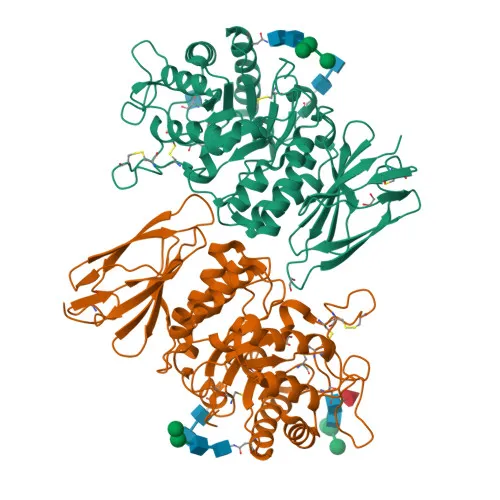
- Galactosidase alpha (GLA), also known as Alpha-galactosidase A, Alpha-D-galactoside galactohydrolase, or Melibiase, is a glycosidase enzyme responsible for hydrolyzing glycosphingolipids in the lysosome.
- Encoded by the GLA gene (GeneID: 2717), the protein participates in the degradation of glycolipids, and its deficiency leads to Fabry disease (disease variant keyword).
- The enzyme localizes to the lysosome (SUBCELLULAR LOCATION: Lysosome).
- Post-translational modifications include glycosylation and disulfide bond formation (keywords: Glycoprotein, Disulfide bond).
- It contains a signal peptide and undergoes proteolytic processing (keyword: Signal).
- Molecular weight: canonical sequence ~48.8 kDa; observed ~49 kDa (from product Protein Weight).
- The protein is a pharmaceutical target, with recombinant enzyme used as replacement therapy (keyword: Pharmaceutical).
- It is a reference proteome entry and has been identified by direct protein sequencing and proteomics (keywords: Direct protein sequencing, Proteomics identification).
Experimental Guidance and Technical Tips
- The immunogen corresponds to an internal region of human GLA (aa 50-150). When designing validation experiments, consider using recombinantly expressed protein or cell lines expressing the target to confirm specificity.
- For Western blotting (WB), the antibody is expected to detect a band around 49 kDa in lysates from human, mouse, or rat samples. Validate in the relevant sample system and consider using positive controls such as lysates from tissues with known GLA expression.
- For ELISA applications, this monoclonal antibody can potentially be used as a capture or detection reagent. Pair with a compatible antibody recognizing a distinct epitope or with recombinant GLA protein as standard.
- Cross-reactivity with mouse and rat is indicated; however, verify sequence homology in the immunogen region and consider that endogenous expression levels may vary across species and tissues.
- Optimization of antibody concentration and incubation conditions is recommended for each experimental setup.
CamelBio: Your One-Stop Sourcing Bridge
CamelBio specializes in providing IVD raw materials, technical services, and consulting for every stage of assay development. For research on glycosphingolipid metabolism and Fabry disease, we offer validated antibodies like this anti-GLA mAb, along with optimized antibody pairs, bulk ancillary reagents, and support for sourcing rare-target raw materials. Let us bridge the gap from concept to clinic with integrated supply solutions.
Product Datasheet
Anti-Galactosidase alpha (GLA) Monoclonal Antibody for WB, ELISA - P06280
REQUEST A QUOTE
Our professional team will reply to you within one business day. Please feel free to contact us!