Polyclonal Antibodies
Anti-GABRR1 Rabbit Polyclonal Antibody for WB and ELISA - P24046
Item Number : CM0026692
Price varies based on specs and customizations
- Application
- WB, ELISA
- Cross Reactivity
- Human, Mouse, Rat
- Protein Weight
- 56kDa

Shipping:
Contact us to get shipping details Enjoy On-time Dispatch Guarantee.
Why Choose Us
Easy ordering process, quality products, and dedicated support for your business success.
Core Product Specifications and Parameters
| Parameter | Value |
|---|---|
| Product Name | GABRR1 Rabbit pAb |
| Remarks/Alias | GABRR1 |
| Species | Human |
| GeneID (Human) | 2569 |
| GeneID | 2569 |
| Immunogen | Recombinant fusion protein containing a sequence corresponding to amino acids 365-465 of human GABRR1 (NP_002033.2) |
| Source | Rabbit |
| Category | Polyclonal Antibodies |
| Application | WB, ELISA |
| Cross Reactivity | Human, Mouse, Rat |
| SWISS | P24046 |
| Protein Weight | 56kDa |
| Shipping | Ice bag |
Biological Background: GABRR1 Function and Localization
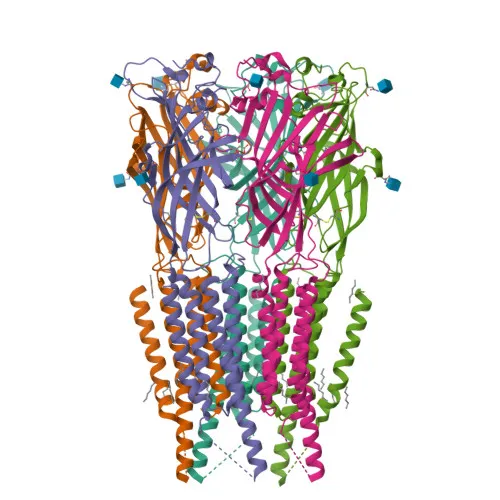
- GABRR1 encodes the gamma-aminobutyric acid receptor subunit rho-1 (GABA(A) receptor subunit rho-1), a subunit of pentameric ligand-gated chloride channels that mediate inhibitory neurotransmission in the brain.
- As a rho subunit, it forms homomeric or heteromeric GABA-gated chloride channels (formerly known as GABA(C) receptors) that are insensitive to bicuculline and benzodiazepines, with GABA binding at rho intersubunit interfaces.
- When activated by GABA, rho-1-containing receptors allow chloride ion influx, hyperpolarizing the postsynaptic membrane. Related references: PMID:37659407
- Rho-1 subunits are highly expressed in the retina, where they may play a role in retinal neurotransmission. They are also detected at lower levels in brain, lung, and thymus. Related references: PMID:1849271
- In the cerebellum, rho-1 contributes to tonic and phasic inhibition in Purkinje neurons and may regulate glial development through extrasynaptic transmission.
- The protein localizes to the postsynaptic cell membrane.
- Key post-translational modifications include glycosylation and disulfide bond formation; the predicted molecular weight is ~56 kDa.
- Alternative splicing generates different isoforms.
Experimental Guidance and Technical Tips
- The immunogen corresponds to a cytoplasmic C-terminal region (aa 365-465) of human GABRR1. Ensure target protein is denatured and reduced for optimal detection in WB.
- Expect a band near 56 kDa; however, N-linked glycosylation may result in a slightly higher apparent molecular weight. Use appropriate molecular weight markers.
- Validate antibody specificity in the relevant sample system (e.g., retina or brain lysates) by including positive and negative controls.
- For ELISA, this antibody can be used for antigen capture or detection; titrate to determine optimal working concentration.
- Cross-reactivity with mouse and rat is indicated; however, confirm in corresponding species' tissues if used for IHC or other applications not originally validated.
CamelBio: Your One-Stop Sourcing Bridge
CamelBio supports your diagnostic and research developments with comprehensive sourcing solutions for IVD raw materials. For GABA receptor and neurotransmission research, we provide polyclonal antibodies like anti-GABRR1, along with validated antibody pairs, optimized monoclonal alternatives, bulk ancillary reagents, and customized rare-target raw-material sourcing to accelerate your project from concept to clinic.
REQUEST A QUOTE
Our professional team will reply to you within one business day. Please feel free to contact us!