Polyclonal Antibodies
Anti-FZD3 Polyclonal Antibody for WB, ELISA - Q9NPG1
Item Number : CM0016105
Price varies based on specs and customizations
- Application
- WB, ELISA
- Cross Reactivity
- Rat
- Protein Weight
- 76kDa

Shipping:
Contact us to get shipping details Enjoy On-time Dispatch Guarantee.
Why Choose Us
Easy ordering process, quality products, and dedicated support for your business success.
Core Product Specifications and Parameters
| Parameter | Value |
|---|---|
| Product Name | FZD3 Rabbit pAb |
| Remarks/Alias | Fz-3; FZD3 |
| Species | Human |
| GeneID | 7976 |
| Immunogen | Recombinant fusion protein containing a sequence corresponding to amino acids 23-205 of human FZD3 (NP_059108.1) |
| Source | Rabbit |
| Category | Polyclonal Antibodies |
| Application | WB, ELISA |
| Cross Reactivity | Rat |
| SWISS | Q9NPG1 |
| Protein Weight | 76kDa |
| Shipping | Ice bag |
Biological Background: Frizzled-3 Function and Localization
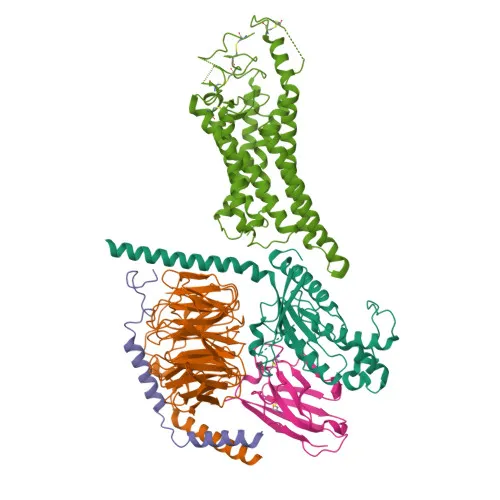
- Frizzled-3 (Fz-3 / FZD3) is a multi-pass membrane receptor for Wnt proteins, transducing signals via both canonical β-catenin and non-canonical pathways (e.g., PKC/calcium), with functional coupling to heterotrimeric G proteins.
- In the canonical Wnt/β-catenin pathway, FZD3 activation leads to dishevelled-mediated inhibition of GSK-3, stabilizing β-catenin and promoting target gene transcription; PKC activity is also implicated in Wnt5A-stimulated signaling.
- FZD3 is essential for tissue morphogenesis and planar cell polarity (PCP), orienting asymmetric structures such as stereociliary bundles in inner ear sensory cells, and functions together with FZD6 in neural tube closure.
- During neural development, FZD3 controls axon guidance and fasciculation, being required for major central fiber tracts (corpus callosum, thalamocortical, corticospinal, etc.) and peripheral motor nerves (facial, hypoglossal, phrenic, limb-innervating).
- The protein also directs cranial neural crest cell migration and commissural sensory axon pathfinding in the spinal cord, operating in a Wnt-dependent signaling context.
- FZD3 promotes neurogenesis by maintaining sympathetic neuroblasts in a proliferative state through β-catenin, and may mediate sensory transmission from trunk and limbs.
- Subcellularly, FZD3 localizes to the cell membrane, cell surface, and apical cell membrane.
- Widely expressed, with relatively high levels in CNS limbic regions, kidney, pancreas, skeletal muscle, uterus, and testis.
Experimental Guidance and Technical Tips
- The immunogen corresponds to the N-terminal extracellular region (aa 23–205) of human FZD3, which may be suitable for detecting both full-length and soluble ectodomain forms in WB and ELISA.
- For Western blotting under reducing conditions, a band around 76 kDa is expected; consider optimizing denaturation time and temperature to resolve potential glycosylated forms.
- When using ELISA, pairing with a detection antibody targeting a non-overlapping epitope may improve sensitivity; validate assay conditions in your sample matrix.
- Rat cross-reactivity is indicated; verify species-specific performance by including appropriate positive and negative control lysates.
CamelBio: Your One-Stop Sourcing Bridge
CamelBio empowers diagnostic manufacturers and research groups with streamlined access to premium IVD raw materials, including validated antibodies for targets like FZD3 in neurodevelopment and Wnt signaling. Beyond this polyclonal antibody, we offer matched antibody pairs, optimized monoclonal alternatives, ancillary reagents, and flexible bulk supply chains—from early-stage R&D to clinical verification. For rare or custom raw-material needs, our sourcing network bridges the gap efficiently.
REQUEST A QUOTE
Our professional team will reply to you within one business day. Please feel free to contact us!