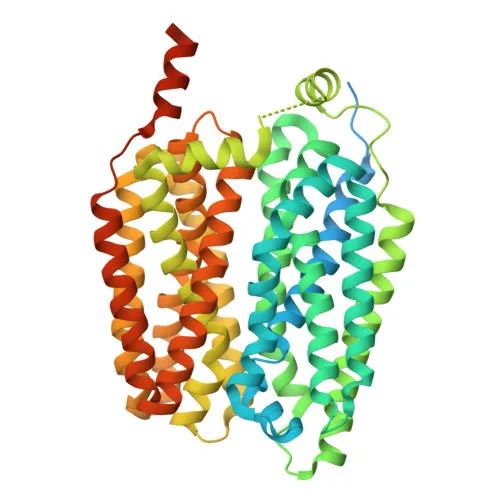
Polyclonal Antibodies
Anti-FLVR2 Rabbit Polyclonal Antibody for WB and ELISA - Q9UPI3
Item Number : CM0029402
Price varies based on specs and customizations
- Application
- WB, ELISA
- Cross Reactivity
- Human, Mouse
- Protein Weight
- 57kDa

Shipping:
Contact us to get shipping details Enjoy On-time Dispatch Guarantee.
Why Choose Us
Easy ordering process, quality products, and dedicated support for your business success.
Core Product Specifications and Parameters
| Parameter | Value |
|---|---|
| Product Name | FLVCR2 Rabbit pAb |
| Remarks/Alias | CCT; EPV; PVHH; MFSD7C; SLC49A2; C14orf58; FLVCRL14q; FLVCR2 |
| Species | Human |
| GeneID (Human) | 55640 |
| GeneID | 55640 |
| Immunogen | Recombinant fusion protein containing a sequence corresponding to amino acids 1-100 of human FLVCR2 (NP_060261.2) |
| Source | Rabbit |
| Category | Polyclonal Antibodies |
| Application | WB, ELISA |
| Cross Reactivity | Human, Mouse |
| SWISS | Q9UPI3 |
| Protein Weight | 57kDa |
| Shipping | Ice bag |
Biological Background: FLVCR2 Function and Localization
- FLVCR2, also known as CCT, SLC49A2, or MFSD7C, functions as a choline/ethanolamine transporter. It mediates choline uptake at the blood-brain barrier, which is critical for brain development (PMID:38302740, PMID:38778100, PMID:40972734). Related references: PMID:38302740, PMID:38778100, PMID:40972734
- In addition to choline transport, FLVCR2 acts as a heme b transporter and is required for mitochondrial respiration, ATP synthesis, and thermogenesis. Heme binding induces dissociation from electron transfer chain complexes to promote thermogenesis (PMID:20823265, PMID:32973183). Related references: PMID:20823265, PMID:32973183
- The protein localizes to the cell membrane, mitochondrion membrane, and endoplasmic reticulum membrane.
- Expression is found in non-hematopoietic tissues (brain, placenta, lung, liver, kidney) and hematopoietic tissues (fetal liver, spleen, bone marrow). At the protein level, it is detected in pituitary acidophil cells (PMID:14729055). Related references: PMID:14729055
- Its choline and ethanolamine transport is driven by the substrate gradient and is enhanced by an inwardly directed proton gradient.
- FLVCR2 is a member of the major facilitator superfamily, contains multiple transmembrane helices, undergoes alternative splicing, and is phosphorylated (UniProt Q9UPI3).
Experimental Guidance and Technical Tips
- The immunogen corresponds to the N-terminal region (amino acids 1–100) of human FLVCR2; consider this when working with truncation mutants or domain-specific assays.
- Predicted molecular weight is ~57 kDa (UniProt: 57,241 Da). Use appropriate molecular weight markers and account for possible post-translational modifications in Western blot.
- Validated for WB and ELISA with human and mouse samples; for other species or applications, in-lab validation is recommended.
- For ELISA, optimize coating concentration of immunogen or lysates and include suitable positive/negative controls.
- Given broad tissue expression, include relevant controls (e.g., brain, liver) to confirm antibody specificity.
CamelBio: Your One-Stop Sourcing Bridge
CamelBio provides diagnostic manufacturers and research labs with one-stop access to IVD raw materials, including validated anti-FLVR2 rabbit polyclonal antibodies for blood-brain barrier transport and heme trafficking studies. Beyond this product, we offer a comprehensive catalog of polyclonal and monoclonal antibodies, antibody pairs, and bulk ancillary reagents tailored for assay development. Rely on CamelBio to streamline your sourcing pipeline from concept to clinical application.
REQUEST A QUOTE
Our professional team will reply to you within one business day. Please feel free to contact us!