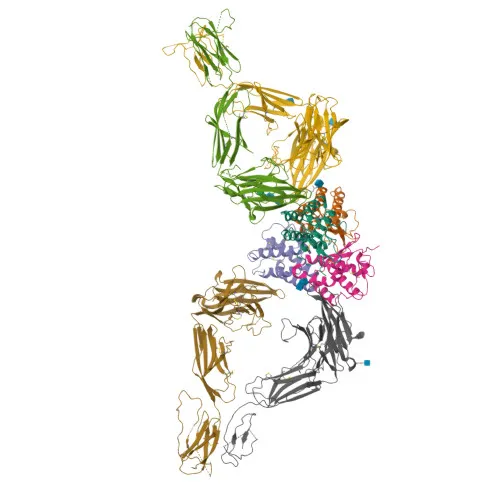
Polyclonal Antibodies
Anti-FLT3 Polyclonal Antibody for WB, IHC-P, ELISA - P36888
Item Number : CM0018473
Price varies based on specs and customizations
- Application
- WB, IHC-P, ELISA
- Cross Reactivity
- Human, Mouse, Rat
- Protein Weight
- 113kDa

Shipping:
Contact us to get shipping details Enjoy On-time Dispatch Guarantee.
Why Choose Us
Easy ordering process, quality products, and dedicated support for your business success.
Core Product Specifications and Parameters
| Parameter | Value |
|---|---|
| Product Name | FLT3 Rabbit pAb |
| Remarks/Alias | FLK2; STK1; CD135; FLK-2; FLT3 |
| Species | Human |
| Gene ID | 2322 |
| Immunogen | Synthetic peptide corresponding to a sequence within amino acids 701-800 of human FLT3 (NP_004110.2) |
| Source | Rabbit |
| Category | Polyclonal Antibodies |
| Application | WB, IHC-P, ELISA |
| Cross Reactivity | Human, Mouse, Rat |
| SWISS | P36888 |
| Protein Weight | 113kDa |
| Shipping | Ice bag |
Biological Background: FLT3 Function and Localization
- FLT3 (also known as CD135, FLK2, STK1, FLK-2) is a receptor-type tyrosine-protein kinase that serves as the cell-surface receptor for the cytokine FLT3LG.
- It plays a critical role in regulating differentiation, proliferation, and survival of hematopoietic progenitor cells and dendritic cells.
- Upon ligand binding, FLT3 activates multiple downstream signaling pathways, including RAS/MAPK, PI3K/AKT/mTOR, and STAT5, by phosphorylating key mediators such as SHC1, AKT1, and PLCG1.
- FLT3 is predominantly expressed in bone marrow, hematopoietic stem cells, myeloid progenitor cells, and granulocyte/macrophage progenitor cells, with lower levels in kidney, pancreas, and high expression in T-cell leukemia.
- It is localized to the cell membrane and endoplasmic reticulum lumen, consistent with its role as a transmembrane receptor.
- Keywords highlight its involvement as a proto-oncogene, with disease-associated mutations causing constitutive kinase activity linked to leukemia.
- Post-translational modifications include glycosylation, disulfide bond formation, and ubiquitination, which regulate its stability and signaling.
- Alternative splicing produces multiple isoforms, potentially affecting ligand binding and kinase activity.
Experimental Guidance and Technical Tips
- The immunogen corresponds to a peptide within the intracellular region (amino acids 701-800) of human FLT3, which includes part of the tyrosine kinase domain. This region is highly conserved, suggesting potential cross-reactivity with mouse and rat FLT3 as indicated by the supplier.
- For Western blotting, a band at approximately 113 kDa is expected. Optimize blocking and antibody dilution using appropriate positive control lysates (e.g., hematopoietic cell lines).
- For immunohistochemistry (IHC-P), antigen retrieval and detection conditions should be validated using tissue sections known to express FLT3, such as bone marrow or leukemia samples.
- For ELISA, the use of peptide immunogen may enhance sensitivity; consider pairing with a detection antibody against a distinct epitope for sandwich ELISA.
CamelBio: Your One-Stop Sourcing Bridge
CamelBio provides diagnostic manufacturers and research institutes with integrated access to IVD raw materials, including validated antibodies like this anti-FLT3 polyclonal antibody. For hematopoietic malignancy and oncology research applications, we offer one-stop sourcing of matched antibody pairs, bulk reagents, and customized development services to streamline your assay development.
REQUEST A QUOTE
Our professional team will reply to you within one business day. Please feel free to contact us!