Polyclonal Antibodies
Anti-FLCN Polyclonal Antibody for WB, ELISA - Q8NFG4
Item Number : CM0025595
Price varies based on specs and customizations
- Application
- WB, ELISA
- Cross Reactivity
- Human
- Protein Weight
- 64kDa

Shipping:
Contact us to get shipping details Enjoy On-time Dispatch Guarantee.
Why Choose Us
Easy ordering process, quality products, and dedicated support for your business success.
Core Product Specifications and Parameters
| Parameter | Value |
|---|---|
| Product Name | FLCN Rabbit pAb |
| Remarks/Alias | BHD; FLCL; DENND8B; FLCN |
| Species | Human |
| Gene ID | 201163 |
| Immunogen | Recombinant fusion protein containing a sequence corresponding to amino acids 341-579 of human FLCN (NP_659434.2) |
| Source | Rabbit |
| Category | Polyclonal Antibodies |
| Application | WB, ELISA |
| Cross Reactivity | Human |
| SWISS | Q8NFG4 |
| Protein Weight | 64kDa |
| Shipping | Ice bag |
Biological Background: FLCN Function and Localization
-
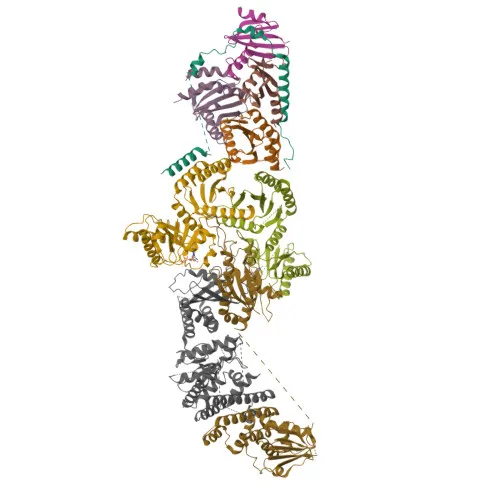
FLCN encodes folliculin, a 64-kDa multi-functional protein that acts as a GTPase-activating protein (GAP) for RagC/D GTPases, regulating mTORC1 signaling in response to amino acid availability. Related references: PMID:17028174, PMID:18663353, PMID:21209915
-
FLCN activates mTORC1 by stimulating GTP hydrolysis on RagC/RRAGC or RagD/RRAGD, promoting GDP-bound states, and this GAP activity is inhibited during starvation and activated by nutrients. Related references: PMID:24095279, PMID:31672913, PMID:31704029, PMID:32612235
-
Through mTORC1, FLCN controls nuclear translocation of MiT/TFE transcription factors TFEB and TFE3, modulating lysosomal biogenesis and autophagy, while not affecting canonical S6K1/4E-BP1 phosphorylation. Related references: PMID:21209915, PMID:24081491, PMID:31672913
-
In addition to amino acid sensing, FLCN regulates glycolysis by directly binding to lactate dehydrogenase LDHA as an uncompetitive inhibitor. Related references: PMID:34381247
-
The protein is localized to the lysosome membrane, cytoplasm, primary cilia, centrosome, mitotic spindle, and nucleus, consistent with its diverse functional roles.
-
FLCN acts as a tumor suppressor; germline mutations cause Birt-Hogg-Dubé syndrome (BHD), characterized by fibrofolliculomas, lung cysts, and increased renal cancer risk.
-
Tissue expression is broad, including skin, lung, kidney, heart, testis, and stomach.
Experimental Guidance and Technical Tips
- For Western blotting, a band near 64 kDa is expected in human cell lysates; consider using positive controls such as HEK293 or HeLa whole-cell extracts.
- Validate antibody specificity in your sample type by performing a knockdown or overexpression experiment.
- ELISA can be used for detecting FLCN in human serum or tissue extracts; optimize coating conditions and antibody dilutions empirically.
- Use non-fat dry milk or BSA as blocking agents, and test different incubation times and temperatures.
CamelBio: Your One-Stop Sourcing Bridge
CamelBio offers a comprehensive portfolio of IVD raw materials, including this anti-FLCN polyclonal antibody, to support diagnostic development and research in mTOR signaling, cancer biology, and autophagy. With validated antibody pairs, optimized polyclonal and monoclonal antibodies, and ancillary reagents, we help bridge your project from concept to clinical application. Contact us for bulk orders or customized sourcing solutions for rare targets.
REQUEST A QUOTE
Our professional team will reply to you within one business day. Please feel free to contact us!