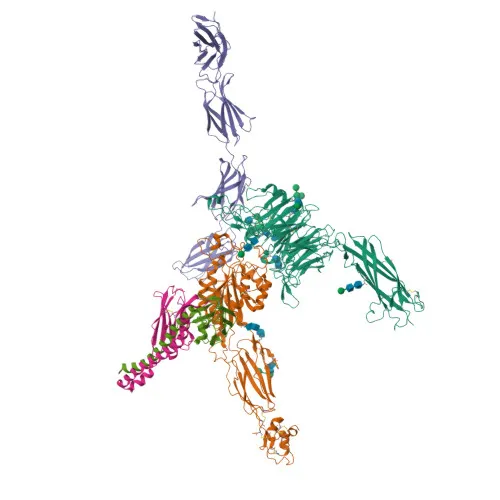
Monoclonal Antibodies
Anti-Fibronectin Rabbit Monoclonal Antibody for WB, IF/ICC, IF-P, IHC-P, ELISA - P02751
Item Number : CM0006675
Price varies based on specs and customizations
- Application
- WB, IF/ICC, IF-P, IHC-P, ELISA
- Cross Reactivity
- Human
- Protein Weight
- 71-73kDa/221-272kDa

Shipping:
Contact us to get shipping details Enjoy On-time Dispatch Guarantee.
Why Choose Us
Easy ordering process, quality products, and dedicated support for your business success.
Core Product Specifications and Parameters
| Parameter | Value |
|---|---|
| Product Name | Fibronectin Rabbit mAb |
| Remarks/Alias | FN1; CIG; ED-B; FINC; FN; FNZ; GFND; GFND2; LETS; MSF; fibronectin; Fibronectin |
| Species | Human |
| Gene ID (Human) | 2335 |
| Gene ID | 2335 |
| Immunogen | Recombinant protein: Recombinant fusion protein containing a sequence corresponding to amino acids 394-614 of human Fibronectin (NP_997647.2) |
| Source | Rabbit |
| Category | Monoclonal Antibodies |
| Application | WB, IF/ICC, IF-P, IHC-P, ELISA |
| Cross Reactivity | Human |
| SWISS | P02751 |
| Protein Weight | 71-73kDa/221-272kDa |
| Shipping | Ice bag |
Biological Background: Fibronectin Function and Localization
- Fibronectin (FN1) is a large glycoprotein with multiple isoforms generated by alternative splicing; plasma fibronectin is a soluble dimer, while cellular fibronectin forms insoluble multimers in the extracellular matrix.
- It binds to cell surfaces and various matrix components including collagen, fibrin, heparin, DNA, and actin, mediating key processes such as cell adhesion, motility, opsonization, wound healing, and maintenance of cell shape (PubMed:3024962, PubMed:3593230, PubMed:3900070).
Related references: PMID:3024962 PMID:3593230 PMID:3900070 - Fibronectin plays a critical role in osteoblast compaction and type I collagen deposition, which are essential for bone mineralization (by similarity).
- It acts as a ligand for the inhibitory receptor LILRB4, suppressing FCGR1A/CD64-mediated monocyte activation (PubMed:34089617).
Related references: PMID:34089617 - The anastellin fragment can induce superfibronectin formation, which exhibits enhanced adhesive properties and inhibits tumor growth, angiogenesis, and metastasis.
- Secreted by contracting skeletal muscle, fibronectin promotes liver autophagy and systemic insulin sensitization through hepatic ITGA5:ITGB1 integrin signaling.
- Fibronectin is localized to the extracellular space and matrix; it is expressed in the inner limiting membrane of the retina and perivascularly, with plasma fibronectin produced by hepatocytes and cellular fibronectin by fibroblasts and epithelial cells (PubMed:29777959).
Related references: PMID:29777959 - Annotated keywords include cell adhesion, extracellular matrix, heparin-binding, angiogenesis, glycoprotein, phosphoprotein, and disease variants, reflecting its diverse functional roles.
Experimental Guidance and Technical Tips
- The immunogen corresponds to residues 394–614 of human Fibronectin, a region likely conserved across isoforms; cross-reactivity should be validated in the relevant sample system.
- For Western blotting, use reducing conditions and high-molecular-weight markers; expect bands around 221–272 kDa for full-length fibronectin and smaller fragments/isoforms at 71–73 kDa. Include human plasma or fibroblast lysate as positive controls.
- For immunofluorescence and immunohistochemistry, fibronectin is abundant in the extracellular matrix; consider antigen retrieval and permeabilization steps to detect intracellular pools in some cell types.
- In ELISA applications, this antibody may be used as a capture or detection reagent, but pairing with a suitable matched antibody is recommended for optimal sensitivity.
CamelBio: Your One-Stop Sourcing Bridge
CamelBio provides diagnostic manufacturers, laboratories, and research institutes with one-stop access to IVD raw materials, technical services, and consulting—covering every stage from concept to clinic. This anti-Fibronectin antibody targets a key extracellular matrix protein involved in cell adhesion, wound healing, and cancer biology, making it a valuable tool for IVD assay development. CamelBio can support your projects with validated antibody pairs, optimized monoclonal/polyclonal antibodies, bulk ancillary reagents, and rare target raw-material sourcing.
Product Datasheet
Anti-Fibronectin Rabbit Monoclonal Antibody for WB, IF/ICC, IF-P, IHC-P, ELISA - P02751
REQUEST A QUOTE
Our professional team will reply to you within one business day. Please feel free to contact us!