Monoclonal Antibodies
Anti-FHIT Monoclonal Antibody for WB, ELISA - P49789
Item Number : CM0005973
Price varies based on specs and customizations
- Application
- WB, ELISA
- Cross Reactivity
- Human, Mouse, Rat
- Protein Weight
- 17kDa

Shipping:
Contact us to get shipping details Enjoy On-time Dispatch Guarantee.
Why Choose Us
Easy ordering process, quality products, and dedicated support for your business success.
Core Product Specifications and Parameters
| Parameter | Value |
|---|---|
| Product Name | FHIT Rabbit mAb |
| Remarks/Alias | FRA3B; AP3Aase; FHIT |
| Species | Human |
| GeneID (Human) | 2272 |
| GeneID | 2272 |
| Immunogen | Synthetic Peptide | A synthetic peptide corresponding to a sequence within amino acids 1-100 of human FHIT (P49789). |
| Source | Rabbit |
| Category | Monoclonal Antibodies |
| Application | WB, ELISA |
| Cross Reactivity | Human, Mouse, Rat |
| SWISS | P49789 |
| Protein Weight | 17kDa |
| Shipping | Ice bag |
Biological Background: FHIT Function and Localization
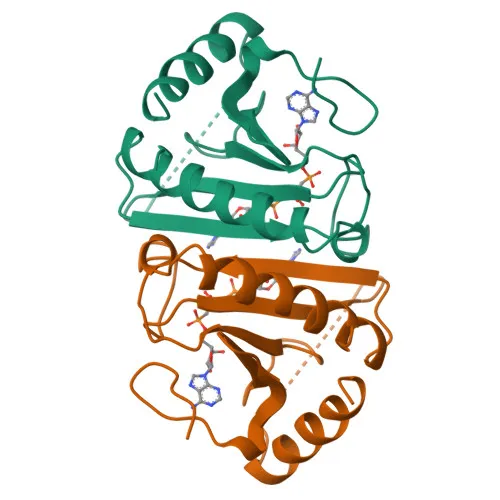
- FHIT (Fragile histidine triad protein), also known as FRA3B or AP3Aase, belongs to the histidine triad superfamily and functions as a dinucleoside triphosphate hydrolase.
- It possesses multiple enzymatic activities: cleaves Ap3A to AMP and ADP (PubMed:12574506, PubMed:15182206, PubMed:8794732), and also hydrolyzes Ap4A, exhibits adenylylsulfatase, adenosine 5'-monophosphoramidase, and adenylylsulfate-ammonia adenylyltransferase activities (PubMed:18694747, PubMed:26181368). Related references: PMID:12574506, PMID:15182206, PMID:8794732, PMID:18694747, PMID:26181368
- FHIT modulates transcriptional activation by CTNNB1, influencing expression of genes such as CCND1 and BIRC5 (PubMed:18077326). Related references: PMID:18077326
- It plays a role in apoptosis induction via SRC and AKT1 signaling (PubMed:16407838) and inhibits MDM2-mediated p53/TP53 degradation, promoting p53-dependent apoptosis (PubMed:15313915). Related references: PMID:16407838, PMID:15313915
- The apoptotic function requires binding to Ap3A or related compounds; the mitochondrial form enhances calcium uptake, contributing to apoptosis (PubMed:12574506, PubMed:19622739). Related references: PMID:12574506, PMID:19622739
- FHIT localizes to the cytoplasm, mitochondrion, and nucleus.
- It is expressed at low levels in all tissues, with phospho-FHIT detected in liver and kidney but absent in brain, lung, and tumor cell lines.
- As a phosphoprotein, FHIT is involved in apoptosis, transcription regulation, and tumor suppression; it binds nucleotides and requires manganese for activity.
Experimental Guidance and Technical Tips
- The immunogen (aa 1-100 of human FHIT) targets the conserved N-terminal region, which is shared across human, mouse, and rat, supporting the observed cross-reactivity in WB and ELISA.
- For WB, expect a band at approximately 17 kDa. Use positive controls such as liver or kidney lysates where phospho-FHIT is detectable, and optimize loading due to low endogenous expression.
- In ELISA, use the antibody with appropriate coating buffers and validate with recombinant FHIT protein or cell lysates.
CamelBio: Your One-Stop Sourcing Bridge
CamelBio provides diagnostic manufacturers and research laboratories with one-stop access to IVD raw materials, including validated monoclonal antibodies like this anti-FHIT clone. Covering key areas such as oncology and apoptosis, we supply optimized antibody pairs, bulk ancillary reagents, and assistance with rare target sourcing to streamline your assay development from concept to clinic.
REQUEST A QUOTE
Our professional team will reply to you within one business day. Please feel free to contact us!