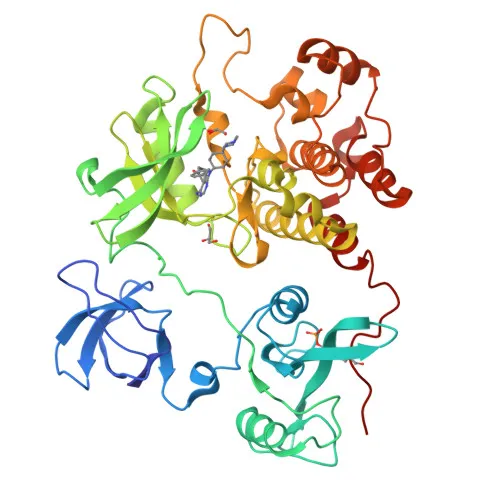
Polyclonal Antibodies
Anti-FGR Polyclonal Antibody for WB, IHC-P, ELISA - P09769
Item Number : CM0019845
Price varies based on specs and customizations
- Application
- WB, IHC-P, ELISA
- Cross Reactivity
- Human, Rat
- Protein Weight
- 59kDa

Shipping:
Contact us to get shipping details Enjoy On-time Dispatch Guarantee.
Why Choose Us
Easy ordering process, quality products, and dedicated support for your business success.
Core Product Specifications and Parameters
| Parameter | Value |
|---|---|
| Product Name | FGR Rabbit pAb |
| Remarks/Alias | SRC2; c-fgr; c-src2; p55-Fgr; p58-Fgr; p55c-fgr; p58c-fgr; FGR |
| Species | Human |
| GeneID (Human) | 2268 |
| GeneID | 2268 |
| Immunogen | Synthetic peptide | A synthetic peptide corresponding to a sequence within amino acids 1-100 of human FGR (NP_005239.1). |
| Source | Rabbit |
| Category | Polyclonal Antibodies |
| Application | WB, IHC-P, ELISA |
| Cross Reactivity | Human, Rat |
| SWISS | P09769 |
| Protein Weight | 59kDa |
| Shipping | Ice bag |
Biological Background: Tyrosine-protein Kinase Fgr Function and Localization
- FGR (Tyrosine-protein kinase Fgr) is a non-receptor tyrosine kinase belonging to the SRC family, with aliases SRC2, c-fgr, p55-Fgr, p58-Fgr, and p58c-Fgr.
- It transmits signals from cell surface receptors lacking intrinsic kinase activity, regulating immune cell functions in neutrophils, monocytes, macrophages, and mast cells.
- Subcellularly, FGR localizes to the cell membrane, ruffle membrane, cytosol, cytoskeleton, and mitochondrial compartments (inner membrane and intermembrane space).
- FGR plays a key role in actin cytoskeleton remodeling, promoting cell spreading, adhesion, and migration via RAC1 activation downstream of integrins ITGB1/ITGB2.
- It acts downstream of immunoreceptors such as MS4A2/FCER1B, FCGR2A, and FCGR2B, phosphorylating targets like SYK, PLD2, and CBL to activate MAP kinase and AKT pathways.
- Tissue expression is prominent in neutrophils, monocytes, natural killer cells, and large lymphocytes.
- As a proto-oncogene, FGR is homologous to the v-fgr oncogene and is subject to lipid modifications (myristoylation, palmitoylation), phosphorylation, and ubiquitination.
Experimental Guidance and Technical Tips
- The immunogen is a synthetic peptide corresponding to the N-terminal region (aa 1-100) of human FGR; the resulting polyclonal antibody may recognize multiple epitopes.
- For Western blot, the predicted molecular weight of FGR is approximately 59 kDa; consider using appropriate positive controls (e.g., immune cell lysates) and validate band specificity.
- For IHC-P and ELISA applications, it is advisable to perform antigen retrieval and test optimal antibody dilutions using tissues or samples known to express FGR.
- As a polyclonal antibody, lot-to-lot variability is possible; always validate performance in your specific experimental system.
CamelBio: Your One-Stop Sourcing Bridge
CamelBio provides comprehensive access to IVD raw materials, technical services, and consulting for diagnostic manufacturers and research laboratories. Our anti-FGR polyclonal antibody supports the study of immune signaling and kinase biology, and we offer bulk sourcing, validated antibody pairs, and customized solutions for rare target procurement. Partner with CamelBio to streamline your development from concept to clinic.
REQUEST A QUOTE
Our professional team will reply to you within one business day. Please feel free to contact us!