Polyclonal Antibodies
Anti-FGG Rabbit Polyclonal Antibody for WB and ELISA - P02679
Item Number : CM0026190
Price varies based on specs and customizations
- Application
- WB, ELISA
- Cross Reactivity
- Human, Mouse
- Protein Weight
- 52kDa

Shipping:
Contact us to get shipping details Enjoy On-time Dispatch Guarantee.
Why Choose Us
Easy ordering process, quality products, and dedicated support for your business success.
Core Product Specifications and Parameters
| Parameter | Value |
|---|---|
| Product Name | FGG Rabbit pAb |
| Remarks/Alias | FGG |
| Species | Human |
| GeneID (human) | 2266 |
| GeneID | 2266 |
| Immunogen | Recombinant protein|Recombinant fusion protein containing a sequence corresponding to amino acids 50-330 of human FGG (NP_000500.2) |
| Source | Rabbit |
| Category | Polyclonal Antibodies |
| Application | WB, ELISA |
| Cross Reactivity | Human, Mouse |
| SWISS | P02679 |
| Protein Weight | 52kDa |
| Shipping | Ice bag |
Biological Background: FGG Function and Localization
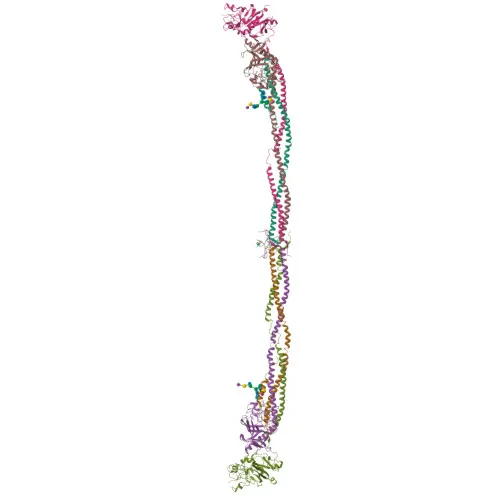
- FGG encodes the fibrinogen gamma chain, which, together with fibrinogen alpha (FGA) and fibrinogen beta (FGB), polymerizes to form an insoluble fibrin matrix essential for blood clot formation.
- Plays a major role in hemostasis as a primary component of blood clots and functions during early wound repair to stabilize lesions and guide cell migration during re-epithelialization.
- Although initially thought essential for platelet aggregation based on in vitro studies, subsequent research indicates it is not absolutely required for thrombus formation in vivo.
- Enhances expression of SELP in activated platelets via an ITGB3-dependent pathway.
- Maternal fibrinogen is essential for successful pregnancy.
- Associated with infection, where fibrin deposition protects against IFNG-mediated hemorrhage and may facilitate antibacterial immune responses via both innate and T-cell mediated pathways.
- The protein is secreted and detected in blood plasma; post-translational modifications include phosphorylation, sulfation, and isopeptide bond formation, classified under keywords Blood coagulation and Hemostasis.
Experimental Guidance and Technical Tips
- The immunogen was generated from a recombinant fusion protein covering amino acids 50–330 of human FGG, a region that is well-conserved; consider validating cross-reactivity in your species of interest.
- For Western blotting, a band at approximately 52 kDa is expected; ensure proper protein loading controls and use human or mouse plasma as positive control samples.
- For ELISA applications, the antibody may be used as a capture or detection reagent; pairing with a matched antibody clone is recommended for sandwich assays.
- As with all polyclonal antibodies, lot-to-lot consistency should be verified, and optimal dilution should be determined empirically.
CamelBio: Your One-Stop Sourcing Bridge
CamelBio is a trusted one-stop provider of IVD raw materials, serving diagnostic manufacturers and research laboratories worldwide. For hemostasis and thrombosis research, we offer validated antibody pairs, optimized polyclonal and monoclonal antibodies, bulk ancillary reagents, and rare target raw-material sourcing. Our comprehensive portfolio and technical support help accelerate your assay development from concept to clinic.
REQUEST A QUOTE
Our professional team will reply to you within one business day. Please feel free to contact us!