Polyclonal Antibodies
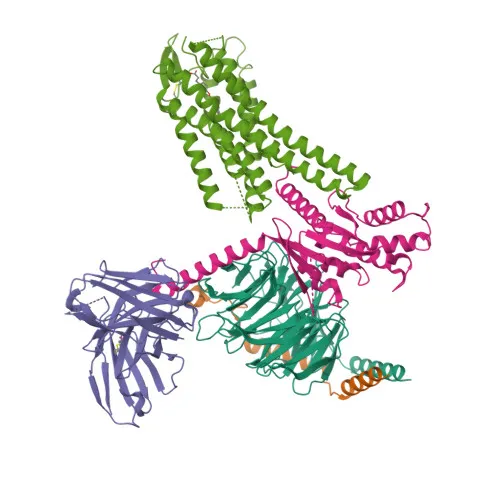
Anti-FFAR4 Rabbit Polyclonal Antibody for WB, ELISA - Q5NUL3
Item Number : CM0023620
Price varies based on specs and customizations
- Application
- WB, ELISA
- Cross Reactivity
- Human, Mouse, Rat
- Protein Weight
- 40kDa

Shipping:
Contact us to get shipping details Enjoy On-time Dispatch Guarantee.
Why Choose Us
Easy ordering process, quality products, and dedicated support for your business success.
Core Product Specifications and Parameters
| Parameter | Value |
|---|---|
| Product Name | FFAR4 Rabbit pAb |
| Remarks/Alias | GT01; PGR4; OB10Q; BMIQ10; GPR120; GPR129; O3FAR1; FFAR4 |
| Species | Human |
| GeneID (Human) | 338557 |
| GeneID | 338557 |
| Immunogen | A synthetic peptide corresponding to a sequence within amino acids 100-200 of human FFAR4 (NP_859529.2) |
| Source | Rabbit |
| Category | Polyclonal Antibodies |
| Application | WB, ELISA |
| Cross Reactivity | Human, Mouse, Rat |
| SWISS | Q5NUL3 |
| Protein Weight | 40kDa |
| Shipping | Ice bag |
Biological Background: FFAR4 Function and Localization
-
FFAR4, also known as GPR120, GPR129, O3FAR1, or BMIQ10, is a G protein-coupled receptor for long-chain fatty acids, initiating signaling through GNAQ/GNA11 (Gq/G11) and beta-arrestin pathways, which regulate intracellular calcium, cAMP, and MAP kinases. Related references: PMID:22282525 PMID:22343897 PMID:24742677
-
It mediates the anti-inflammatory effects of omega-3 fatty acids by inhibiting NLRP3 inflammasome activation via ARRB2, suppressing pro-inflammatory cytokine release. Related references: PMID:23809162
-
FFAR4 is expressed in multiple tissues including adipose, pancreatic islets, lung, brain, and intestine, with notable localization to the primary cilium of perivascular preadipocytes in white adipose tissue. Related references: PMID:24742677 PMID:31761534
-
Subcellularly, FFAR4 localizes to the cell membrane, endosomes, lysosomes, and primary cilium, underscoring its roles in surface signaling, internalization, and specialized ciliary functions.
-
The receptor plays a critical role in systemic energy homeostasis by regulating adipocyte proliferation and differentiation, hormone secretion (GIP, GLP-1, glucagon), and appetite control through ghrelin inhibition.
-
Alternative splicing produces isoforms with distinct tissue distribution and signaling properties, contributing to functional diversity in metabolic and inflammatory processes.
Experimental Guidance and Technical Tips
-
The immunogen is a synthetic peptide covering amino acids 100–200 of human FFAR4; consider optimizing blocking and washing conditions to minimize non‑specific binding in Western blot.
-
For Western blotting, the predicted molecular weight is ~40 kDa; confirm band specificity using positive and negative control lysates, and validate in the relevant sample system.
-
In ELISA applications, the antibody can be used as either capture or detection reagent; determine optimal coating concentration through preliminary titration experiments.
-
Cross-reactivity with mouse and rat is reported; verify epitope conservation for your model system and consider using species-appropriate secondary antibodies.
CamelBio: Your One-Stop Sourcing Bridge
CamelBio provides diagnostic manufacturers, labs, and research institutes with one‑stop access to high‑quality IVD raw materials, technical services, and consulting to accelerate development from concept to clinic. This anti‑FFAR4 polyclonal antibody supports metabolic disease research, enabling robust detection in commonly used applications. Visit camelbio.com to explore our full portfolio of validated antibody reagents and customized sourcing solutions for adipogenesis, diabetes, and inflammation targets.
REQUEST A QUOTE
Our professional team will reply to you within one business day. Please feel free to contact us!