Polyclonal Antibodies
Anti-Fas Rabbit Polyclonal Antibody for WB, ELISA - P25445
Item Number : CM0017590
Price varies based on specs and customizations
- Application
- WB, ELISA
- Cross Reactivity
- Human, Mouse, Rat
- Protein Weight
- 9-38 kDa

Shipping:
Contact us to get shipping details Enjoy On-time Dispatch Guarantee.
Why Choose Us
Easy ordering process, quality products, and dedicated support for your business success.
Core Product Specifications and Parameters
| Parameter | Value |
|---|---|
| Product Name | Fas Rabbit pAb |
| Remarks/Alias | APT1; CD95; FAS1; APO-1; FASTM; ALPS1A; TNFRSF6; Fas |
| Species | Human |
| GeneID (human) | 355 |
| GeneID | 355 |
| Immunogen | Recombinant protein: Recombinant fusion protein containing a sequence corresponding to amino acids 200-300 of human Fas (NP_000034.1). |
| Source | Rabbit |
| Category | Polyclonal Antibodies |
| Application | WB, ELISA |
| Cross Reactivity | Human, Mouse, Rat |
| SWISS | P25445 |
| Protein Weight | 9-38 kDa |
| Shipping | Ice bag |
Biological Background: Fas Function and Localization
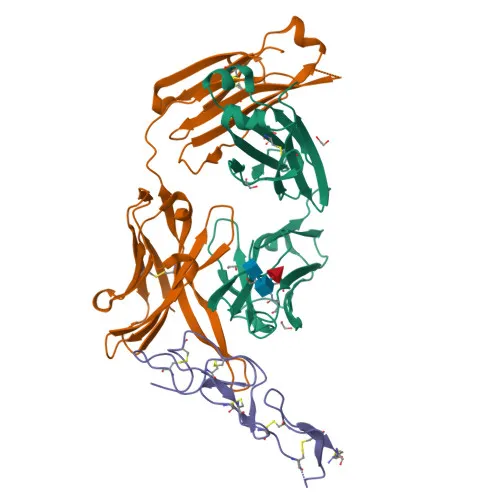
- Fas, also known as CD95, APO-1, and TNFRSF6, is a member of the tumor necrosis factor receptor superfamily and a critical apoptosis mediator.
- It functions as the receptor for FASLG (Fas ligand), forming the death-inducing signaling complex (DISC) via FADD recruitment, which activates caspase-8 and the downstream caspase cascade to execute apoptosis.
- The full-length isoform 1 (membrane-bound) triggers apoptosis, while secreted isoforms 2–6 produced by alternative splicing act as decoy receptors that block FASLG-mediated apoptosis in vitro.
- Fas is primarily localized to the cell membrane, including membrane rafts, but secreted isoforms are also detected extracellularly.
- Key post-translational modifications include glycosylation, palmitoylation, and phosphorylation, which regulate its membrane trafficking and signaling.
- In resting peripheral blood mononuclear cells (PBMCs), isoform 1 and isoform 6 are expressed at equal levels; upon activation, isoform 1 increases while isoform 6 decreases, suggesting a regulatory switch.
- Fas-mediated apoptosis is essential for peripheral tolerance and activation-induced cell death of mature T-cells, highlighting its role in immune homeostasis.
Experimental Guidance and Technical Tips
- The immunogen corresponds to amino acids 200–300 within the extracellular domain of human Fas. This region is conserved across human, mouse, and rat, supporting cross-reactivity.
- For Western blotting, multiple bands between 9–38 kDa may be observed due to alternative splicing, glycosylation, and membrane shedding. Validate band specificity using appropriate controls.
- When performing ELISA, consider using the recombinant Fas fragment as a positive control and pre-incubating the antibody with immunogen to confirm specificity.
- For studies involving immune cell activation, note that Fas isoform expression changes upon stimulation, so timing and cell type are critical for detection.
CamelBio: Your One-Stop Sourcing Bridge
CamelBio offers a streamlined procurement pathway for diagnostic manufacturers and research laboratories seeking high-quality IVD raw materials. This Fas rabbit polyclonal antibody supports apoptosis and immunology research, and CamelBio can supply validated antibody pairs, optimized polyclonal and monoclonal antibodies, bulk ancillary reagents, and rare target sourcing—backed by technical consultation from concept to clinic. Partner with us for reliable, end-to-end material solutions.
REQUEST A QUOTE
Our professional team will reply to you within one business day. Please feel free to contact us!