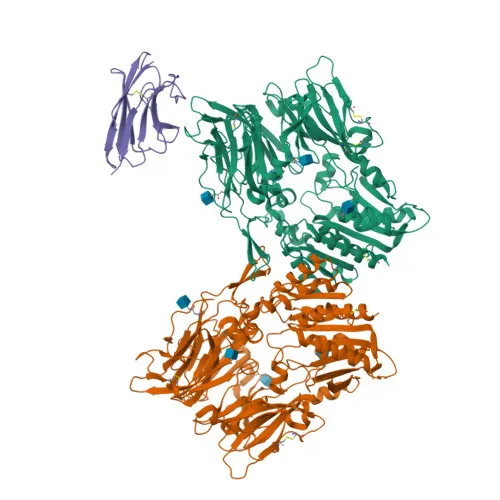
Polyclonal Antibodies
Anti-FAP Polyclonal Antibody for IF/ICC, ELISA - Q12884
Item Number : CM0028573
Price varies based on specs and customizations
- Application
- IF/ICC, ELISA
- Cross Reactivity
- Human
- Protein Weight
- 88kDa

Shipping:
Contact us to get shipping details Enjoy On-time Dispatch Guarantee.
Why Choose Us
Easy ordering process, quality products, and dedicated support for your business success.
Core Product Specifications and Parameters
| Parameter | Value |
|---|---|
| Product Name | FAP Rabbit pAb |
| Remarks/Alias | FAPA; SIMP; DPPIV; FAPalpha |
| Species | Human |
| GeneID (Human) | 2191 |
| GeneID | 2191 |
| Immunogen | Synthetic peptide corresponding to a sequence within amino acids 481-580 of human FAP (NP_004451.2) |
| Source | Rabbit |
| Category | Polyclonal Antibodies |
| Application | IF/ICC, ELISA |
| Cross Reactivity | Human |
| SWISS | Q12884 |
| Protein Weight | 88kDa |
| Shipping | Ice bag |
Biological Background: FAP Function and Localization
- FAP (Prolyl endopeptidase FAP) is a cell surface glycoprotein serine protease, also known as FAPalpha, seprase, and 170 kDa melanoma membrane-bound gelatinase. It is encoded by the FAP gene, producing two isoforms (isoform 1 and isoform 2) through alternative splicing.
- It participates in extracellular matrix degradation, exhibiting both endopeptidase and dipeptidyl peptidase activities. Endopeptidase activity prefers Ala/Ser-Gly-Pro-Ser/Asn/Ala consensus sequences, cleaving substrates like alpha-2-antiplasmin and SPRY2. Dipeptidyl peptidase activity hydrolyzes prolyl bonds two residues from the N-terminus of dipeptides, including neuropeptide hormones NPY, PYY, substance P, and BNP32. Related references: PMID:14751930 PMID:16223769 PMID:16410248 PMID:21314817
- FAP degrades gelatin and denatured type I collagen but not native collagens I and IV, vitronectin, tenascin, laminin, fibronectin, fibrin, or casein. Related references: PMID:10347120 PMID:10455171 PMID:12376466
- It is involved in tissue remodeling, fibrosis, wound healing, inflammation, and tumor growth. In cancer, it promotes cell adhesion, migration, invasion, angiogenesis, collagen degradation, and reduces antitumor immunity. It also acts as a tumor suppressor in melanocytic cells via a serine protease-independent mechanism.
- Subcellularly, FAP localizes to the cell membrane (including lamellipodium, invadopodium, and ruffle membranes), cell surface, and can be secreted or cytoplasmic. Its membrane form associates with DPP4, PLAUR, or integrins for pericellular proteolysis.
- The protein is a transmembrane glycoprotein with a signal-anchor, disulfide bonds, and a serine protease domain. Key post-translational modifications include glycosylation and cleavage on pairs of basic residues.
- Tissue specificity: Expressed in activated fibroblasts in healing wounds, tumor stroma (reactive stromal fibroblasts), activated hepatic stellate cells, and glioma cells. Not detected in normal liver. Isoforms expressed in melanoma, carcinoma, and fibroblast cell lines.
- Angiogenesis promotion and apoptosis modulation are among its keywords, reflecting its functional roles in cancer and wound healing.
Experimental Guidance and Technical Tips
- The immunogen corresponds to amino acids 481–580 of human FAP, a region within the catalytic domain; verify that this epitope is accessible in your assay format.
- For IF/ICC, ensure proper permeabilization and fixation protocols, as FAP is membrane-bound; validate staining in your specific cell line or tissue type.
- For ELISA, consider pairing with a capture antibody to establish a sandwich ELISA; assess linearity and sensitivity using recombinant FAP or relevant biological samples.
- Cross-reactivity is reported only for human; confirm reactivity if using other species.
CamelBio: Your One-Stop Sourcing Bridge
CamelBio is your one-stop sourcing partner for IVD raw materials, offering validated antibody pairs, optimized monoclonal and polyclonal antibodies, bulk ancillary reagents, and rare target sourcing. For FAP-related research in oncology and fibrosis, we supply high-quality antibodies and support to accelerate your assay development.
REQUEST A QUOTE
Our professional team will reply to you within one business day. Please feel free to contact us!