Polyclonal Antibodies
Anti-FANCL Rabbit Polyclonal Antibody for WB and ELISA - Q9NW38
Item Number : CM0030124
Price varies based on specs and customizations
- Application
- WB, ELISA
- Cross Reactivity
- Mouse
- Protein Weight
- 43kDa

Shipping:
Contact us to get shipping details Enjoy On-time Dispatch Guarantee.
Why Choose Us
Easy ordering process, quality products, and dedicated support for your business success.
Core Product Specifications and Parameters
| Parameter | Value |
|---|---|
| Product Name | FANCL Rabbit pAb |
| Remarks/Alias | POG; PHF9; FAAP43; FANCL |
| Species | Human |
| GeneID (human) | 55120 |
| GeneID | 55120 |
| Immunogen | Recombinant protein |
| Source | Rabbit |
| Category | Polyclonal Antibodies |
| Application | WB, ELISA |
| Cross Reactivity | Mouse |
| SWISS | Q9NW38 |
| Protein Weight | 43kDa |
| Shipping | Ice bag |
Biological Background: FANCL Function and Localization
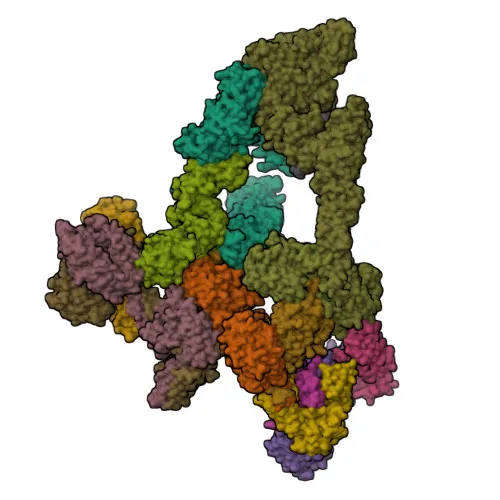
- FANCL, also designated POG, PHF9, or FAAP43, is a RING-type E3 ubiquitin-protein ligase critical for the Fanconi anemia (FA) DNA interstrand crosslink repair pathway.
- As the catalytic subunit of the FA core complex, FANCL catalyzes the monoubiquitination of FANCD2 in concert with UBE2T, a key event that triggers downstream DNA repair processes. Related references: PMID:12973351 PMID:16916645 PMID:17938197
- FANCL also mediates the monoubiquitination of FANCI, contributing to the formation of the FANCD2-FANCI heterodimer and further coordinating the FA pathway. Related references: PMID:19589784
- The protein is localized in both the cytoplasm and nucleus, reflecting its involvement in DNA damage sensing and signaling.
- FANCL contains a RING-type zinc finger domain and is subjected to post-translational modifications, including acetylation and alternative splicing, which may modulate its activity.
- Beyond DNA repair, FANCL is required for proper primordial germ cell proliferation during embryonic development, suggesting a broader role in cellular homeostasis.
Experimental Guidance and Technical Tips
- The immunogen encompasses the N-terminal 255 amino acids of human FANCL, a region containing the RING domain; consider this when assessing detection of isoforms or fragments.
- For Western blot analysis, a predominant band near 43 kDa is expected; however, additional bands may appear due to post-translational modifications or alternative splicing products.
- Cross-reactivity with mouse samples suggests that the antibody recognizes conserved epitopes, but users should validate performance in their specific application.
- For ELISA-based assays, pairing this polyclonal antibody with a specific monoclonal capture antibody may enhance assay sensitivity and specificity.
- Induction of DNA damage (e.g., by mitomycin C) can be used to study FANCL-dependent ubiquitination events in cell-based models.
CamelBio: Your One-Stop Sourcing Bridge
CamelBio partners with diagnostic developers and researchers by providing comprehensive access to IVD raw materials, from validated antibody pairs to bulk ancillary reagents. For FANCL and related DNA repair targets, CamelBio can support your project with optimized polyclonal antibodies, rare-target sourcing, and technical consulting to accelerate assay development. Discover a reliable supply chain that bridges bench to validation.
REQUEST A QUOTE
Our professional team will reply to you within one business day. Please feel free to contact us!