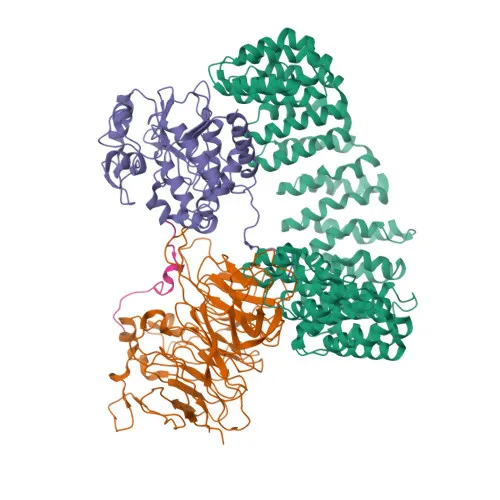
Polyclonal Antibodies
Anti-EYA3 Rabbit Polyclonal Antibody for WB and ELISA - Q99504
Item Number : CM0030518
Price varies based on specs and customizations
- Application
- WB, ELISA
- Cross Reactivity
- Human, Mouse, Rat
- Protein Weight
- 63kDa

Shipping:
Contact us to get shipping details Enjoy On-time Dispatch Guarantee.
Why Choose Us
Easy ordering process, quality products, and dedicated support for your business success.
Core Product Specifications and Parameters
| Parameter | Value |
|---|---|
| Product Name | EYA3 Rabbit pAb |
| Remarks/Alias | EYA3 |
| Species | Human |
| GeneID (human) | 2140 |
| GeneID | 2140 |
| Immunogen | Recombinant protein|Recombinant fusion protein containing a sequence corresponding to amino acids 1-300 of human EYA3 (NP_001981.2) |
| Source | Rabbit |
| Category | Polyclonal Antibodies |
| Application | WB, ELISA |
| Cross Reactivity | Human, Mouse, Rat |
| SWISS | Q99504 |
| Protein Weight | 63kDa |
| Shipping | Ice bag |
Biological Background: EYA3 Function and Localization
- EYA3 (Eyes absent homolog 3) is a protein phosphatase and transcriptional coactivator that belongs to the eyes absent family of proteins, which are known to play critical roles in organogenesis and development.
- It functions as a tyrosine phosphatase that specifically dephosphorylates 'Tyr-142' of histone H2AX (H2AXY142ph), promoting efficient DNA repair by facilitating the recruitment of DNA repair complexes containing MDC1. Related references: PMID:19234442 PMID:19351884
- EYA3 acts as a transcriptional coactivator for the SIX family of homeobox proteins (SIX1, and likely SIX2, SIX4, SIX5). In myoblasts, recruitment of EYA3 to the SIX1-DACH1 complex switches SIX1-mediated repression of precursor cell proliferation to activation, a process that appears dependent on EYA3 phosphatase activity.
- The protein localizes to both the cytoplasm and nucleus, consistent with its dual roles in signal transduction and transcriptional regulation.
- EYA3 may be involved in eye development, aligning with the broader developmental functions of the eyes absent family.
- UniProt keywords highlight its involvement in chromatin regulation, DNA damage and repair, transcription, and development, along with post-translational modifications such as acetylation and phosphorylation.
Experimental Guidance and Technical Tips
- The immunogen corresponds to the N-terminal region (amino acids 1–300) of human EYA3; sequence alignment across species may help predict cross-reactivity with mouse and rat orthologs.
- For Western blot (WB), consider the predicted molecular weight of ~63 kDa and validate the antibody in relevant human, mouse, or rat cell lysates to confirm expected band size.
- ELISA applications may require optimization of coating antigen and antibody dilution; using recombinant EYA3 protein as a positive control is advisable.
- As a polyclonal antibody, lot-to-lot consistency should be verified for critical quantitative assays, and appropriate controls should be included to ensure reproducibility.
CamelBio: Your One-Stop Sourcing Bridge
CamelBio serves as a comprehensive one-stop sourcing partner for IVD raw materials, offering a broad portfolio including validated antibody pairs, optimized monoclonal and polyclonal antibodies, bulk ancillary reagents, and rare target sourcing. For EYA3-related research—spanning DNA repair, chromatin regulation, and developmental biology—CamelBio can facilitate your procurement of high-quality antibodies and complementary reagents to accelerate diagnostic development. Our supply network supports transitions from concept to clinic with reliable, scalable raw materials.
REQUEST A QUOTE
Our professional team will reply to you within one business day. Please feel free to contact us!