Polyclonal Antibodies
Anti-EXT1 Rabbit Polyclonal Antibody for WB, IF/ICC, ELISA - Q16394
Item Number : CM0020396
Price varies based on specs and customizations
- Application
- WB, IF/ICC, ELISA
- Cross Reactivity
- Human, Mouse, Rat
- Protein Weight
- 86kDa

Shipping:
Contact us to get shipping details Enjoy On-time Dispatch Guarantee.
Why Choose Us
Easy ordering process, quality products, and dedicated support for your business success.
Core Product Specifications and Parameters
| Parameter | Value |
|---|---|
| Product Name | EXT1 Rabbit pAb |
| Remarks/Alias | EXT; LGS; TTV; LGCR; TRPS2; EXT1 |
| Species | Human |
| GeneID (Human) | 2131 |
| GeneID | 2131 |
| Immunogen | Synthetic peptide corresponding to a sequence within amino acids 467-746 of human EXT1 (NP_000118.2) |
| Source | Rabbit |
| Category | Polyclonal Antibodies |
| Application | WB, IF/ICC, ELISA |
| Cross Reactivity | Human, Mouse, Rat |
| SWISS | Q16394 |
| Protein Weight | 86kDa |
| Shipping | Ice bag |
Biological Background: EXT1 Function and Localization
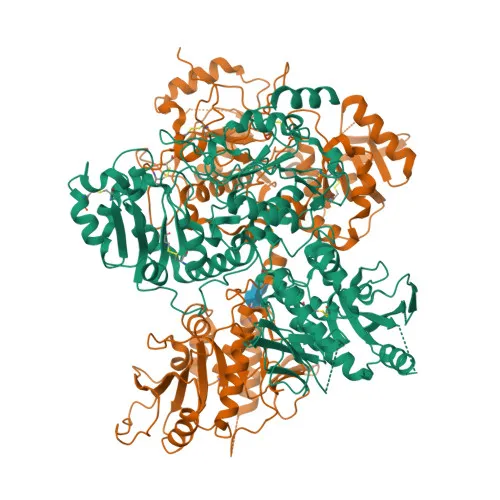
- EXT1 (Exostosin-1) is a glycosyltransferase that, together with EXT2, forms the heterodimeric heparan sulfate polymerase responsible for elongating the heparan sulfate glycan backbone (PubMed:10639137, PubMed:22660413, PubMed:36402845). Related references: PMID:10639137, PMID:22660413, PMID:36402845
- The polymerase catalyzes the alternating transfer of GlcA and GlcNAc residues; EXT1 provides N-acetylglucosaminyl-proteoglycan 4-beta-glucuronosyltransferase activity, while EXT2 carries the complementary glucuronosyl-N-acetylglucosaminyl-proteoglycan 4-alpha-N-acetylglucosaminyltransferase activity (PubMed:36402845, PubMed:36593275). Related references: PMID:36402845, PMID:36593275
- EXT1 is a member of the exostosin family and acts as a tumor suppressor; mutations are associated with hereditary multiple exostoses.
- The protein localizes to the Golgi apparatus, particularly the cis-Golgi network, and the endoplasmic reticulum membrane, consistent with its role in glycan biosynthesis.
- EXT1 is widely expressed across tissues, reflecting the ubiquitous presence of heparan sulfate proteoglycans in the extracellular matrix and their roles in signaling and homeostasis.
- It is a glycoprotein with disulfide bonds and requires manganese as a cofactor for its enzymatic activity.
- Heparan sulfate proteoglycans synthesized by EXT1/EXT2 are critical for tissue homeostasis, growth factor signaling, and extracellular matrix integrity (PubMed:10639137, PubMed:11391482). Related references: PMID:10639137, PMID:11391482
Experimental Guidance and Technical Tips
- The immunogen spans residues 467–746, a region that may be present in certain isoforms or processed forms; validate specificity in your model system.
- For Western blot, a band around 86 kDa is expected; consider using 8–10% SDS-PAGE gels and appropriate loading controls.
- In immunofluorescence (IF/ICC), expect perinuclear/Golgi-like staining; co-staining with a Golgi marker may confirm localization.
- The antibody is validated for human, mouse, and rat samples; cross-reactivity with other species should be verified experimentally.
- For ELISA, use the peptide immunogen as a positive control to assess antibody titer and specificity.
CamelBio: Your One-Stop Sourcing Bridge
CamelBio is your one-stop sourcing partner for IVD raw materials, offering validated antibody pairs, bulk ancillary reagents, and rare target sourcing to support your diagnostic and research workflows. This EXT1 antibody is tailored for studies in heparan sulfate biology, extracellular matrix signaling, and hereditary multiple exostoses — and we can supply matched reagent sets and consultative support from concept to clinic.
REQUEST A QUOTE
Our professional team will reply to you within one business day. Please feel free to contact us!