Polyclonal Antibodies
Anti-ETFA Polyclonal Antibody for WB, IHC-P, IP, ELISA - P13804
Item Number : CM0026840
Price varies based on specs and customizations
- Application
- WB, IHC-P, IP, ELISA
- Cross Reactivity
- Human, Mouse, Rat
- Protein Weight
- 35kDa

Shipping:
Contact us to get shipping details Enjoy On-time Dispatch Guarantee.
Why Choose Us
Easy ordering process, quality products, and dedicated support for your business success.
Core Product Specifications and Parameters
| Parameter | Value |
|---|---|
| Product Name | ETFA Rabbit pAb |
| Remarks/Alias | EMA; GA2; MADD; ETFA |
| Species | Human |
| Gene ID (Human) | 2108 |
| Gene ID | 2108 |
| Immunogen | Recombinant protein|Recombinant fusion protein containing a sequence corresponding to amino acids 1-333 of human ETFA (NP_000117.1). |
| Source | Rabbit |
| Category | Polyclonal Antibodies |
| Application | WB, IHC-P, IP, ELISA |
| Cross Reactivity | Human, Mouse, Rat |
| SWISS | P13804 |
| Protein Weight | 35kDa |
| Shipping | Ice bag |
Biological Background: ETFA Function and Localization
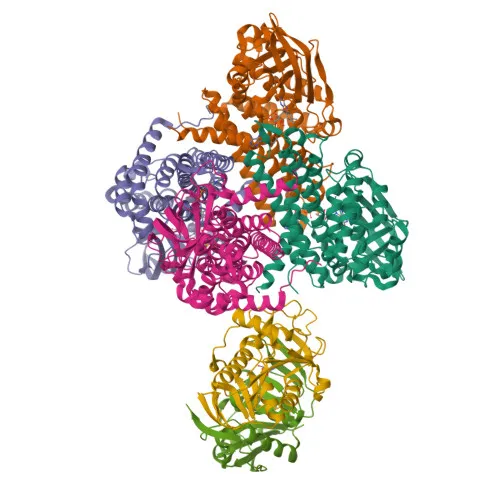
- ETFA encodes the alpha subunit of the heterodimeric electron transfer flavoprotein (ETF), a key enzyme in mitochondrial energy metabolism.
- ETF accepts electrons from several mitochondrial dehydrogenases, including acyl-CoA dehydrogenases, glutaryl-CoA dehydrogenase, and sarcosine dehydrogenase, and subsequently transfers them to ETF-ubiquinone oxidoreductase to enter the respiratory chain.
Related references:
PMID:10356313, PMID:15159392, PMID:15975918, PMID:9334218 - It is essential for normal mitochondrial fatty acid oxidation and amino acid catabolism.
Related references:
PMID:12815589, PMID:1430199, PMID:1882842 - The protein localizes to the mitochondrial matrix, directed by an N-terminal transit peptide.
- ETFA contains a non-covalently bound FAD cofactor and is subject to post-translational modifications including acetylation and phosphorylation.
- Mutations in ETFA cause glutaricaciduria type II (multiple acyl-CoA dehydrogenase deficiency), a disorder characterized by impaired oxidation of fatty acids and amino acids.
- Alternative splicing of the ETFA gene produces multiple transcript variants encoding distinct isoforms.
Experimental Guidance and Technical Tips
- For Western blotting, a band around 35 kDa is expected; we recommend using reducing conditions and validating in mitochondrial-enriched fractions from human, mouse, or rat tissues.
- In immunohistochemistry (IHC-P), strong staining is anticipated in metabolically active tissues such as liver, heart, and skeletal muscle; always include a negative control to confirm specificity.
- For immunoprecipitation (IP), consider native lysis buffers that preserve protein–protein interactions, as ETF functions as a heterodimer with the beta subunit.
- ELISA applications may benefit from pairing this polyclonal antibody with a monoclonal detector; optimize coating and blocking conditions according to your sample type.
CamelBio: Your One-Stop Sourcing Bridge
CamelBio enables diagnostic manufacturers, labs, and research institutes to access a comprehensive portfolio of IVD raw materials, technical services, and consulting—from concept to clinic. This anti-ETFA polyclonal antibody supports studies in mitochondrial metabolism, fatty acid oxidation disorders, and related diagnostic development. Leverage our bulk supply capabilities, validated antibody pairs, and dedicated sourcing for rare targets to accelerate your next project.
REQUEST A QUOTE
Our professional team will reply to you within one business day. Please feel free to contact us!