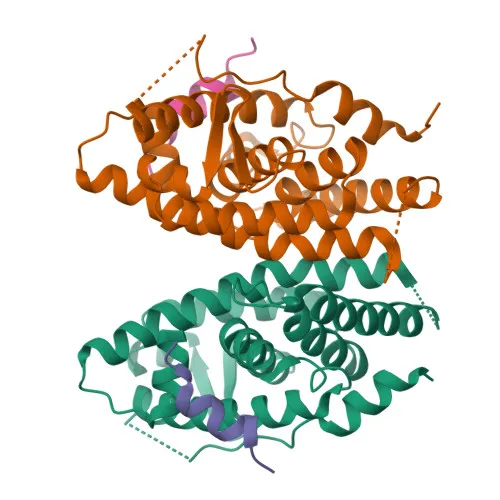
Polyclonal Antibodies
Anti-ESRRA Rabbit Polyclonal Antibody for WB, IF/ICC, ELISA - P11474
Item Number : CM0023990
Price varies based on specs and customizations
- Application
- WB, IF/ICC, ELISA
- Cross Reactivity
- Human, Mouse, Rat
- Protein Weight
- 46kDa

Shipping:
Contact us to get shipping details Enjoy On-time Dispatch Guarantee.
Why Choose Us
Easy ordering process, quality products, and dedicated support for your business success.
Core Product Specifications and Parameters
| Parameter | Value |
|---|---|
| Product Name | ESRRA Rabbit pAb |
| Remarks/Alias | ERR1; ERRa; ESRL1; NR3B1; ERRalpha; ESRRA |
| Species | Human |
| GeneID | 2101 |
| Immunogen | Recombinant fusion protein containing a sequence corresponding to amino acids 1-76 of human ESRRA (NP_004442.3) |
| Source | Rabbit |
| Category | Polyclonal Antibodies |
| Application | WB, IF/ICC, ELISA |
| Cross Reactivity | Human, Mouse, Rat |
| SWISS | P11474 |
| Protein Weight | 46kDa |
| Shipping | Ice bag |
Biological Background: ESRRA Function and Localization
- ESRRA (estrogen-related receptor alpha) is a steroid hormone receptor and ligand-activated transcription factor belonging to the nuclear receptor subfamily 3 group B (NR3B1). It is also known as ERR1, ERR-alpha, and ESRL1.
- The protein binds to ERR-alpha response elements (ERRE) containing a core consensus half-site 5'-TNAAGGTCA-3', regulating promoters of genes involved in energy metabolism, such as MCAD and lactoferrin.
- ESRRA functions as an obligate dimer and requires interaction with the coactivator PGC-1A (PPARGC1A) for full transcriptional activity; the complex is a key regulator of mitochondrial biogenesis and oxidative metabolism.
- In skeletal muscle, ESRRA induces the expression of PERM1, further linking it to metabolic adaptation and muscle function.
- Subcellular localization includes both nuclear and cytoplasmic compartments, consistent with its roles in transcriptional regulation and potential non-genomic signaling.
- Post-translational modifications such as acetylation and phosphorylation modulate its activity, and the protein features two zinc-finger motifs typical of nuclear receptor DNA-binding domains.
- Alternative splicing generates multiple isoforms, potentially contributing to tissue-specific functions.
Experimental Guidance and Technical Tips
- The immunogen covers the N-terminal region (amino acids 1–76) of human ESRRA, a domain that may be conserved across isoforms; consider sequence alignment when interpreting isoform detection.
- For WB, a band near 46 kDa is expected; however, post-translational modifications may cause slight shifts. Include appropriate loading controls and molecular weight markers.
- Validate antibody specificity using knockdown or knockout controls, or by overexpressing the target gene in cell lines with low endogenous expression.
- For IF/ICC, note the dual nuclear and cytoplasmic localization; use appropriate fixation and permeabilization protocols to preserve both compartments.
- Cross-reactivity with mouse and rat is indicated; verify performance in the intended species’s tissue or cell lysates with positive controls.
CamelBio: Your One-Stop Sourcing Bridge
CamelBio serves as a comprehensive B2B source for IVD raw materials, including validated antibody pairs, optimized monoclonal and polyclonal antibodies, and bulk ancillary reagents. We can support your ESRRA-related projects in the fields of metabolic disease and nuclear receptor research by providing consistent-quality reagents and rare target sourcing. Our one-stop model streamlines procurement so you can focus on developing robust diagnostic assays.
REQUEST A QUOTE
Our professional team will reply to you within one business day. Please feel free to contact us!