Polyclonal Antibodies
Anti-ERK1/ERK2 Rabbit Polyclonal Antibody for WB, IF/ICC, IHC-P, ELISA - P28482 / P27361
Item Number : CM0022556
Price varies based on specs and customizations
- Application
- WB, IF/ICC, IHC-P, ELISA
- Cross Reactivity
- Human, Mouse, Rat
- Protein Weight
- 36kDa/41kDa/38kDa/40kDa/43kDa

Shipping:
Contact us to get shipping details Enjoy On-time Dispatch Guarantee.
Why Choose Us
Easy ordering process, quality products, and dedicated support for your business success.
Core Product Specifications and Parameters
| Parameter | Value |
|---|---|
| Product Name | ERK1 / ERK2 Rabbit pAb |
| Remarks/Alias | MAPK1/MAPK3; ERK1 / ERK2 |
| Species | Human |
| GeneID (Human) | 5594/5595 |
| GeneID | 5594/5595 |
| Immunogen | Synthetic peptide |
| Source | Rabbit |
| Category | Polyclonal Antibodies |
| Application | WB, IF/ICC, IHC-P, ELISA |
| Cross Reactivity | Human, Mouse, Rat |
| SWISS | P28482/P27361 |
| Protein Weight | 36kDa/41kDa/38kDa/40kDa/43kDa |
| Shipping | Ice bag |
Biological Background: ERK1/ERK2 Function and Localization
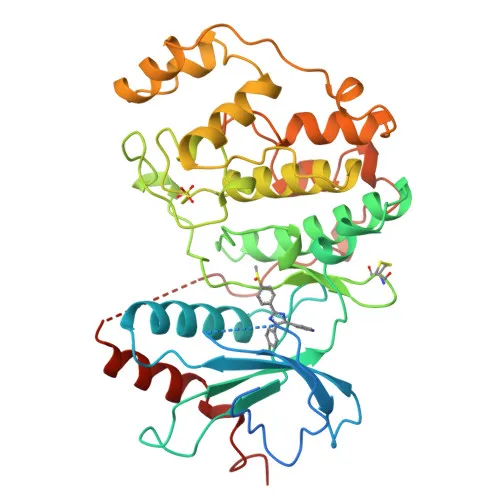
- MAPK1 (ERK2, p42-MAPK) and MAPK3 (ERK1, p44-MAPK) are closely related serine/threonine kinases essential for the canonical MAPK/ERK signal transduction cascade.
- They phosphorylate a broad array of substrates (over 160) including transcription factors (ATF2, ELK1, FOS), cytoskeletal regulators, and other protein kinases, mediating responses in cell proliferation, differentiation, adhesion, and apoptosis. Related references: PMID:35831023
- In hypoxic microenvironments, ERK2 directly phosphorylates phosphoglycerate kinase PGK1 at the mitochondrion, altering central carbon metabolism. Related references: PMID:26942675
- The kinase also participates in spindle assembly checkpoint control and Golgi fragmentation during mitosis, highlighting roles in cell cycle progression.
- Subcellularly, ERK2 localizes dynamically to the cytoplasm, nucleus, centrosome, focal adhesions, and caveolae, reflecting its context-dependent signaling functions.
- Post-translational modifications, including phosphorylation, acetylation, and ubiquitination, tightly regulate ERK2 activity and stability.
- Alternative splicing generates distinct isoforms, and mutations in MAPK1 are linked to human diseases, underscoring its clinical relevance.
Experimental Guidance and Technical Tips
- The immunogen is a synthetic peptide spanning amino acids 200–300 of human ERK1/ERK2 (NP_620407.1/NP_002737.2), a conserved region between the two isoforms, making this antibody suitable for detecting both ERK1 and ERK2.
- For Western blotting (WB), expect bands around 42–44 kDa for ERK1 and 41–42 kDa for ERK2; additional lower bands may represent phosphorylated forms or degradation products.
- In immunofluorescence (IF/ICC) and immunohistochemistry (IHC-P), validate antibody specificity using appropriate controls (e.g., siRNA knockdown or peptide blocking) due to broad expression.
- The antibody cross-reacts with mouse and rat, but always confirm reactivity in your specific experimental model.
- ELISA applications may require optimization of coating antigen and detection conditions; the antibody is suitable as a capture or detection reagent in sandwich formats.
CamelBio: Your One-Stop Sourcing Bridge
CamelBio offers comprehensive access to IVD raw materials, connecting diagnostic developers with high-quality antibodies like this anti-ERK1/ERK2 rabbit polyclonal antibody. Whether you need validated antibody pairs for ELISA development, bulk monoclonal/polyclonal antibodies, or rare-target sourcing, our one-stop platform supports your project from concept to clinic. With ERK1/ERK2 playing pivotal roles in cancer and cell signaling research, we also provide ancillary reagents and technical consulting to accelerate your assay development.
Product Datasheet
Anti-ERK1/ERK2 Rabbit Polyclonal Antibody for WB, IF/ICC, IHC-P, ELISA - P28482 / P27361
REQUEST A QUOTE
Our professional team will reply to you within one business day. Please feel free to contact us!