Monoclonal Antibodies
Anti-ERK1 (MAPK3) Monoclonal Antibody for WB, IP, IF/ICC, IHC-P, ELISA - P27361
Item Number : CM0002329
Price varies based on specs and customizations
- Application
- WB, IP, IF/ICC, IF-P, IHC-P, ELISA
- Cross Reactivity
- Human, Mouse
- Protein Weight
- 43kDa

Shipping:
Contact us to get shipping details Enjoy On-time Dispatch Guarantee.
Why Choose Us
Easy ordering process, quality products, and dedicated support for your business success.
Core Product Specifications and Parameters
| Parameter | Value |
|---|---|
| Product Name | [KD Validated] ERK1 Rabbit mAb |
| Remarks/Alias | ERK1; ERT2; ERK-1; PRKM3; P44ERK1; P44MAPK; HS44KDAP; HUMKER1A; p44-ERK1; p44-MAPK; K1 |
| Species (Target) | Human |
| Gene ID (Human) | 5595 |
| Immunogen | Synthetic Peptide - A synthetic peptide corresponding to a sequence within amino acids 1-100 of human ERK1 (P27361). |
| Source | Rabbit |
| Category | Monoclonal Antibodies |
| Application | WB, IP, IF/ICC, IF-P, IHC-P, ELISA |
| Cross Reactivity | Human, Mouse |
| SWISS | P27361 |
| Protein Weight | 43kDa |
| Shipping | Ice bag |
Biological Background: ERK1 Function and Localization
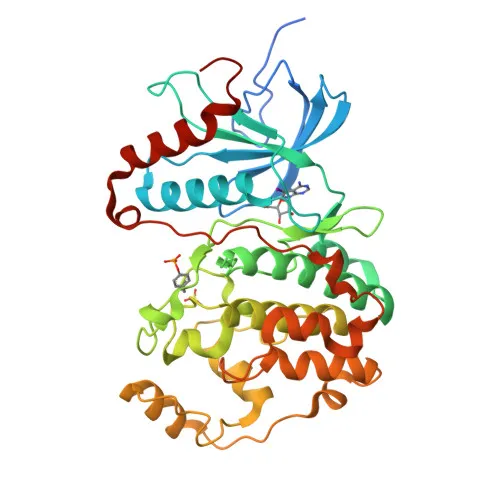
- ERK1, encoded by the MAPK3 gene, is a serine/threonine kinase that functions as a core component of the MAP kinase signal transduction pathway, mediating diverse biological processes such as cell growth, adhesion, survival, and differentiation (PubMed:34497368). Related references: PMID:34497368
- Together with ERK2 (MAPK1), it forms a key node in the MAPK/ERK cascade, which is activated by a wide range of extracellular stimuli and leads to the phosphorylation of numerous downstream targets, including transcription factors, protein kinases, and cytoskeletal proteins.
- ERK1 phosphorylates over 160 substrates, such as transcription factors (e.g., ATF2, BCL6, ELK1, FOS), cytoskeletal elements (e.g., CANX, MAP2, MAPT), regulators of apoptosis (e.g., BAD, CASP9), and regulators of translation (e.g., EIF4EBP1), thereby regulating gene expression, cell cycle progression, and metabolism (PubMed:35216969). Related references: PMID:35216969
- The protein localizes to multiple subcellular compartments, including the cytoplasm, nucleus, membrane caveolae, cell junctions, and focal adhesions, enabling context-dependent signaling. Upon activation, it translocates to the nucleus to phosphorylate nuclear targets, while its cytosolic and membrane-associated pools regulate processes like translation, mitosis, and cell adhesion.
- Alternative splicing of MAPK3 produces isoforms, and the kinase activity is controlled by phosphorylation on Thr-202 and Tyr-204 by MAP2K1/MEK1, as well as through interactions with scaffold proteins, phosphatases, and subcellular targeting.
- Beyond classical MAPK signaling, ERK1 is involved in endosomal dynamics, lysosome processing, and fragmentation of the Golgi apparatus during mitosis, highlighting its role in organelle regulation.
- ERK1 has been implicated in host-virus interactions and apoptosis, with its dysregulation linked to various cancers and developmental disorders.
Experimental Guidance and Technical Tips
- The immunogen is a synthetic peptide corresponding to the N-terminal region (aa 1-100) of human ERK1, suggesting the antibody recognizes an epitope within this domain. For Western blot, a band of approximately 43 kDa is expected; consider using a loading control such as GAPDH or β-actin.
- When performing immunofluorescence (IF/ICC) or IHC, permeabilization of cells/tissues is recommended to allow antibody access to intracellular and nuclear ERK1. Antigen retrieval may be necessary for formalin-fixed paraffin-embedded (FFPE) samples.
- For immunoprecipitation (IP), the antibody is suitable for capturing native ERK1. Co-IP experiments may be feasible if the epitope is exposed in protein complexes; however, verify co-precipitation of known partners (e.g., MEK, RSK) in your system.
- This monoclonal antibody is validated for multiple applications, but optimization of dilution and buffer conditions is advised, especially when using non-human or non-mouse species, as cross-reactivity beyond the listed species has not been tested.
CamelBio: Your One-Stop Sourcing Bridge
CamelBio empowers diagnostic manufacturers, laboratories, and research institutes with streamlined access to IVD raw materials and technical services. This anti-ERK1 monoclonal antibody supports assays targeting the MAPK/ERK pathway, widely studied in oncology, neuroscience, and cell signaling. Beyond single reagents, CamelBio supplies validated antibody pairs, bulk ancillary reagents, and offers rare-target sourcing to accelerate your assay development from concept to clinic.
Product Datasheet
Anti-ERK1 (MAPK3) Monoclonal Antibody for WB, IP, IF/ICC, IHC-P, ELISA - P27361
REQUEST A QUOTE
Our professional team will reply to you within one business day. Please feel free to contact us!