Polyclonal Antibodies
Anti-ERCC8 Rabbit Polyclonal Antibody for WB, ELISA - Q13216
Item Number : CM0028887
Price varies based on specs and customizations
- Application
- WB, ELISA
- Cross Reactivity
- Mouse
- Protein Weight
- 44kDa

Shipping:
Contact us to get shipping details Enjoy On-time Dispatch Guarantee.
Why Choose Us
Easy ordering process, quality products, and dedicated support for your business success.
Core Product Specifications and Parameters
| Parameter | Specification |
|---|---|
| Product Name | ERCC8 Rabbit pAb |
| Remarks/Alias | CSA, CKN1, UVSS2, ERCC8 |
| Species | Human |
| GeneID (Human) | 1161 |
| GeneID | 1161 |
| Immunogen | Synthetic peptide |
| Source | Rabbit |
| Category | Polyclonal Antibodies |
| Application | WB, ELISA |
| Cross Reactivity | Mouse |
| SWISS | Q13216 |
| Protein Weight | 44kDa |
| Shipping | Ice bag |
Biological Background: ERCC8 Function and Localization
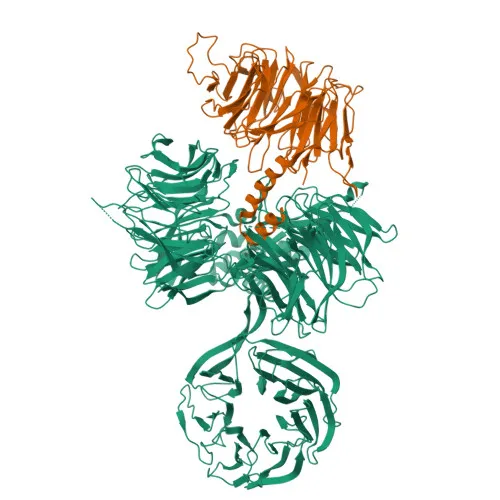
- ERCC8 (also known as CSA, CKN1, UVSS2) is a DNA excision repair protein and a substrate-recognition component of the CSA complex.
- The CSA complex is a DCX (DDB1-CUL4-X-box) E3 ubiquitin-protein ligase complex that functions in transcription-coupled nucleotide excision repair (TC-NER), rapidly removing RNA polymerase II-blocking lesions from the transcribed strand of active genes. Related references: PMID:12732143 PMID:16751180 PMID:16964240
- Upon recruitment to lesion-stalled RNA polymerase II, the CSA complex mediates ubiquitination of Pol II subunit POLR2A/RPB1 at Lys-1268, a critical step governing RNA Pol II stability and initiating damage excision by TFIIH recruitment. Related references: PMID:12732143 PMID:16751180 PMID:16964240
- The CSA complex also promotes ubiquitination and proteasomal degradation of ERCC6/CSB in a UV-dependent manner, essential for recovery of RNA synthesis after repair. Related references: PMID:16751180
- ERCC8 plays a role in DNA double-strand break (DSB) repair by non-homologous end joining (NHEJ). Related references: PMID:29545921
- ERCC8 localizes to the nucleus, specifically to chromosomes and the nuclear matrix.
- As a WD repeat protein, ERCC8 contains multiple WD40 domains, and mutations are associated with Cockayne syndrome, a disorder characterized by dwarfism, deafness, and photosensitivity.
- ERCC8 undergoes alternative splicing and is a phosphoprotein, subject to post-translational modifications.
Experimental Guidance and Technical Tips
- The immunogen used is a synthetic peptide corresponding to the C-terminal region (aa 300-396) of human ERCC8. This design may enhance specificity for the target protein.
- For Western blotting (WB), validate the antibody using appropriate positive and negative controls. Detect endogenous ERCC8 in human and mouse cell lysates at the predicted molecular weight of 44 kDa.
- For ELISA, optimize coating antigen and antibody dilution to achieve suitable sensitivity. Pair with a compatible detection system.
- If weak or no signal is observed, consider testing different blocking buffers, antibody incubation times, or lysate preparation methods. Heat-induced epitope retrieval is generally not required for western blotting.
CamelBio: Your One-Stop Sourcing Bridge
CamelBio provides diagnostic manufacturers, laboratories, and research institutes with one-stop access to IVD raw materials, technical services, and consulting, covering every stage from concept to clinic. As your dedicated sourcing partner, we offer validated antibody pairs, optimized monoclonal and polyclonal antibodies, bulk ancillary reagents, and rare target raw-material sourcing to support your DNA repair and Cockayne syndrome research programs. Let CamelBio streamline your supply chain and accelerate your diagnostic development.
REQUEST A QUOTE
Our professional team will reply to you within one business day. Please feel free to contact us!