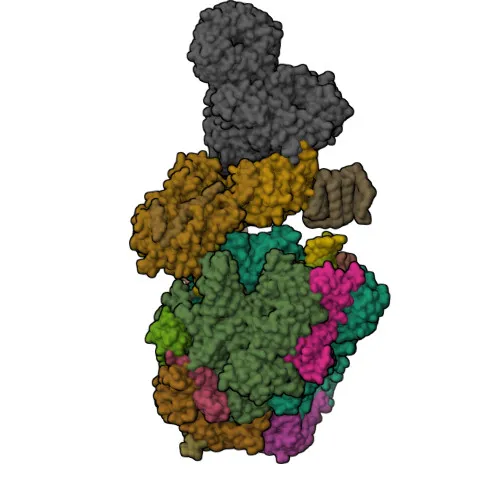
Polyclonal Antibodies
Anti-ERCC6 Polyclonal Antibody for WB, IHC-P, ELISA - Q03468
Item Number : CM0023563
Price varies based on specs and customizations
- Application
- WB, IHC-P, ELISA
- Cross Reactivity
- Human, Mouse, Rat
- Protein Weight
- 168kDa

Shipping:
Contact us to get shipping details Enjoy On-time Dispatch Guarantee.
Why Choose Us
Easy ordering process, quality products, and dedicated support for your business success.
Core Product Specifications and Parameters
| Parameter | Value |
|---|---|
| Product Name | ERCC6 Rabbit pAb |
| Remarks/Alias | CSB; CKN2; COFS; ARMD5; COFS1; POF11; RAD26; UVSS1; CSB-PGBD3; ERCC6 |
| Species | Human |
| GeneID (Human) | 2074 |
| GeneID | 2074 |
| Immunogen | Synthetic peptide|A synthetic peptide corresponding to a sequence within amino acids 700-800 of human ERCC6 (NP_000115.1). |
| Source | Rabbit |
| Category | Polyclonal Antibodies |
| Application | WB, IHC-P, ELISA |
| Cross Reactivity | Human, Mouse, Rat |
| SWISS | Q03468 |
| Protein Weight | 168kDa |
| Shipping | Ice bag |
Biological Background: ERCC6 Function and Localization
- DNA excision repair protein ERCC-6 (also known as CSB) functions as an essential ATP-dependent helicase in transcription-coupled nucleotide excision repair (TC-NER), recognizing stalled RNA polymerase II and recruiting ERCC8/CSA and TFIIH to initiate lesion removal. Related references: PMID:16246722 PMID:20541997 PMID:22483866 PMID:32355176 PMID:34526721 PMID:38600235
- Upon DNA binding, ERCC6 wraps DNA around itself, locally modifying chromatin conformation and the interface between RNA polymerase II and damaged DNA. Related references: PMID:15548521
- Acts as a chromatin remodeler at DNA double-strand breaks (DSBs), utilizing its DNA-dependent ATPase activity to evict histones from flanking chromatin, facilitating repair factor access. Related references: PMID:16246722 PMID:9565609 PMID:29203878
- Regulates DSB repair pathway choice by inhibiting non-homologous end joining (NHEJ) and promoting homologous recombination (HR); also mediates ATM/CHEK2-dependent checkpoint activation to prevent premature mitosis. Related references: PMID:25820262
- Required for neuronal differentiation and neuritogenesis through its transcription and chromatin remodeling activities during neurogenesis. Related references: PMID:24874740
- Localizes primarily to the nucleus and associates with chromosomes; implicated in Cockayne syndrome, UV-sensitive syndrome, and age-related macular degeneration.
Experimental Guidance and Technical Tips
- The immunogen is a synthetic peptide spanning amino acids 700–800 of human ERCC6, targeting a central region likely conserved across isoforms; verify specificity in your sample system if multiple isoforms are present.
- For Western blot, anticipate a band around 168 kDa. Use a low-percentage gel (e.g., 6–8%) and optimize transfer conditions for high-molecular-weight proteins.
- In immunohistochemistry (IHC-P), nuclear ERCC6 detection may require antigen retrieval optimization; include positive control tissues (e.g., testis, proliferating cells) and a negative control (e.g., knockout material if available) to confirm staining specificity.
- Cross-reactivity with mouse and rat has been observed; validate the antibody in the relevant species and tissue context before large-scale experiments.
CamelBio: Your One-Stop Sourcing Bridge
CamelBio provides a comprehensive portfolio of IVD raw materials, including validated antibody pairs, optimized monoclonal and polyclonal antibodies, and bulk ancillary reagents to support your diagnostic development from concept to clinic. This anti-ERCC6 polyclonal antibody is well-suited for research in DNA repair, chromatin dynamics, and related disease mechanisms, and CamelBio can further assist with sourcing rare-target raw materials and offering technical consulting tailored to your assay requirements.
REQUEST A QUOTE
Our professional team will reply to you within one business day. Please feel free to contact us!