Polyclonal Antibodies
Anti-ERCC3 Rabbit Polyclonal Antibody for WB, ELISA - P19447
Item Number : CM0015149
Price varies based on specs and customizations
- Application
- WB, ELISA
- Cross Reactivity
- Human, Mouse, Rat
- Protein Weight
- 89kDa

Shipping:
Contact us to get shipping details Enjoy On-time Dispatch Guarantee.
Why Choose Us
Easy ordering process, quality products, and dedicated support for your business success.
Core Product Specifications and Parameters
| Parameter | Detail |
|---|---|
| Product Name | ERCC3 Rabbit pAb |
| Remarks/Alias | XPB; BTF2; Ssl2; TTD2; GTF2H; RAD25; TFIIH; ERCC3 |
| Species | Human |
| GeneID (Human) | 2071 |
| GeneID | 2071 |
| Immunogen | Recombinant fusion protein containing a sequence corresponding to amino acids 512-782 of human ERCC3 (NP_000113.1) |
| Source | Rabbit |
| Category | Polyclonal Antibodies |
| Application | WB, ELISA |
| Cross Reactivity | Human, Mouse, Rat |
| SWISS | P19447 |
| Protein Weight | 89kDa |
| Shipping | Ice bag |
Biological Background: ERCC3 Function and Localization
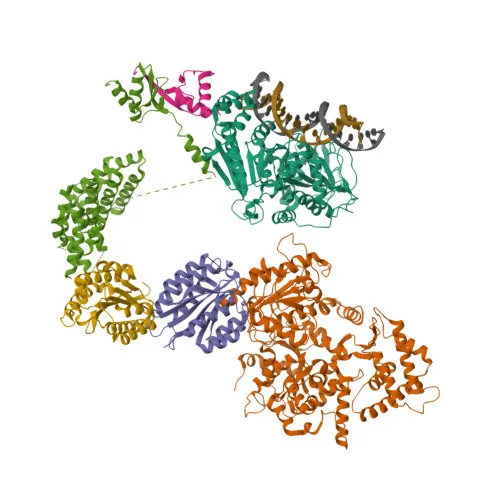
- ERCC3 (XPB) is the 89 kDa subunit of the general transcription and DNA repair factor IIH (TFIIH) core complex, also known as basic transcription factor 2 89 kDa subunit (BTF2 p89).
- It functions as an ATP-dependent 3'-5' DNA helicase/translocase that binds dsDNA and unzips it via translocase activity rather than classical helicase action.
Related references:
PMID:27193682, PMID:33902107 - In transcription initiation, ERCC3 is essential for promoter opening and escape; its ATP-dependent helicase activity induces and propagates a DNA twist to open the promoter.
Related references:
PMID:10024882, PMID:8157004, PMID:27193682, PMID:33902107 - In nucleotide excision repair (NER), ERCC3 helps open DNA around lesions; the ATPase activity (but not helicase activity) is required for initial DNA melting, while XPA retains it at the 5' end of a DNA bubble.
Related references:
PMID:17466626, PMID:2111438, PMID:31253769 - ERCC3 is located exclusively in the nucleus.
- It participates in host-virus interactions and is linked to diseases such as xeroderma pigmentosum, Cockayne syndrome, and trichothiodystrophy when mutated.
- Post-translational modifications include phosphorylation; it is a phosphoprotein.
- The protein has a molecular weight of 89,278 Da and is involved in critical cellular processes including transcription regulation, DNA repair, and DNA damage response.
Experimental Guidance and Technical Tips
- The immunogen used corresponds to amino acids 512–782 of human ERCC3 (NP_000113.1); this region may generate antibodies recognizing both full-length ERCC3 and potential isoforms.
- For Western blotting, consider using nuclear extracts or whole-cell lysates from human, mouse, or rat cell lines; the predicted band size is approximately 89 kDa.
- ELISA can be employed for quantifying ERCC3 levels or screening, but optimize coating and detection conditions for your specific assay format.
- Since ERCC3 is a component of the TFIIH complex, co-immunoprecipitation experiments may require careful optimization to maintain complex integrity.
- When studying DNA repair or transcription, validate the antibody's performance in your relevant sample system under induced or baseline conditions.
CamelBio: Your One-Stop Sourcing Bridge
CamelBio is your one-stop sourcing partner for IVD raw materials, offering validated antibody pairs, optimized monoclonal and polyclonal antibodies, bulk ancillary reagents, and rare target raw-material procurement. For researchers investigating transcription and DNA repair pathways, we provide reliable anti-ERCC3 antibodies and can assist with the sourcing of related components to accelerate your assay development from concept to clinic.
REQUEST A QUOTE
Our professional team will reply to you within one business day. Please feel free to contact us!