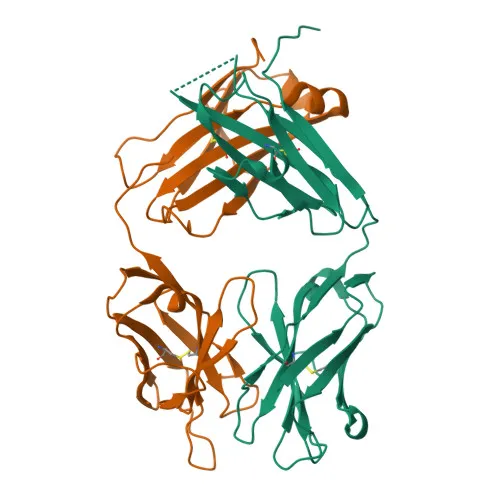
Monoclonal Antibodies
Anti-ErbB4/HER4 Monoclonal Antibody for WB, ELISA - Q15303
Item Number : CM0002270
Price varies based on specs and customizations
- Application
- WB, ELISA
- Cross Reactivity
- Mouse, Rat
- Protein Weight
- 147kDa

Shipping:
Contact us to get shipping details Enjoy On-time Dispatch Guarantee.
Why Choose Us
Easy ordering process, quality products, and dedicated support for your business success.
Core Product Specifications and Parameters
| Parameter | Value |
|---|---|
| Product Name | ErbB4/HER4 Rabbit mAb |
| Remarks/Alias | HER4; ALS19; p180erbB4; ErbB4/HER4 |
| Species | Human |
| Gene ID (Human) | 2066 |
| Gene ID | 2066 |
| Immunogen | Synthetic Peptide - A synthetic peptide corresponding to a sequence within amino acids 1200-1308 of human ErbB4/HER4 (Q15303). |
| Source | Rabbit |
| Category | Monoclonal Antibodies |
| Application | WB, ELISA |
| Cross Reactivity | Mouse, Rat |
| SWISS | Q15303 |
| Protein Weight | 147kDa |
| Shipping | Ice bag |
Biological Background: ErbB4/HER4 Function and Localization
- Receptor tyrosine-protein kinase erbB-4 (ErbB4/HER4) is a transmembrane glycoprotein belonging to the epidermal growth factor receptor (EGFR/ERBB) family.
- Acts as a cell-surface receptor for neuregulins (NRG1-4) and EGF family members (BTC, EREG, HBEGF), regulating heart, central nervous system, and mammary gland development, as well as cell proliferation, differentiation, migration, and apoptosis.
- Alternative splicing generates multiple isoforms (JM-A, JM-B, CYT-1, CYT-2) with distinct signaling properties; CYT-1 isoforms activate the PI3K-AKT pathway, while CYT-2 isoforms lack this capability.
- Proteolytic cleavage of JM-A isoforms releases soluble intracellular domains (4ICD) that can translocate to the nucleus to regulate gene transcription (e.g., milk protein expression during lactation) or to mitochondria to promote apoptosis.
- Subcellularly localized at the cell membrane, but also found in the nucleus and mitochondria depending on isoform and processing.
- Expressed at highest levels in brain, heart, kidney, skeletal muscle, parathyroid, cerebellum, pituitary, spleen, testis, and breast.
- Post-translational modifications include phosphorylation at multiple tyrosine residues, glycosylation, and ubiquitination, which modulate receptor activity and turnover.
- Keywords: Kinase, receptor, transmembrane, glycoprotein, developmental protein, apoptosis, alternative splicing, disease variant (amyotrophic lateral sclerosis).
Experimental Guidance and Technical Tips
- The immunogen sequence (aa 1200-1308) lies within the intracellular domain, suggesting the antibody may recognize full-length and cleaved intracellular fragments (4ICD) of ErbB4.
- In Western blot (WB), a major band near 147 kDa is expected for the full-length receptor; additional bands corresponding to proteolytic fragments or isoforms may be observed.
- For ELISA, use appropriate coating conditions and validate with recombinant ErbB4 or cell lysates expressing the target.
- Cross-reactivity with mouse and rat has been reported; consider verifying in species-specific tissue or cell lines.
- Confirm specificity by using knockdown or knockout controls, as ErbB4 shares homology with other EGFR family members.
CamelBio: Your One-Stop Sourcing Bridge
CamelBio is a dedicated one-stop partner for IVD raw-material sourcing, supporting diagnostic manufacturers, laboratories, and research institutes from concept to clinic. This anti-ErbB4/HER4 monoclonal antibody is an essential tool for cancer, neuroscience, and developmental biology research, and CamelBio can supply validated antibody pairs, bulk ancillary reagents, and assist in sourcing rare-target raw materials to meet your project needs.
REQUEST A QUOTE
Our professional team will reply to you within one business day. Please feel free to contact us!