Polyclonal Antibodies
Anti-EPHB6 Polyclonal Antibody for WB, ELISA - O15197
Item Number : CM0017536
Price varies based on specs and customizations
- Application
- WB, ELISA
- Cross Reactivity
- Human, Mouse
- Protein Weight
- 111kDa

Shipping:
Contact us to get shipping details Enjoy On-time Dispatch Guarantee.
Why Choose Us
Easy ordering process, quality products, and dedicated support for your business success.
Core Product Specifications and Parameters
| Parameter | Value |
|---|---|
| Product Name | EPHB6 Rabbit pAb |
| Remarks/Alias | HEP; EPHB6 |
| Species | Human |
| GeneID (Human) | 2051 |
| GeneID | 2051 |
| Immunogen | Recombinant fusion protein containing a sequence corresponding to amino acids 615-729 of human EPHB6 (NP_001267724.2) |
| Source | Rabbit |
| Category | Polyclonal Antibodies |
| Application | WB, ELISA |
| Cross Reactivity | Human, Mouse |
| SWISS | O15197 |
| Protein Weight | 111kDa |
| Shipping | Ice bag |
Biological Background: EPHB6 Function and Localization
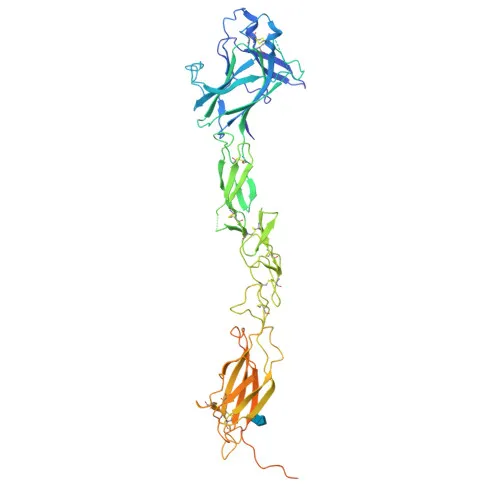
- Ephrin type-B receptor 6 (EPHB6, also known as HEP) is a kinase-defective receptor that belongs to the ephrin receptor subfamily of protein-tyrosine kinases. It lacks catalytic activity due to alterations in its kinase domain.
- EPHB6 binds to ephrin-B1 and ephrin-B2, modulating cell adhesion and migration upon stimulation with ephrin-B2. Related references: PMID:12517763 PMID:15955811
- EPHB6 inhibits JNK activation, T-cell receptor-induced IL-2 secretion, and CD25 expression upon ephrin-B2 stimulation, playing a role in immune cell signaling. Related references: PMID:12517763 PMID:15955811
- Following phosphorylation by EPHB4, EPHB6 can recruit SH2 domain-containing signaling adapters, indicating cross-talk between Eph receptors. Related references: PMID:34431498
- EPHB6 localizes to the cell membrane and is also found secreted, as indicated by its subcellular location annotations.
- Tissue specificity: Highly expressed in brain and pancreas, with weaker expression in heart, placenta, lung, liver, skeletal muscle, and kidney. Notably, expression is observed in non-invasive breast carcinoma cell lines but not in metastatic lesions. Isoform 3 is expressed in glioblastoma and astrocytoma cell lines but not in normal tissues.
- Post-translational modifications: EPHB6 is a glycoprotein and phosphoprotein, with potential ATP-binding (though kinase-defective), and contains transmembrane helix and repeat regions.
Experimental Guidance and Technical Tips
- As a polyclonal antibody, it may recognize multiple epitopes on the EPHB6 protein; include appropriate negative controls (e.g., pre-immune serum or knockout cell lysates) to confirm specificity.
- For Western blot analysis, expect a band around 111 kDa under reducing conditions. Validate band specificity using known positive (e.g., brain or pancreas lysates) and negative samples.
- In ELISA applications, consider using the recombinant immunogen (amino acids 615-729) as a coating antigen or positive control to verify antibody binding.
- Given cross-reactivity with mouse EPHB6, this antibody can be considered for studies in mouse models, but validate in the relevant tissue or cell type before large-scale experiments.
CamelBio: Your One-Stop Sourcing Bridge
CamelBio is a dedicated IVD raw-material partner, providing a seamless bridge between cutting-edge research and diagnostic development. For targets like EPHB6—a kinase-defective ephrin receptor involved in cell adhesion and immune signaling—we offer a reliable supply of validated antibody pairs, optimized polyclonal and monoclonal antibodies, bulk ancillary reagents, and tailored sourcing solutions for rare targets. Whether you need to scale up production or secure consistent lot-to-lot performance, CamelBio supports your journey from concept to clinic with expertise and flexibility.
REQUEST A QUOTE
Our professional team will reply to you within one business day. Please feel free to contact us!