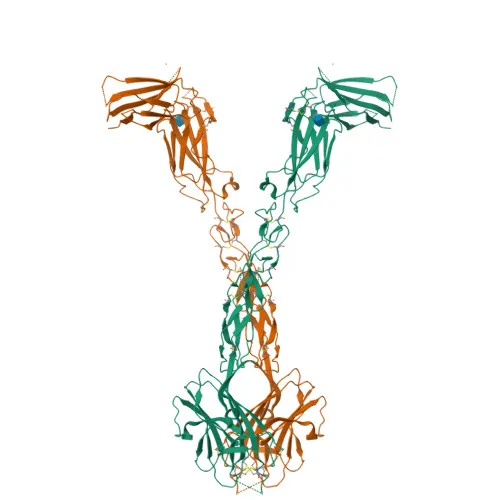
Polyclonal Antibodies
Anti-EPHA2 Rabbit Polyclonal Antibody for WB & ELISA - P29317
Item Number : CM0029602
Price varies based on specs and customizations
- Application
- WB, ELISA
- Cross Reactivity
- Human, Mouse, Rat
- Protein Weight
- 108 kDa

Shipping:
Contact us to get shipping details Enjoy On-time Dispatch Guarantee.
Why Choose Us
Easy ordering process, quality products, and dedicated support for your business success.
Core Product Specifications and Parameters
| Parameter | Value |
|---|---|
| Product Name | EPHA2 Rabbit pAb |
| Remarks/Alias | ECK; CTPA; ARCC2; CTPP1; CTRCT6; EPHA2 |
| Species | Human |
| GeneID | 1969 |
| Immunogen | Recombinant fusion protein containing a sequence corresponding to amino acids 280-530 of human EPHA2 (NP_004422.2) |
| Source | Rabbit |
| Category | Polyclonal Antibodies |
| Application | WB, ELISA |
| Cross Reactivity | Human, Mouse, Rat |
| SWISS | P29317 |
| Protein Weight | 108kDa |
| Shipping | Ice bag |
Biological Background: EPHA2 Function and Localization
- Encoded by the EPHA2 gene, ephrin type-A receptor 2 is a receptor tyrosine kinase that binds promiscuously to membrane-bound ephrin-A family ligands, initiating contact-dependent bidirectional signaling (forward and reverse).
- Upon ligand binding, particularly ephrin-A1 (EFNA1), EPHA2 regulates key cellular processes including migration, integrin-mediated adhesion, proliferation, and differentiation, partly through inhibition of the ERK1/ERK2 signaling pathway and modulation of desmoglein-1 (DSG1).
- Involved in multiple developmental processes such as angiogenesis, early hindbrain patterning, epithelial proliferation, and branching morphogenesis during mammary gland development; interaction with ephrin-A5 (EFNA5) influences lens fiber cell shape and transparency.
- Plays a role in bone remodeling via ephrin-A2 (EFNA2)-mediated regulation of osteoclastogenesis and osteoblastogenesis.
- Acts as a host cell receptor for hepatitis C virus (HCV) entry in hepatocytes by facilitating the formation of CD81-CLDN1 receptor complexes and enhancing membrane fusion, and also serves as a receptor for human cytomegalovirus (HCMV) entry in glioblastoma cells.
- Localizes to the cell membrane, particularly at membrane ruffles and lamellipodia, and at focal adhesions, consistent with its role in cell adhesion and migration.
- Expressed predominantly in epithelial cell-rich tissues such as skin, intestine, lung, and ovary, and in brain and glioma tissues; belongs to the protein kinase superfamily with features like ATP-binding, phosphorylation, and alternative splicing.
Experimental Guidance and Technical Tips
- The immunogen corresponds to the extracellular region (amino acids 280–530) of human EPHA2, which includes fibronectin type-III domains; this design typically yields antibodies capable of recognizing the native receptor on cell surfaces.
- For Western blotting, the predicted molecular weight is approximately 108 kDa; use appropriate molecular weight markers and consider loading 20–50 µg of lysate from EPHA2-positive cell lines (e.g., HeLa, A431, MCF-7) as a positive control.
- This polyclonal antibody cross-reacts with mouse and rat EPHA2 according to the supplier, but sequence variations across species may require optimization of blocking and incubation conditions; validate in the relevant sample system.
- For ELISA applications, the antibody can be used for direct antigen detection or as part of a sandwich pair; consider testing serial dilutions to determine the optimal working concentration.
CamelBio: Your One-Stop Sourcing Bridge
CamelBio provides diagnostic manufacturers, labs, and research institutes with one-stop access to IVD raw materials, technical services, and consulting—covering every stage from concept to clinic. Our portfolio includes validated antibody pairs, optimized monoclonal/polyclonal antibodies, and bulk ancillary reagents for assays targeting receptor tyrosine kinases like EPHA2, which are implicated in cancer, angiogenesis, and viral infections. We also specialize in sourcing rare-target raw materials, ensuring your projects stay on track from research to diagnostic development.
REQUEST A QUOTE
Our professional team will reply to you within one business day. Please feel free to contact us!