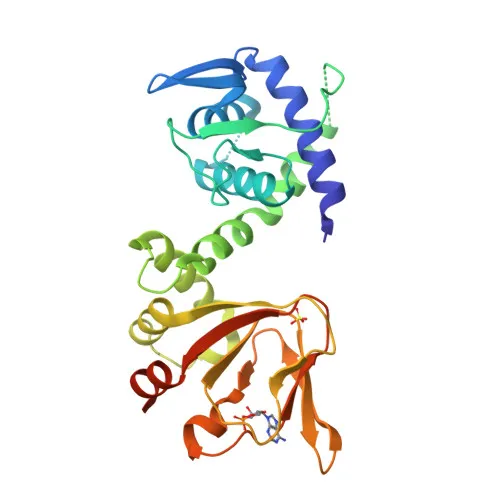
Polyclonal Antibodies
Anti-Epac1/RAPGEF3 Polyclonal Antibody for WB, ELISA - O95398
Item Number : CM0019966
Price varies based on specs and customizations
- Application
- WB, ELISA
- Cross Reactivity
- Human, Mouse
- Protein Weight
- 104kDa

Shipping:
Contact us to get shipping details Enjoy On-time Dispatch Guarantee.
Why Choose Us
Easy ordering process, quality products, and dedicated support for your business success.
Core Product Specifications and Parameters
| Parameter | Value |
|---|---|
| Product Name | Epac1/RAPGEF3 Rabbit pAb |
| Remarks/Alias | EPAC; EPAC1; bcm910; HSU79275; CAMP-GEFI; Epac1/RAPGEF3 |
| Species | Human |
| Gene ID (Human) | 10411 |
| Gene ID | 10411 |
| Immunogen | Recombinant protein|Recombinant fusion protein containing a sequence corresponding to amino acids 1-200 of human Epac1/Epac1/RAPGEF3 (NP_001092002.1). |
| Source | Rabbit |
| Category | Polyclonal Antibodies |
| Application | WB, ELISA |
| Cross Reactivity | Human, Mouse |
| SWISS | O95398 |
| Protein Weight | 104kDa |
| Shipping | Ice bag |
Biological Background: Epac1/RAPGEF3 Function and Localization
- Epac1, encoded by RAPGEF3, is a cAMP-activated guanine nucleotide exchange factor for the small GTPases RAP1A and RAP2A.
- It functions as a key mediator of cAMP signaling, regulating processes such as angiogenesis, endothelial barrier function, and actin cytoskeleton remodeling.
- Epac1 assembles a signaling complex with PDE3B and PIK3R6 that activates the PI3K gamma complex, contributing to angiogenic responses.
- The protein plays a critical role in the dynamic control of endothelial barrier integrity via a Rho-independent pathway, influencing cell-cell junction actin organization.
- Epac1 is localized to the endomembrane system and is widely expressed, with highest levels in adult kidney, heart, thyroid, brain, and fetal kidney.
- Post-translational modifications include phosphorylation; the protein contains cAMP-binding and nucleotide-binding domains, and alternative splicing generates multiple isoforms.
- Keywords: Guanine-nucleotide releasing factor, cAMP-binding, Phosphoprotein, Membrane, Angiogenesis.
Experimental Guidance and Technical Tips
- The immunogen corresponds to the N-terminal region (aa 1–200) of human Epac1, which includes part of the regulatory cAMP-binding domain. For functional studies, consider that antibody binding may compete with cAMP or protein interactions.
- In Western blotting, endogenous Epac1 is expected at approximately 104 kDa. Additional lower bands may represent splice variants or proteolytic fragments; validate in the relevant model system.
- Confirm cross-reactivity in mouse samples, as indicated, and optimize antibody dilution and blocking conditions based on endogenous expression levels in your target tissue or cell line.
CamelBio: Your One-Stop Sourcing Bridge
CamelBio provides diagnostic manufacturers, labs, and research institutes with one-stop access to IVD raw materials, technical services, and consulting—covering every stage from concept to clinic. This anti-Epac1/RAPGEF3 polyclonal antibody exemplifies our portfolio of cell-signaling and cardiovascular research reagents. We offer validated antibody pairs, bulk ancillary reagents, and tailored sourcing for rare targets, supporting seamless assay development and scale-up.
REQUEST A QUOTE
Our professional team will reply to you within one business day. Please feel free to contact us!