Polyclonal Antibodies
Anti-EP300 Polyclonal Antibody for IHC-P, ELISA - Q09472
Item Number : CM0020723
Price varies based on specs and customizations
- Application
- IHC-P, ELISA
- Cross Reactivity
- Mouse, Rat
- Protein Weight
- 264kDa

Shipping:
Contact us to get shipping details Enjoy On-time Dispatch Guarantee.
Why Choose Us
Easy ordering process, quality products, and dedicated support for your business success.
Core Product Specifications and Parameters
| Parameter | Value |
|---|---|
| Product Name | EP300 Rabbit pAb |
| Remarks/Alias | p300; KAT3B; MKHK2; RSTS2; EP300 |
| Species | Human |
| Gene ID (Human) | 2033 |
| Gene ID | 2033 |
| Immunogen | Recombinant protein corresponding to a sequence within amino acids 940-1030 of human EP300 (NP_001420.2) |
| Source | Rabbit |
| Category | Polyclonal Antibodies |
| Application | IHC-P, ELISA |
| Cross Reactivity | Mouse, Rat |
| SWISS | Q09472 |
| Protein Weight | 264kDa |
| Shipping | Ice bag |
Biological Background: Histone acetyltransferase p300 Function and Localization
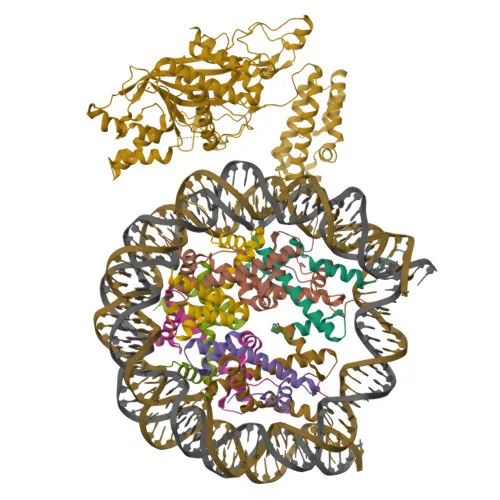
- Histone acetyltransferase p300 (also known as E1A-associated protein p300, KAT3B) is a large ~264 kDa transcriptional coactivator encoded by the EP300 gene. It belongs to the p300/CBP family of acetyltransferases that regulate chromatin structure and gene expression.
- p300 functions as a histone acetyltransferase, acetylating all four core histones in nucleosomes (H2A, H2B, H3, H4). This histone acetylation serves as an epigenetic tag for transcriptional activation, and it can also generate dual acetyl-methyl marks (Kacme) on histone H3 and H4, associated with active chromatin. Related references: PMID:23415232 PMID:23934153 PMID:8945521 PMID:21131905 PMID:23911289 PMID:37731000
- Beyond histones, p300 acetylates numerous non-histone proteins including transcription factors (e.g., p53/TP53, ALX1, FOXO1, STAT3) and other regulators (e.g., HDAC1, SIRT2), thereby modulating their stability, DNA binding, or enzymatic activity. It also participates in DNA damage response by acetylating histone H1 and PCNA. Related references: PMID:11511361 PMID:15448695 PMID:15653507 PMID:12929931 PMID:18722353
- p300 exhibits versatile acyltransferase activity, utilizing various acyl-CoA substrates to catalyze histone crotonylation, butyrylation, 2-hydroxyisobutyrylation, lactylation, propionylation, and isonicotinylation, linking metabolism to chromatin state. Related references: PMID:17267393 PMID:25818647 PMID:29775581 PMID:31645732
- Subcellular localization includes the nucleus, cytoplasm, and chromosomes. Nuclear p300 is recruited to promoters by specific transcription factors and is implicated in circadian rhythm regulation through interactions with CLOCK/BMAL1. Related references: PMID:14645221
- p300 is a substrate for various post-translational modifications, including acetylation, phosphorylation, methylation, citrullination, and ubiquitination, which fine-tune its activity and interactions. Its bromodomain recognizes acetylated lysines, and the protein contains zinc finger motifs.
- In viral pathogenesis, p300 is hijacked by HIV-1 Tat protein to facilitate proviral transcription, and it interacts with adenovirus E1A, linking it to cellular transformation.
Experimental Guidance and Technical Tips
- The immunogen is a recombinant protein spanning amino acids 940-1030, a region that may cover part of the catalytic HAT domain or other functional regions; this design may be suitable for detecting full-length p300 and possibly distinguishing it from highly homologous CBP. Verify specificity using knockout or knockdown models.
- Recommended applications based on the supplier are IHC-P and ELISA. For immunohistochemistry, consider antigen retrieval conditions and optimize antibody concentration for nuclear and cytoplasmic staining patterns. For ELISA, validate with recombinant p300 protein as standard.
- Due to its large size (264 kDa), use appropriate gel electrophoresis (e.g., 6-8% SDS-PAGE) and prolonged transfer times for western blot if attempted.
- Cross-reacts with mouse and rat p300 according to supplier data, enabling use in rodent models. However, confirm reactivity with your specific tissue/cell line.
CamelBio: Your One-Stop Sourcing Bridge
CamelBio specializes in providing diagnostic manufacturers and research laboratories with a comprehensive range of IVD raw materials. This anti-EP300 polyclonal antibody supports epigenetics and transcription regulation research, and we can also supply matched antibody pairs, recombinant antigens, and ancillary reagents to streamline your assay development. Whether you need bulk quantities or custom modifications, CamelBio bridges the gap from concept to clinic with efficient sourcing and technical expertise.
REQUEST A QUOTE
Our professional team will reply to you within one business day. Please feel free to contact us!