Polyclonal Antibodies
Anti-ENO3 Rabbit Polyclonal Antibody for WB and ELISA - P13929
Item Number : CM0031014
Price varies based on specs and customizations
- Application
- WB, ELISA
- Cross Reactivity
- Human, Mouse, Rat
- Protein Weight
- 47kDa

Shipping:
Contact us to get shipping details Enjoy On-time Dispatch Guarantee.
Why Choose Us
Easy ordering process, quality products, and dedicated support for your business success.
Core Product Specifications and Parameters
| Parameter | Value |
|---|---|
| Product Name | ENO3 Rabbit pAb |
| Remarks/Alias | MSE; GSD13; ENO3 |
| Species | Human |
| GeneID (Human) | 2027 |
| GeneID | 2027 |
| Immunogen | Recombinant fusion protein containing a sequence corresponding to amino acids 1-190 of human ENO3 (NP_001967.3) |
| Source | Rabbit |
| Category | Polyclonal Antibodies |
| Application | WB, ELISA |
| Cross Reactivity | Human, Mouse, Rat |
| SWISS | P13929 |
| Protein Weight | 47kDa |
| Shipping | Ice bag |
Biological Background: Beta-enolase Function and Localization
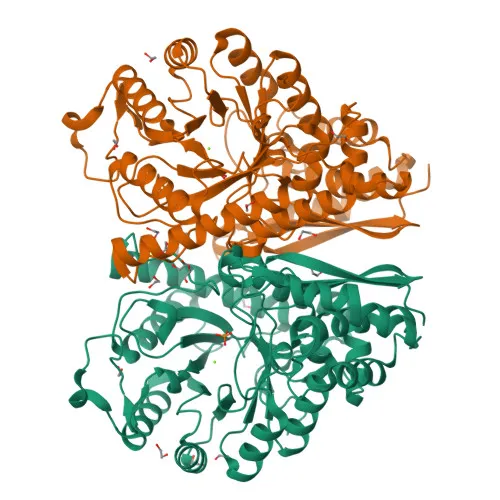
- Beta-enolase (ENO3) is a muscle-specific enolase isozyme that catalyzes the interconversion of 2-phosphoglycerate and phosphoenolpyruvate in glycolysis and gluconeogenesis, functioning as a homodimer or heterodimer with alpha-enolase.
- It belongs to the enolase family, which includes alpha-enolase (ENO1), gamma-enolase (ENO2), and beta-enolase (ENO3), with tissue-specific expression patterns.
- ENO3 is predominantly expressed in skeletal and cardiac muscle, where it is critical for energy metabolism, and it also appears to play a role in striated muscle development and regeneration.
- The protein localizes to the cytoplasm, consistent with its role in glycolysis.
- Post-translational modifications include acetylation and phosphorylation, and it binds magnesium ions as a cofactor.
- Mutations in the ENO3 gene are associated with glycogen storage disease XIII (GSD13), a metabolic myopathy.
- Alternative splicing produces multiple transcript variants encoding different isoforms.
- The alpha/beta heterodimer and beta/beta homodimer are found in striated muscle, while the alpha/gamma and gamma/gamma dimers are neuronal.
Experimental Guidance and Technical Tips
- The immunogen spans the N-terminal region (1-190) of human ENO3, which is highly conserved across human, mouse, and rat; therefore, cross-reactivity is expected, but sequence alignment should be verified for other species.
- For Western blotting, the predicted molecular weight is approximately 47 kDa; however, actual migration may vary depending on gel conditions and post-translational modifications.
- Consider validating the antibody's specificity using appropriate positive control lysates from skeletal muscle tissues or cell lines expressing ENO3.
- For ELISA applications, optimize the dilution range experimentally and use recombinant ENO3 as a standard for quantification.
- Since beta-enolase can form homodimers or heterodimers with alpha-enolase, be aware of potential detection of complexed forms under non-denaturing conditions.
CamelBio: Your One-Stop Sourcing Bridge
CamelBio provides diagnostic manufacturers and research labs with a one-stop sourcing platform for IVD raw materials, including validated antibody pairs, optimized polyclonal and monoclonal antibodies, and bulk ancillary reagents. For researchers focusing on energy metabolism and muscle biology, CamelBio offers reliable access to ENO3 antibodies and related reagents to support assay development. With a commitment to streamlining procurement from concept to clinic, CamelBio ensures consistent supply and technical support for your IVD needs.
REQUEST A QUOTE
Our professional team will reply to you within one business day. Please feel free to contact us!