Polyclonal Antibodies
Anti-ELP3 (KAT9) Rabbit Polyclonal Antibody for WB, IHC-P, ELISA - Q9H9T3
Item Number : CM0026225
Price varies based on specs and customizations
- Application
- WB, IHC-P, ELISA
- Cross Reactivity
- Human, Mouse, Rat
- Protein Weight
- 62kDa

Shipping:
Contact us to get shipping details Enjoy On-time Dispatch Guarantee.
Why Choose Us
Easy ordering process, quality products, and dedicated support for your business success.
Core Product Specifications and Parameters
| Parameter | Value |
|---|---|
| Product Name | KAT9/Elp3 Rabbit pAb |
| Remarks/Alias | KAT9; KAT9/Elp3 |
| Species | Human |
| Gene ID (Human) | 55140 |
| Gene ID | 55140 |
| Immunogen | Recombinant protein |
| Source | Rabbit |
| Category | Polyclonal Antibodies |
| Application | WB, IHC-P, ELISA |
| Cross Reactivity | Human, Mouse, Rat |
| SWISS | Q9H9T3 |
| Protein Weight | 62kDa |
| Shipping | Ice bag |
Biological Background: ELP3 (KAT9) Function and Localization
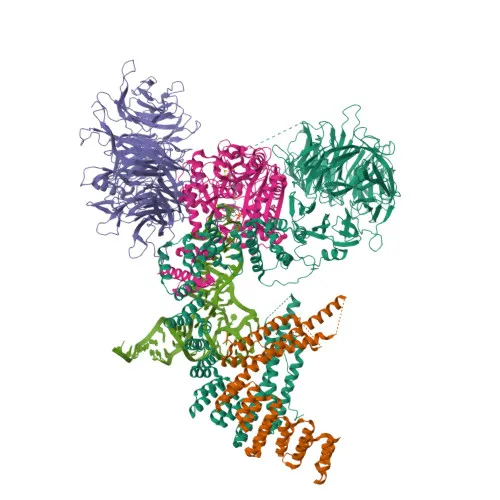
- ELP3 serves as the catalytic tRNA acetyltransferase within the elongator complex, mediating the formation of carboxymethyluridine at position 34 in tRNAs, which is critical for efficient translation. Related references: PMID:29415125
- Although ELP3 has been suggested as a protein lysine acetyltransferase, recent evidence indicates its primary in vivo function is tRNA modification rather than protein acetylation; it is not a major acetyltransferase of tubulin. Related references: PMID:29415125, PMID:22153374
- ELP3 plays a role in neurogenesis by regulating migration and branching of projection neurons in the developing cerebral cortex, a process dependent on alpha-tubulin acetylation. Related references: PMID:19185337
- Subcellularly, ELP3 localizes to both the cytoplasm and nucleus, consistent with its roles in tRNA processing and potential transcription-related functions.
- Tissue expression is notably observed in the cerebellum and spinal motor neurons, aligning with its involvement in neuromuscular and neurodegenerative pathways.
- The protein is subject to phosphorylation and contains a 4Fe-4S cluster and S-adenosyl-L-methionine binding domain, characteristic of a radical SAM enzyme, underscoring its acetyltransferase mechanism.
- Alternative splicing generates multiple isoforms, potentially modulating its activity in different cellular contexts.
- Keywords associated with ELP3 include amyotrophic lateral sclerosis, neurodegeneration, and tRNA processing, highlighting its clinical relevance.
Experimental Guidance and Technical Tips
- The immunogen consists of a recombinant protein corresponding to amino acids 1–200 of human ELP3, suggesting reactivity to epitopes within the N-terminal domain. For Western blot, a predominant band at ~62 kDa is expected; use standard protocols with appropriate secondary antibodies.
- In IHC-P, both nuclear and cytoplasmic staining may be observed; consider optimizing antigen retrieval and blocking steps for your specific tissue type.
- ELISA applications may employ this antibody for capture or detection of ELP3 in biological samples; validate performance with appropriate controls and sample matrices.
- Cross-reactivity with mouse and rat ELP3 indicates utility in rodent models, but independent validation in your specific experimental system is advisable.
CamelBio: Your One-Stop Sourcing Bridge
CamelBio serves as a one-stop IVD raw material sourcing partner for diagnostic developers and research laboratories. This anti-ELP3 antibody is part of our extensive catalog of validated polyclonal antibodies, supporting investigations into tRNA modification disorders, neurodegeneration, and developmental neurobiology. We also supply optimized antibody pairs, bulk ancillary reagents, and offer custom sourcing for rare targets, streamlining your workflow from concept to clinical application.
Product Datasheet
Anti-ELP3 (KAT9) Rabbit Polyclonal Antibody for WB, IHC-P, ELISA - Q9H9T3
REQUEST A QUOTE
Our professional team will reply to you within one business day. Please feel free to contact us!