Polyclonal Antibodies
Anti-ELP2 Rabbit Polyclonal Antibody for WB, ELISA - Q6IA86
Item Number : CM0016562
Price varies based on specs and customizations
- Application
- WB, ELISA
- Cross Reactivity
- Mouse, Rat
- Protein Weight
- 93kDa

Shipping:
Contact us to get shipping details Enjoy On-time Dispatch Guarantee.
Why Choose Us
Easy ordering process, quality products, and dedicated support for your business success.
Core Product Specifications and Parameters
| Parameter | Value |
|---|---|
| Product Name | ELP2 Rabbit pAb |
| Remarks/Alias | StIP; MRT58; SHINC-2; STATIP1; ELP2 |
| Species | Human |
| Gene ID | 55250 |
| Immunogen | Recombinant fusion protein containing a sequence corresponding to amino acids 300-600 of human ELP2 (NP_001229808.1) |
| Source | Rabbit |
| Category | Polyclonal Antibodies |
| Application | WB, ELISA |
| Cross Reactivity | Mouse, Rat |
| SWISS | Q6IA86 |
| Protein Weight | 93kDa |
| Shipping | Ice bag |
Biological Background: ELP2 Function and Localization
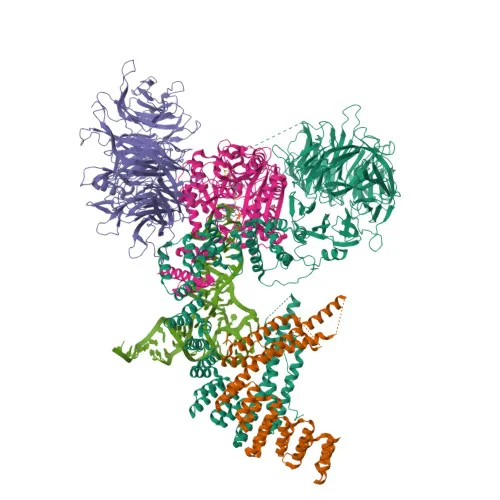
- ELP2 (Elongator complex protein 2), also known as STAT3-interacting protein 1 (StIP1) or SHINC-2, is a key component of the elongator complex.
- It is essential for multiple tRNA modifications, including mcm5U, mcm5s2U, and ncm5U, by catalyzing carboxymethyluridine formation at wobble position 34. Related references: PMID:29332244
- The elongator complex regulates transcriptional elongation and cytoskeleton organization, with ELP2 primarily dedicated to tRNA processing.
- ELP2 contains WD repeat domains that mediate protein-protein interactions, critical for assembly of the multi-subunit elongator complex.
- It localizes to both the cytoplasm and nucleus, reflecting its roles in tRNA modification and potentially transcription.
- Mutations in the ELP2 gene are linked to autosomal recessive intellectual disability (MRT58), underscoring its neurological relevance.
- Alternative splicing produces multiple isoforms, adding functional diversity.
- Identified through comprehensive proteomics, ELP2 is a member of the human reference proteome.
Experimental Guidance and Technical Tips
- For Western blot, consider loading 20–50 µg total protein lysate and confirm specificity using knockdown or knockout control samples.
- Validate the expected band size around 93 kDa; slight migration differences may occur due to isoform or post-translational modifications.
- In ELISA, titrate both coating antigen and antibody to optimize signal-to-noise ratio; include blank and negative control wells.
- Polyclonal antibodies exhibit lot-to-lot variation; qualify each batch with consistent positive and negative controls.
- Perform blocking and incubation steps with buffers empirically determined for your specific matrix and detection system.
- Given cross-reactivity with mouse and rat, verify sequence homology across species if used in non-human applications.
CamelBio: Your One-Stop Sourcing Bridge
CamelBio offers a comprehensive portfolio of IVD raw materials, including validated antibodies, antigen pairs, and ancillary reagents, accelerating your development from concept to clinic. For elongator complex and tRNA modification research, we provide bulk anti-ELP2 polyclonal antibodies, custom immunogen services, and access to related targets, ensuring reliable supply for diagnostic and life science applications.
REQUEST A QUOTE
Our professional team will reply to you within one business day. Please feel free to contact us!