Monoclonal Antibodies
Anti-eIF4EBP1 Rabbit Monoclonal Antibody for WB, IF/ICC, ELISA - Q13541
Item Number : CM0007479
Price varies based on specs and customizations
- Application
- WB, IF/ICC, ELISA
- Cross Reactivity
- Human
- Protein Weight
- 13kDa

Shipping:
Contact us to get shipping details Enjoy On-time Dispatch Guarantee.
Why Choose Us
Easy ordering process, quality products, and dedicated support for your business success.
Core Product Specifications and Parameters
| Parameter | Value |
|---|---|
| Product Name | [KD Validated] eIF4EBP1 Rabbit mAb |
| Remarks/Alias | BP-1; 4EBP1; 4E-BP1; PHAS-I; [KD Validated] eIF4EBP1 |
| Species | Human |
| GeneID (Human) | 1978 |
| GeneID | 1978 |
| Immunogen | Synthetic Peptide |
| Source | Rabbit |
| Category | Monoclonal Antibodies |
| Application | WB, IF/ICC, ELISA |
| Cross Reactivity | Human |
| SWISS | Q13541 |
| Protein Weight | 13kDa |
| Shipping | Ice bag |
Biological Background: eIF4EBP1 Function and Localization
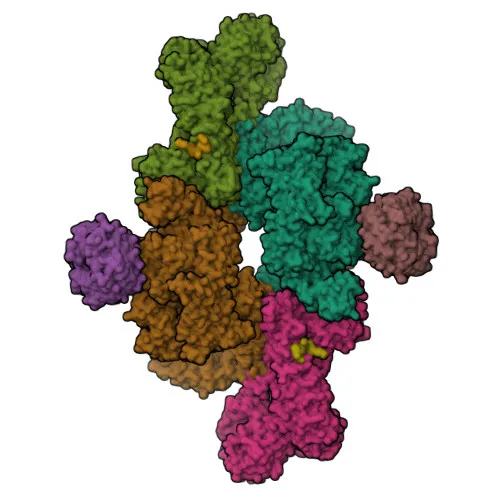
- eIF4EBP1 is a repressor of translation initiation that competes with eIF4G1/eIF4G3 for binding to the mRNA cap-binding protein eIF4E. Hypophosphorylated eIF4EBP1 binds tightly to eIF4E, preventing its incorporation into the eIF4F complex and inhibiting cap-dependent translation.
- Hyperphosphorylation of eIF4EBP1 in response to stimuli such as growth factors and hormones leads to its dissociation from eIF4E, allowing eIF4F assembly and translation initiation. This regulation involves the MAP kinase and mTORC1 signaling pathways.
- Also known as PHAS-I (phosphorylated heat- and acid-stable protein regulated by insulin 1), eIF4EBP1 is a key mediator linking extracellular signals to protein synthesis control.
- The protein is localized in both the cytoplasm and the nucleus, consistent with its role in regulating translation and possibly other nuclear functions.
- eIF4EBP1 is subject to multiple post-translational modifications including phosphorylation, acetylation, and ubiquitination, which fine-tune its activity and stability.
- As a member of the eIF4E-binding protein family, eIF4EBP1 shares structural and functional similarities with other 4E-BPs, but exhibits distinct regulatory features.
Experimental Guidance and Technical Tips
- The immunogen corresponds to the N-terminal region (aa 1-100) of human eIF4EBP1; thus, the antibody may preferentially recognize full-length and N-terminal fragments. Consider antigen retrieval or denaturing conditions for optimal exposure if targeting internal epitopes in fixed samples.
- For Western blot, eIF4EBP1 has a predicted molecular weight of ~13 kDa, but post-translational modifications (e.g., phosphorylation) may result in multiple bands or shifts. Validate in the relevant sample system and include phosphatase inhibitors if phosphorylation status is critical.
- For immunofluorescence/ICC, perform appropriate fixation and permeabilization to access cytoplasmic and nuclear pools. Include controls to confirm specificity.
- For ELISA, pair with a suitable capture or detection antibody to build a sandwich assay, considering the linear epitope region recognized.
CamelBio: Your One-Stop Sourcing Bridge
CamelBio provides diagnostic manufacturers, labs, and research institutes with one-stop access to IVD raw materials, technical services, and consulting—covering every stage from concept to clinic. For researchers studying translational control and mTOR signaling, we offer validated anti-eIF4EBP1 antibody pairs, optimized monoclonal and polyclonal antibodies, bulk ancillary reagents, and rare target raw-material sourcing. Let CamelBio bridge your eIF4EBP1 project needs with reliable supply solutions.
Product Datasheet
Anti-eIF4EBP1 Rabbit Monoclonal Antibody for WB, IF/ICC, ELISA - Q13541
REQUEST A QUOTE
Our professional team will reply to you within one business day. Please feel free to contact us!