Polyclonal Antibodies
Anti-EIF4E2 Polyclonal Antibody for WB - O60573
Item Number : CM0024764
Price varies based on specs and customizations
- Application
- WB, IHC-P, IF/ICC, ELISA
- Cross Reactivity
- Human, Mouse, Rat
- Protein Weight
- 28kDa

Shipping:
Contact us to get shipping details Enjoy On-time Dispatch Guarantee.
Why Choose Us
Easy ordering process, quality products, and dedicated support for your business success.
Core Product Specifications and Parameters
| Parameter | Value |
|---|---|
| Product Name | EIF4E2 Rabbit pAb |
| Remarks/Alias | 4EHP, IF4e, 4E-LP, h4EHP, EIF4EL3, EIF4E2 |
| Species | Human |
| GeneID (Human) | 9470 |
| GeneID | 9470 |
| Immunogen | Recombinant fusion protein containing amino acids 1-240 of human EIF4E2 (NP_004837.1) |
| Source | Rabbit |
| Category | Polyclonal Antibodies |
| Application | WB, IHC-P, IF/ICC, ELISA |
| Cross Reactivity | Human, Mouse, Rat |
| SWISS | O60573 |
| Protein Weight | 28kDa |
| Shipping | Ice bag |
Biological Background: EIF4E2 Function and Localization
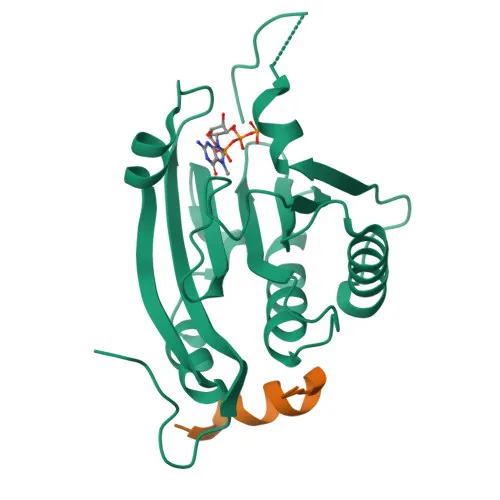
- Eukaryotic translation initiation factor 4E type 2 (EIF4E2), also known as 4EHP, h4EHP, 4E-LP, and EIF4EL3, is a member of the eIF4E family that acts as a translational repressor rather than an activator.
- Recognizes and binds the 7-methylguanosine cap of mRNA during initiation, competing with EIF4E and blocking assembly of the eIF4F complex, thereby repressing translation. Related references: PMID:17368478, PMID:22751931, PMID:25624349
- In P-bodies, EIF4E2 is part of a complex that promotes miRNA-mediated translational repression, playing a key role in post-transcriptional gene silencing. Related references: PMID:28487484
- Mediates MIR34A-induced translational silencing to control IFNB1 production, serving as a negative feedback mechanism in virus-induced host responses. Related references: PMID:28487484, PMID:33581076
- Together with GIGYF2, forms the 4EHP-GYF2 complex that functions in ribosome-associated quality control (RQC) by sequestering mRNA caps and reducing translational load on defective messages; operates downstream of ZNF598. Related references: PMID:22751931, PMID:35878012, PMID:32726578
- During SARS-CoV-2 infection, viral non-structural protein 2 (nsp2) enhances GIGYF2-EIF4E2 interaction, repressing translation of antiviral genes such as IFNB1.
- Subcellular localization is primarily cytoplasmic, with enrichment in processing bodies (P-bodies).
- Post-translational modifications include acetylation, phosphorylation, and isopeptide bond formation; alternative splicing generates multiple isoforms.
Experimental Guidance and Technical Tips
- The immunogen covers the N-terminal 1–240 amino acids, including the cap-binding domain; therefore, the antibody may detect multiple splice isoforms or variants. Validate in the relevant sample system.
- For Western blot, a band around 28 kDa is predicted, but migration may be altered by post-translational modifications. Use appropriate positive and negative controls.
- For immunohistochemistry (IHC-P), heat-induced antigen retrieval and careful titration are recommended to optimize specific staining.
- In immunofluorescence (IF/ICC), include controls to confirm cytoplasmic and P-body localization.
- For ELISA, pairing with a capture antibody may be considered for quantitative assays.
CamelBio: Your One-Stop Sourcing Bridge
CamelBio provides diagnostic manufacturers, laboratories, and research institutions with a one-stop supply chain for IVD raw materials, including validated recombinant antibodies, optimized monoclonal and polyclonal antibodies, and bulk ancillary reagents. This anti-EIF4E2 polyclonal antibody, targeting a key translational repressor, supports advanced research in miRNA biology, antiviral innate immunity, and mRNA quality control. Our technical services and consulting further assist in seamlessly transitioning from early-stage concept to clinical application.
REQUEST A QUOTE
Our professional team will reply to you within one business day. Please feel free to contact us!