Polyclonal Antibodies
Anti-EIF3J Polyclonal Antibody for WB, IF/ICC, ELISA - O75822
Item Number : CM0030390
Price varies based on specs and customizations
- Application
- WB, IF/ICC, ELISA
- Cross Reactivity
- Human, Mouse, Rat
- Protein Weight
- 29kDa

Shipping:
Contact us to get shipping details Enjoy On-time Dispatch Guarantee.
Why Choose Us
Easy ordering process, quality products, and dedicated support for your business success.
Core Product Specifications and Parameters
| Parameter | Value |
|---|---|
| Product Name | EIF3J Rabbit pAb |
| Remarks/Alias | EIF3S1; eIF3-p35; eIF3-alpha; EIF3J |
| Species | Human |
| Gene ID (Human) | 8669 |
| Gene ID | 8669 |
| Immunogen | Recombinant protein corresponding to amino acids 1-258 of human EIF3J (NP_003749.2) |
| Source | Rabbit |
| Category | Polyclonal Antibodies |
| Application | WB, IF/ICC, ELISA |
| Cross Reactivity | Human, Mouse, Rat |
| SWISS | O75822 |
| Protein Weight | 29kDa |
| Shipping | Ice bag |
Biological Background: EIF3J Function and Localization
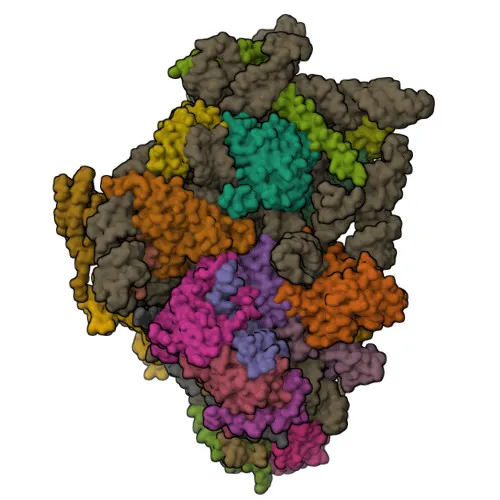
- Protein identity: EIF3J (Eukaryotic translation initiation factor 3 subunit J), also known as EIF3S1, eIF3-p35, eIF3-alpha, is encoded by the EIF3J gene (Gene ID 8669). It is a core subunit of the about 800 kDa eIF3 complex.
- Core translation initiation function: EIF3J is a component of the eIF-3 complex essential for eukaryotic protein synthesis. eIF-3 associates with the 40S ribosomal subunit and facilitates recruitment of eIF-1, eIF-1A, eIF-2:GTP:methionyl-tRNAi and eIF-5 to form the 43S pre-initiation complex (43S PIC). It also stimulates mRNA recruitment to the 43S PIC and scanning for AUG start codon recognition. Related references: PMID:25849773, PMID:27462815
- Ribosome recycling: The eIF-3 complex is required for disassembly and recycling of post-termination ribosomal complexes, preventing premature 40S–60S subunit joining prior to initiation.
- Regulatory role in translation: The eIF-3 complex selectively targets and controls translation of a subset of mRNAs involved in cell proliferation, differentiation, and apoptosis, using different RNA stem-loop binding modes to exert either translational activation or repression. Related references: PMID:25849773
- Subcellular localization: Predominantly cytoplasmic, consistent with its role in translation initiation on cytoplasmic ribosomes.
- Post-translational modifications: EIF3J can be acetylated, phosphorylated, modified by isopeptide bond formation (ubiquitin-like), and ubiquitinated, as evidenced by proteomics studies. These modifications may regulate complex assembly and activity.
- Alternative splicing: Multiple transcript variants exist for EIF3J, potentially yielding isoforms with distinct functions or expression patterns.
Experimental Guidance and Technical Tips
- Immunogen design: The antibody was raised against a recombinant protein covering amino acids 1–258 of human EIF3J. This N-terminal region is likely conserved across species, supporting the observed cross-reactivity with mouse and rat. It should detect full-length endogenous EIF3J in relevant species.
- Western blot (WB): Use whole cell lysates from human, mouse, or rat samples. The predicted molecular weight is about 29 kDa. Validate specificity by including knockdown or overexpression controls, and optimize loading amounts to avoid saturation.
- Immunofluorescence/ICC: EIF3J localizes to the cytoplasm; permeabilize cells with a mild detergent (e.g., 0.1% Triton X-100) and block with serum appropriate for the host species. Test antibody dilutions starting at 1:50–1:200.
- ELISA: Confirm binding using recombinant EIF3J protein or peptide corresponding to the immunogen sequence. Optimize coating concentration (typically 1–10 µg/mL) and detection conditions.
- Sample handling: Ship on ice bags; upon arrival, store aliquots at -20°C to -80°C. Avoid repeated freeze-thaw cycles.
CamelBio: Your One-Stop Sourcing Bridge
CamelBio provides diagnostic manufacturers, labs, and research institutes with one-stop access to IVD raw materials, technical services, and consulting—covering every stage from concept to clinic. For EIF3J and other translation initiation factors, CamelBio can source validated antibody pairs, optimized polyclonal antibodies, bulk ancillary reagents, and rare-target raw materials. Leverage our supply network to accelerate your assay development and protein synthesis research workflows.
REQUEST A QUOTE
Our professional team will reply to you within one business day. Please feel free to contact us!