Monoclonal Antibodies
Anti-eIF3B Rabbit Monoclonal Antibody for WB, IF/ICC, ELISA - P55884
Item Number : CM0012480
Price varies based on specs and customizations
- Application
- WB, IF/ICC, ELISA
- Cross Reactivity
- Human, Mouse, Rat
- Protein Weight
- 93kDa

Shipping:
Contact us to get shipping details Enjoy On-time Dispatch Guarantee.
Why Choose Us
Easy ordering process, quality products, and dedicated support for your business success.
Core Product Specifications and Parameters
| Parameter | Value |
|---|---|
| Product Name | eIF3B Rabbit mAb |
| Remarks/Alias | PRT1; EIF3S9; EIF3-ETA; EIF3-P110; EIF3-P116; eIF3B |
| Species | Human |
| GeneID (Human) | 8662 |
| GeneID | 8662 |
| Immunogen | Recombinant fusion protein containing a sequence corresponding to amino acids 101-200 of human eIF3B (NP_003742.2). |
| Source | Rabbit |
| Category | Monoclonal Antibodies |
| Application | WB, IF/ICC, ELISA |
| Cross Reactivity | Human, Mouse, Rat |
| SWISS | P55884 |
| Protein Weight | 93kDa |
| Shipping | Ice bag |
Biological Background: eIF3B Function and Localization
- Eukaryotic translation initiation factor 3 subunit B (eIF3B), also known as PRT1, EIF3S9, eIF3-p110, or eIF3-p116, is a core component of the eukaryotic translation initiation factor 3 (eIF-3) complex, which plays a critical role in protein synthesis by targeting and initiating translation of a subset of mRNAs involved in cell proliferation, cell cycling, differentiation, and apoptosis.
- The eIF-3 complex is required for several steps in translation initiation: it associates with the 40S ribosomal subunit to facilitate recruitment of initiation factors, stimulates mRNA recruitment and scanning for AUG recognition, and is essential for disassembly and recycling of post-termination ribosomal complexes to prevent premature subunit joining. Related references: PMID:17581632 PMID:9388245
- eIF3B is a key RNA-binding subunit that enables the eIF-3 complex to specifically regulate translation of cell proliferation-related mRNAs by using different modes of RNA stem-loop binding, acting as either a translational activator or repressor. Related references: PMID:25849773
- In the context of feline calicivirus (FCV) infection, eIF3B participates in the ribosomal termination-reinitiation event that directs translation of the viral VP2 protein, highlighting its role in host-pathogen interactions. Related references: PMID:18056426
- Subcellularly, eIF3B is predominantly cytoplasmic and can localize to stress granules, membraneless organelles that form under cellular stress conditions to temporarily store mRNAs and regulate translation.
- eIF3B undergoes post-translational modifications including acetylation and phosphorylation, which may modulate its activity and interactions within the translation initiation machinery.
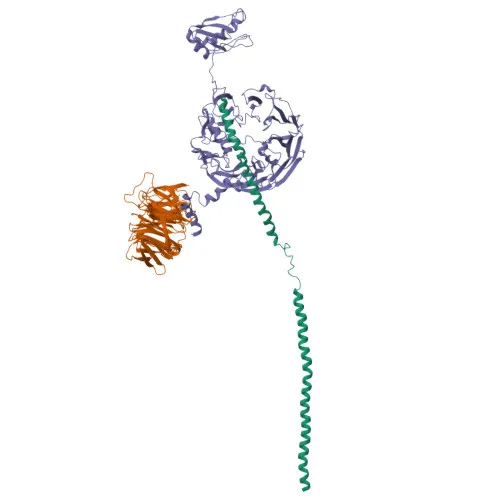
- Structurally, eIF3B contains WD repeat domains and belongs to the WD repeat protein family, which are known for facilitating protein–protein interactions and forming propeller-like structures, consistent with its role in assembling the multi-subunit eIF-3 complex.
Experimental Guidance and Technical Tips
- For Western blot applications, expect a predominant band at approximately 93 kDa corresponding to full-length eIF3B; consider using a loading control and normalizing signals across samples.
- In immunofluorescence (IF/ICC), eIF3B exhibits a cytoplasmic distribution; permeabilization with detergents such as Triton X-100 or saponin is required, and staining may localize to stress granules under conditions of cellular stress.
- The antibody shows cross-reactivity with mouse and rat homologs; however, it is recommended to validate binding specificity and performance in these species using appropriate positive and negative controls.
- For ELISA, titrate the antibody to determine the optimal working concentration; consider a direct or sandwich ELISA format depending on assay requirements and sensitivity.
- Since the immunogen corresponds to a recombinant fragment (amino acids 101–200), the antibody likely recognizes a conserved linear epitope in the N-terminal region; it may be suitable for applications requiring denatured proteins, though native conformation recognition should be empirically verified.
CamelBio: Your One-Stop Sourcing Bridge
CamelBio streamlines IVD raw-material procurement by offering one-stop access to validated antibodies, bulk ancillary reagents, and custom sourcing services—from concept to clinic. This anti-eIF3B rabbit monoclonal antibody supports research into translation initiation, cell proliferation, and host-pathogen interactions, making it a valuable tool for diagnostic and life science applications. For manufacturers requiring matched antibody pairs, alternative formats, or rare-target raw materials, CamelBio provides tailored supply solutions to accelerate development and ensure reliable production.
REQUEST A QUOTE
Our professional team will reply to you within one business day. Please feel free to contact us!