Monoclonal Antibodies
Anti-EGFR Rabbit Monoclonal Antibody for FC - P00533
Item Number : CM0011069
Price varies based on specs and customizations
- Application
- FC
- Cross Reactivity
- Human
- Protein Weight
- 44kDa/69kDa/77kDa/134kDa

Shipping:
Contact us to get shipping details Enjoy On-time Dispatch Guarantee.
Why Choose Us
Easy ordering process, quality products, and dedicated support for your business success.
Core Product Specifications and Parameters
| Parameter | Value |
|---|---|
| Product Name | Rabbit anti-Human EGFR mAb |
| Remarks/Alias | ERBB; ERRP; HER1; mENA; ERBB1; PIG61; NISBD2 |
| Species | Human |
| GeneID (Human) | 1956 |
| GeneID | 1956 |
| Immunogen | Recombinant protein|Recombinant fusion protein containing a sequence corresponding to amino acids 335-525 of human EGFR (NP_005219.2). |
| Source | Rabbit |
| Category | Monoclonal Antibodies |
| Application | FC |
| Cross Reactivity | Human |
| SWISS | P00533 |
| Protein Weight | 44kDa/69kDa/77kDa/134kDa |
| Shipping | Ice bag |
Biological Background: EGFR Function and Localization
- Epidermal growth factor receptor (EGFR), also known as ErbB-1 or HER1, is a receptor tyrosine kinase belonging to the ErbB family. Multiple isoforms exist due to alternative splicing; isoform 2 may function as an antagonist of EGF signaling.
- EGFR binds a variety of EGF family ligands, including EGF, TGFA, AREG, EPGN, BTC, EREG, and HBEGF, triggering receptor homo- and/or heterodimerization and autophosphorylation on key cytoplasmic residues. Related references: PMID:10805725 PMID:27153536 PMID:2790960 PMID:12297049 PMID:15611079 PMID:17909029
- Ligand-activated EGFR initiates multiple downstream signaling cascades, including RAS-RAF-MEK-ERK, PI3K-AKT, PLCgamma-PKC, and STAT pathways, and may also activate NF-kappa-B signaling. Related references: PMID:27153536 PMID:11116146
- EGFR directly phosphorylates other proteins such as RGS16 and MUC1, linking its activity to G protein-coupled receptor signaling and cell adhesion through beta-catenin. Related references: PMID:11602604 PMID:11483589
- Positively regulates cell migration by interacting with CCDC88A/GIV, which retains EGFR at the cell membrane following stimulation. It also plays a role in learning, memory, and pain signaling. Related references: PMID:20462955
- Subcellular localization includes the cell membrane, endoplasmic reticulum, Golgi apparatus, nuclear membrane, endosomes, and nucleus; a secreted form also exists.
- EGFR is a glycoprotein with tyrosine kinase activity, subject to multiple post-translational modifications including phosphorylation, ubiquitination, palmitoylation, and methylation. It serves as a host cell receptor for hepatitis C virus entry.
- Ubiquitously expressed in human tissues, with isoform 2 found in ovarian cancers.
Experimental Guidance and Technical Tips
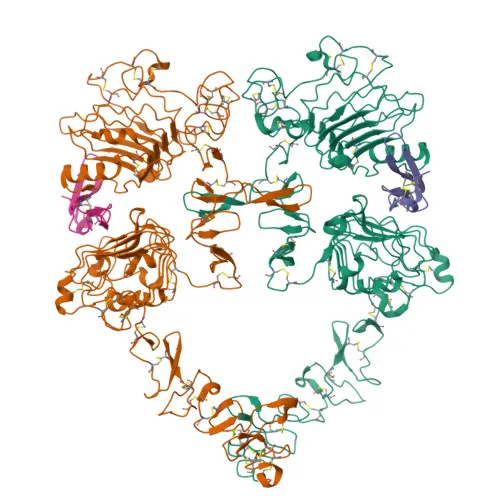
- The immunogen covers amino acids 335–525 of human EGFR, corresponding to the extracellular domain, making this antibody suitable for detecting cell surface EGFR by flow cytometry.
- For flow cytometry, titrate the antibody to determine optimal working concentration and include appropriate isotype controls.
- Validate specificity in your cellular system, considering EGFR’s multiple isoforms and potential shedding of the extracellular domain.
CamelBio: Your One-Stop Sourcing Bridge
CamelBio serves as a comprehensive sourcing partner for IVD raw materials, offering validated antibody pairs, optimized monoclonal/polyclonal antibodies, and bulk ancillary reagents for EGFR-related diagnostics and research. Whether you need rare target reagents or scaled-up production, our one-stop platform bridges your concept to clinical application.
REQUEST A QUOTE
Our professional team will reply to you within one business day. Please feel free to contact us!