Polyclonal Antibodies
Anti-EFHC1 Rabbit Polyclonal Antibody for WB, ELISA - Q5JVL4
Item Number : CM0029073
Price varies based on specs and customizations
- Application
- WB, ELISA
- Cross Reactivity
- Human, Mouse, Rat
- Protein Weight
- 74kDa

Shipping:
Contact us to get shipping details Enjoy On-time Dispatch Guarantee.
Why Choose Us
Easy ordering process, quality products, and dedicated support for your business success.
Core Product Specifications and Parameters
| Parameter | Value |
|---|---|
| Product Name | EFHC1 Rabbit pAb |
| Remarks/Alias | EJM1, POC9, RIB72, dJ304B14.2, EFHC1 |
| Species | Human |
| GeneID (Human) | 114327 |
| GeneID | 114327 |
| Immunogen | Recombinant fusion protein containing a sequence corresponding to amino acids 391-640 of human EFHC1 (NP_060570.2). |
| Source | Rabbit |
| Category | Polyclonal Antibodies |
| Application | WB, ELISA |
| Cross Reactivity | Human, Mouse, Rat |
| SWISS | Q5JVL4 |
| Protein Weight | 74kDa |
| Shipping | Ice bag |
Biological Background: EFHC1 Function and Localization
-
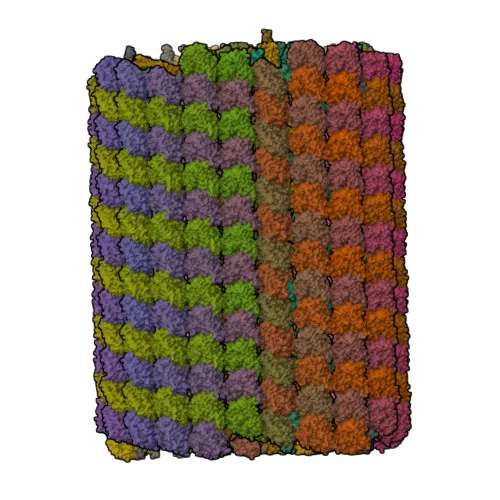
EFHC1 is an EF-hand domain-containing protein (myoclonin-1) that serves as a microtubule inner protein (MIP) in ciliary and flagellar axonemes, critical for motile cilia beating. Related references: PMID:36191189
-
It functions as a microtubule-associated protein regulating cell division and neuronal migration during cortical development. Related references: PMID:19734894 PMID:28370826
-
EFHC1 is necessary for radial and tangential cell migration in the developing brain, modulating cell morphology and process formation. Related references: PMID:22926142
-
The protein can enhance calcium influx via CACNA1E channels and stimulate programmed cell death. Related references: PMID:15258581 PMID:19734894 PMID:22926142
-
Subcellularly, EFHC1 localizes to the cytoplasm, ciliary/flagellar axonemes, centrosomes, and mitotic spindle poles.
-
It is widely expressed in tissues but is not detected in lymphocytes.
-
Mutations in EFHC1 are linked to epilepsy, and the protein is subject to alternative splicing.
Experimental Guidance and Technical Tips
- For Western blot, expect a specific band around 74 kDa corresponding to the predicted molecular weight of EFHC1; validate with an appropriate loading control and positive control lysate (e.g., HeLa, SH-SY5Y cells).
- In ELISA, consider using the recombinant immunogen (amino acids 391–640) as a coating antigen or standard for quantitative detection.
- Given the reported cross-reactivity with human, mouse, and rat, this antibody is suitable for comparative studies across these species; verify signal specificity in each system.
- As a polyclonal antibody, it may recognize multiple epitopes and is robust for denaturing applications like WB; for native protein detection, optimize conditions.
CamelBio: Your One-Stop Sourcing Bridge
CamelBio is a premier one-stop sourcing partner for IVD raw materials, supporting diagnostic manufacturers, laboratories, and research institutes from concept to clinic. For EFHC1-related research—including cilia biology, neuronal migration, and epilepsy—we supply validated antibody pairs, optimized polyclonal antibodies, bulk ancillary reagents, and custom rare-target procurement. Our integrated services ensure seamless access to critical raw materials for assay development and production.
REQUEST A QUOTE
Our professional team will reply to you within one business day. Please feel free to contact us!