Polyclonal Antibodies
Anti-eEF2 Rabbit Polyclonal Antibody for WB and ELISA - P13639
Item Number : CM0022353
Price varies based on specs and customizations
- Application
- WB, ELISA
- Cross Reactivity
- Human
- Protein Weight
- 95kDa

Shipping:
Contact us to get shipping details Enjoy On-time Dispatch Guarantee.
Why Choose Us
Easy ordering process, quality products, and dedicated support for your business success.
Core Product Specifications and Parameters
| Parameter | Value |
|---|---|
| Product Name | eEF2 Rabbit pAb |
| Remarks/Alias | EF2; EF-2; EEF-2; SCA26; eEF2 |
| Species | Human |
| Gene ID (Human) | 1938 |
| Gene ID | 1938 |
| Immunogen | Recombinant fusion protein containing a sequence corresponding to amino acids 1-290 of human eEF2 (NP_001952.1). |
| Source | Rabbit |
| Category | Polyclonal Antibodies |
| Application | WB, ELISA |
| Cross Reactivity | Human |
| SWISS | P13639 |
| Protein Weight | 95kDa |
| Shipping | Ice bag |
Biological Background: eEF2 Function and Localization
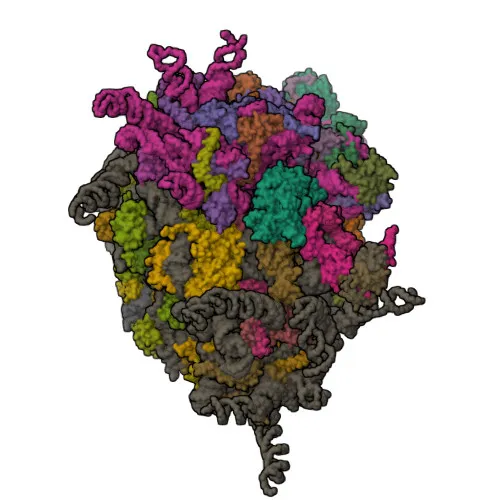
- eEF2 (Elongation factor 2) is a key GTPase that drives ribosomal translocation during protein synthesis elongation. Related references: PMID:26593721
- It catalyzes the coordinated movement of tRNA molecules and mRNA through the ribosome, transitioning from pre-translocational to post-translocational states.
- eEF2 is encoded by the EEF2 gene, and mutations are linked to spinocerebellar ataxia 26 (SCA26), a neurodegenerative disorder.
- The protein is predominantly cytoplasmic but can also localize to the nucleus, suggesting possible extra-ribosomal functions.
- Post-translational modifications include phosphorylation, acetylation, ADP-ribosylation, methylation, and ubiquitination, which regulate its activity.
- It is a member of the GTP-binding elongation factor family and an essential component of the protein biosynthesis machinery.
- Its molecular weight is approximately 95 kDa (predicted 95,338 Da from sequence).
Experimental Guidance and Technical Tips
- The immunogen corresponds to the N-terminal region (aa 1–290) of human eEF2; consider this region for epitope mapping or in competitive assays.
- For Western blot, use whole cell or tissue lysates; eEF2 is abundant, so standard loading (e.g., 20–30 µg) may suffice. Optimize blocking and antibody dilution for your system.
- In ELISA, coat with recombinant eEF2 or peptide and perform checkerboard titration to determine optimal coating and antibody concentrations.
- Validate cross-reactivity with human samples; reactivity with other species has not been tested, so empirically verify if using non-human samples.
- Because eEF2 is subject to multiple post-translational modifications, band shifts or multiple bands may appear under certain conditions; dephosphorylation or specific inhibitors may be used to identify modified forms.
CamelBio: Your One-Stop Sourcing Bridge
CamelBio provides diagnostic manufacturers, labs, and research institutes with one-stop access to IVD raw materials, including validated antibody pairs, optimized monoclonal/polyclonal antibodies like this anti-eEF2 antibody, bulk ancillary reagents, and rare target raw-material sourcing. Whether you are developing assays for protein synthesis studies or neurodegeneration biomarkers, our comprehensive portfolio and technical consulting can support your project from concept to clinic.
REQUEST A QUOTE
Our professional team will reply to you within one business day. Please feel free to contact us!