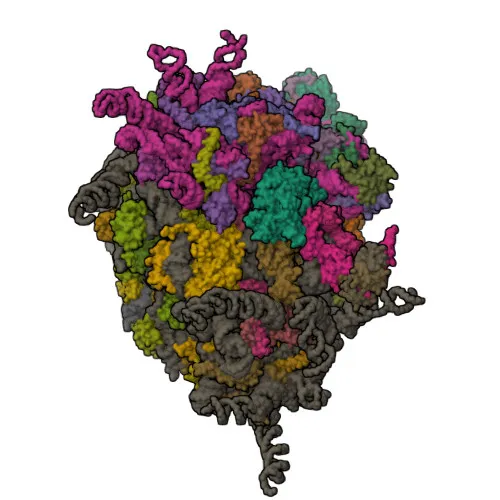
Polyclonal Antibodies
Anti-eEF2 (EF-2) Rabbit Polyclonal Antibody for WB, ELISA - P13639
Item Number : CM0015772
Price varies based on specs and customizations
- Application
- WB, ELISA
- Cross Reactivity
- Human
- Protein Weight
- 95kDa

Shipping:
Contact us to get shipping details Enjoy On-time Dispatch Guarantee.
Why Choose Us
Easy ordering process, quality products, and dedicated support for your business success.
Core Product Specifications and Parameters
| Parameter | Value |
|---|---|
| Product Name | eEF2 Rabbit pAb |
| Remarks/Alias | EF2; EF-2; EEF-2; SCA26; eEF2 |
| Species | Human |
| Gene ID (Human) | 1938 |
| Gene ID | 1938 |
| Immunogen | Recombinant fusion protein containing a sequence corresponding to amino acids 1-290 of human eEF2 (NP_001952.1) |
| Source | Rabbit |
| Category | Polyclonal Antibodies |
| Application | WB, ELISA |
| Cross Reactivity | Human |
| SWISS | P13639 |
| Protein Weight | 95kDa |
| Shipping | Ice bag |
Biological Background: eEF2 Function and Localization
- Elongation factor 2 (eEF2) catalyzes GTP-dependent ribosomal translocation during translation elongation, moving the peptidyl-tRNA from the A to P site and deacylated tRNA from P to E site (PubMed:26593721) Related references: PMID:26593721
- This translocation is coupled with mRNA movement and conformational changes in the ribosome to drive the pre- to post-translocational state transition (PubMed:26593721) Related references: PMID:26593721
- eEF2 belongs to the TRAFAC class translation factor GTPase superfamily, containing GTP-binding and hydrolase domains essential for its function
- Localizes predominantly to the cytoplasm but can also be found in the nucleus
- Undergoes extensive post-translational modifications including acetylation, ADP-ribosylation, methylation, phosphorylation, and ubiquitination, which may regulate its activity
- Mutations in EEF2 are associated with spinocerebellar ataxia 26 (SCA26), a neurodegenerative disorder
- The protein has a calculated molecular weight of ~95.3 kDa, consistent with observed migration at ~95 kDa in SDS-PAGE
Experimental Guidance and Technical Tips
- The immunogen corresponds to the N-terminal region (amino acids 1–290) of human eEF2, which may allow detection of full-length and some truncated forms
- For western blotting, the predicted band is ~95 kDa; validate with appropriate positive and negative controls
- Due to the essential role of eEF2 in translation, expression levels can vary with cellular growth conditions; consider using loading controls like β-actin or GAPDH
- ELISA may be used for quantitative detection; determine optimal antibody dilution and assay linear range empirically
- For immunofluorescence or IHC, note that eEF2 is primarily cytoplasmic but may also exhibit nuclear staining; use appropriate fixation and permeabilization protocols
CamelBio: Your One-Stop Sourcing Bridge
CamelBio provides diagnostic manufacturers and research institutes with a one-stop solution for IVD raw materials, from concept to clinic. For eEF2-related research, we offer high-quality anti-eEF2 antibodies validated for WB and ELISA, alongside ancillary reagents and custom development services. Whether you need validated antibody pairs, bulk raw materials, or support for rare target sourcing, CamelBio is your trusted B2B partner.
REQUEST A QUOTE
Our professional team will reply to you within one business day. Please feel free to contact us!