Polyclonal Antibodies
Anti-EEF1A2 Polyclonal Antibody for WB and ELISA - Q05639
Item Number : CM0019289
Price varies based on specs and customizations
- Application
- WB, ELISA
- Cross Reactivity
- Human, Mouse, Rat
- Protein Weight
- 50kDa

Shipping:
Contact us to get shipping details Enjoy On-time Dispatch Guarantee.
Why Choose Us
Easy ordering process, quality products, and dedicated support for your business success.
Core Product Specifications and Parameters
| Parameter | Value |
|---|---|
| Product Name | EEF1A2 Rabbit pAb |
| Remarks/Alias | HS1; STN; EF1A; STNL; DEE33; MRD38; EEF1AL; EIEE33; EF-1-alpha-2; EEF1A2 |
| Species | Human |
| GeneID (Human) | 1917 |
| GeneID | 1917 |
| Immunogen | Recombinant fusion protein containing a sequence corresponding to amino acids 184-463 of human EEF1A2 (NP_001949.1). |
| Source | Rabbit |
| Category | Polyclonal Antibodies |
| Application | WB, ELISA |
| Cross Reactivity | Human, Mouse, Rat |
| SWISS | Q05639 |
| Protein Weight | 50kDa |
| Shipping | Ice bag |
Biological Background: EEF1A2 Function and Localization
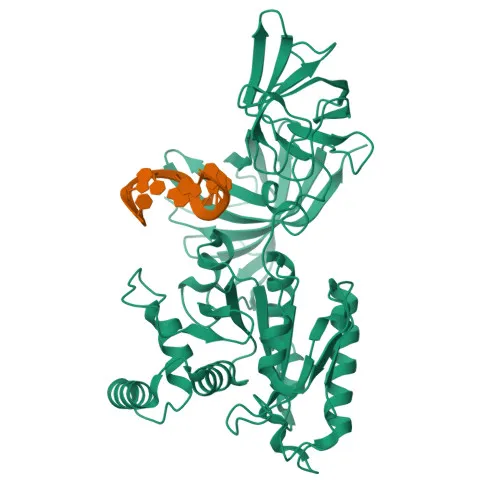
- EEF1A2 encodes elongation factor 1-alpha 2, also known as eukaryotic elongation factor 1 A-2 (eEF1A-2) or statin-S1, a member of the GTP-binding elongation factor family.
- It catalyzes the GTP-dependent binding of aminoacyl-tRNA to the ribosomal A-site during protein synthesis elongation, facilitating peptide bond formation (By similarity).
- EEF1A2 is a paralog of the ubiquitously expressed EEF1A1, but shows tissue-specific expression predominantly in brain, heart, and skeletal muscle.
- The protein localizes to the endoplasmic reticulum membrane, consistent with its role in cotranslational protein processing.
- Post-translational modifications include acetylation, methylation, and phosphorylation, which may regulate its activity; it also binds GTP and magnesium as cofactors.
- Mutations in EEF1A2 are associated with autosomal dominant neurological disorders, including epilepsy, intellectual disability, and autism spectrum disorder.
- It contains conserved GTP-binding domains and undergoes conformational changes upon GTP hydrolysis to release aminoacyl-tRNA, ensuring translation fidelity.
Experimental Guidance and Technical Tips
- For Western blot (WB), validate the expected band at ~50 kDa using lysates from human, mouse, or rat tissues; enrichment from brain, heart, or skeletal muscle is recommended due to tissue-specific expression.
- In ELISA, consider coating with recombinant EEF1A2 protein or a specific peptide; optimize antibody dilution and include appropriate controls.
- Use positive and negative controls (e.g., EEF1A2-overexpressing or knockdown cell lines) to confirm specificity.
- The immunogen (aa 184–463) covers the central domain; cross-reactivity with EEF1A1 should be assessed if necessary, as the two isoforms share high sequence identity.
CamelBio: Your One-Stop Sourcing Bridge
CamelBio serves as your comprehensive one-stop sourcing partner for IVD raw materials, supporting diagnostic manufacturers and research laboratories with high-quality reagents and technical expertise. This EEF1A2 polyclonal antibody exemplifies our capability to provide validated antibodies for translational research and neurological disease biomarker development. From optimized monoclonal/polyclonal antibodies and validated antibody pairs to bulk ancillary reagents and rare target sourcing, CamelBio bridges the gap from concept to clinic with reliable supply solutions.
REQUEST A QUOTE
Our professional team will reply to you within one business day. Please feel free to contact us!