Polyclonal Antibodies
Anti-EDNRB Polyclonal Antibody for WB and ELISA - P24530
Item Number : CM0027117
Price varies based on specs and customizations
- Application
- WB, ELISA
- Cross Reactivity
- Human, Mouse
- Protein Weight
- 50kDa

Shipping:
Contact us to get shipping details Enjoy On-time Dispatch Guarantee.
Why Choose Us
Easy ordering process, quality products, and dedicated support for your business success.
Core Product Specifications and Parameters
| Parameter | Value |
|---|---|
| Product Name | EDNRB Rabbit pAb |
| Remarks/Alias | ETB; ET-B; ETB1; ETBR; ETRB; HSCR; WS4A; ABCDS; ET-BR; HSCR2; EDNRB |
| Species | Human |
| GeneID | 1910 |
| Immunogen | Recombinant fusion protein containing a sequence corresponding to amino acids 1-100 of human EDNRB (NP_001116131.1) |
| Source | Rabbit |
| Category | Polyclonal Antibodies |
| Application | WB, ELISA |
| Cross Reactivity | Human, Mouse |
| SWISS | P24530 |
| Protein Weight | 50kDa |
| Shipping | Ice bag |
Biological Background: EDNRB Function and Localization
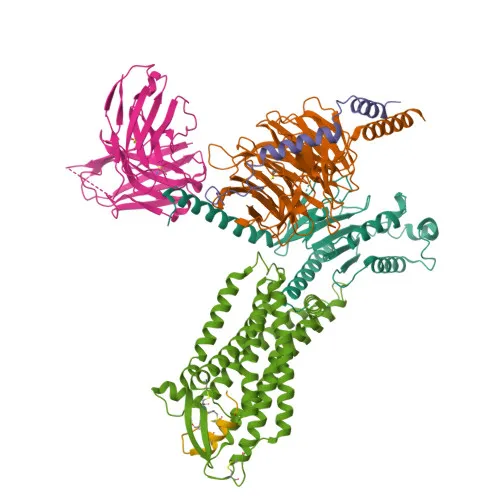
- EDNRB encodes the endothelin receptor type B, also known as endothelin receptor non-selective type, a G protein-coupled receptor (GPCR) that binds endothelins 1, 2, and 3 with similar affinity.
- Upon ligand binding, EDNRB activates G proteins that stimulate the phosphatidylinositol-calcium second messenger system, mediating vasoactive and developmental signaling.
- The receptor is located at the cell membrane and features seven transmembrane domains, a signal peptide, disulfide bonds, palmitoylation, and glycosylation, typical of GPCRs.
- It is expressed in placental stem villi vessels but not in cultured placental villi smooth muscle cells, suggesting a role in vascular function.
- Mutations and alternative splicing of EDNRB are associated with Hirschsprung disease, Waardenburg syndrome, and albinism, highlighting its importance in neural crest and melanocyte development.
- Phosphorylation and other post-translational modifications regulate its trafficking and signaling dynamics.
Experimental Guidance and Technical Tips
- The immunogen spans the N-terminal extracellular region (residues 1–100), which is less conserved among GPCRs; this may contribute to target specificity.
- For WB, the predicted molecular weight is ~50 kDa, but glycosylation may cause a shift; validate against known controls.
- The antibody is polyclonal and may detect multiple isoforms or cleavage products; confirm specificity in your model system.
- Suitable for ELISA; consider pairing with an EDNRB capture antibody for sandwich ELISA development.
CamelBio: Your One-Stop Sourcing Bridge
CamelBio provides academic and IVD researchers with seamless access to a broad portfolio of high-quality raw materials, including validated antibody pairs, optimized polyclonal and monoclonal antibodies, and bulk ancillary reagents. For studies focused on endothelin receptor signaling—whether investigating vascular biology, developmental disorders, or GPCR pharmacology—our dedicated sourcing support can also assist with difficult-to-find rare targets, helping you accelerate from concept to clinical application.
REQUEST A QUOTE
Our professional team will reply to you within one business day. Please feel free to contact us!