Polyclonal Antibodies
Anti-DYNC1H1 Rabbit Polyclonal Antibody for WB, ELISA - Q14204
Item Number : CM0021628
Price varies based on specs and customizations
- Application
- WB, ELISA
- Cross Reactivity
- Human
- Protein Weight
- 532kDa

Shipping:
Contact us to get shipping details Enjoy On-time Dispatch Guarantee.
Why Choose Us
Easy ordering process, quality products, and dedicated support for your business success.
Core Product Specifications and Parameters
| Parameter | Value |
|---|---|
| Product Name | DYNC1H1 Rabbit pAb |
| Remarks/Alias | p22; DHC1; DNCL; DYHC; HL-3; CMT2O; DHC1a; DNCH1; DNECL; Dnchc1; CDCBM13; SMALED1; DYNC1H1 |
| Species | Human |
| Gene ID (Human) | 1778 |
| Gene ID | 1778 |
| Immunogen | Recombinant fusion protein containing a sequence corresponding to amino acids 1-210 of human DYNC1H1 (NP_001367.2) |
| Source | Rabbit |
| Category | Polyclonal Antibodies |
| Application | WB, ELISA |
| Cross Reactivity | Human |
| SWISS | Q14204 |
| Protein Weight | 532kDa |
| Shipping | Ice bag |
Biological Background: DYNC1H1 Function and Localization
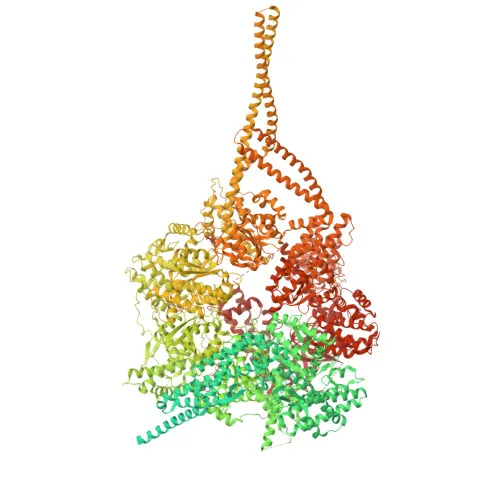
- Cytoplasmic dynein 1 heavy chain 1 (DYNC1H1) is a large motor protein that functions as the heavy chain of cytoplasmic dynein 1, a multi-subunit complex responsible for minus-end-directed transport along microtubules.
- DYNC1H1 possesses ATPase activity, generating mechanical force through conformational changes associated with ATP hydrolysis and ADP release, which drives cargo movement.
- It plays a critical role in intracellular retrograde transport of diverse cargoes, including vesicles, organelles, and macromolecular complexes, essential for neuronal function and cell homeostasis.
- DYNC1H1 is involved in mitotic spindle assembly and positioning, facilitating chromosome congression during metaphase and ensuring proper cell division. Related references: PMID:27462074
- The protein is localized to the cytoplasm, associating with the microtubule cytoskeleton, and is enriched at the mitotic spindle during cell division.
- Mutations in DYNC1H1 are linked to neurodegenerative diseases, including Charcot-Marie-Tooth disease type 2O (CMT2O), spinal muscular atrophy with lower extremity predominance (SMALED1), and intellectual disability, underscoring its importance in neuronal development and maintenance.
- DYNC1H1 is subject to post-translational modifications such as acetylation and phosphorylation, which may regulate its activity, cargo binding, and cellular localization.
Experimental Guidance and Technical Tips
- The immunogen corresponds to the N-terminal region (amino acids 1–210) of human DYNC1H1, which may be critical for specific isoform recognition; verify reactivity in your target tissue or cell line.
- For Western blot (WB), due to the large molecular weight (~532 kDa), use a low-porosity gel (e.g., 4–8% gradient or 5% SDS-PAGE) and ensure thorough transfer; a wet transfer system with extended time is recommended.
- ELISA applications may require optimization of coating antigen and antibody titer; consider using recombinant DYNC1H1 fragments or cell lysates as capture targets.
- The antibody has been validated for human; cross-reactivity with other species should be experimentally confirmed if needed.
CamelBio: Your One-Stop Sourcing Bridge
CamelBio is your dedicated sourcing partner for IVD raw materials, providing one-stop access to high-quality antibodies, antigens, and ancillary reagents for every stage of development. This anti-DYNC1H1 polyclonal antibody supports research into intracellular transport and neurological disorders, and we can assist with bulk orders, custom reagent sourcing, or technical consultation to accelerate your diagnostic assay development.
REQUEST A QUOTE
Our professional team will reply to you within one business day. Please feel free to contact us!