Polyclonal Antibodies
Anti-DTX1 Rabbit Polyclonal Antibody for WB, ELISA - Q86Y01
Item Number : CM0021241
Price varies based on specs and customizations
- Application
- WB, ELISA
- Cross Reactivity
- Human, Mouse
- Protein Weight
- 67kDa

Shipping:
Contact us to get shipping details Enjoy On-time Dispatch Guarantee.
Why Choose Us
Easy ordering process, quality products, and dedicated support for your business success.
Core Product Specifications and Parameters
| Parameter | Value |
|---|---|
| Product Name | DTX1 Rabbit pAb |
| Remarks/Alias | hDx-1; RNF140; DTX1 |
| Species | Human |
| Gene ID (Human) | 1840 |
| Immunogen | Recombinant fusion protein containing a sequence corresponding to amino acids 1-190 of human DTX1 (NP_004407.2). |
| Source | Rabbit |
| Category | Polyclonal Antibodies |
| Application | WB, ELISA |
| Cross Reactivity | Human, Mouse |
| SWISS | Q86Y01 |
| Protein Weight | 67kDa |
| Shipping | Ice bag |
Biological Background: DTX1 Function and Localization
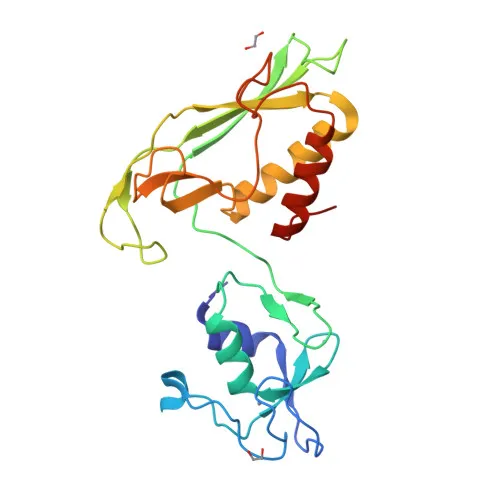
- DTX1 (Deltex-1) is an E3 ubiquitin-protein ligase containing a RING-type zinc finger domain, mediating ubiquitination of target proteins.
- Functions as a key regulator of the Notch signaling pathway, acting predominantly as a positive regulator but can be context-dependent negative regulator.
- Negatively regulates Notch signaling through control of PIP4K2C, a lipid kinase that promotes recycling of Notch receptors from endosomes to the cell surface.
Related references: PMID:29440432 - Mediates ubiquitination and proteasomal degradation of MEKK1, modulating signaling pathways in cell fate determination (By similarity).
- Promotes degradation of PRKCQ (PKCtheta) via the endosome-lysosome pathway, contributing to PKCtheta downregulation during T-cell anergy.
Related references: PMID:25000980 - Facilitates differentiation of Th17 cells by inducing the expression and DNA-binding activity of RORgT.
Related references: PMID:32736174 - Subcellular localization includes cytoplasm, nucleus, and endosomes.
- Widely expressed, with strong expression in blood vessels; also found in embryonic nervous system, pancreas, lung, adrenal gland, digestive tube, muscles, and developing B- and T-cells.
Experimental Guidance and Technical Tips
- For Western blot, a major band around 67 kDa is expected in human and mouse lysates. It is advisable to validate the antibody in the specific experimental system of interest.
- Consider using positive controls from tissues with high DTX1 expression, such as blood vessels or immune cells.
- For ELISA, optimize antigen coating conditions and antibody dilution based on the specific assay format. Batch-to-batch consistency testing is recommended for quantitative applications.
CamelBio: Your One-Stop Sourcing Bridge
CamelBio provides diagnostic manufacturers and researchers with comprehensive access to IVD raw materials, technical services, and consulting from concept to clinic. For targets like DTX1 involved in Notch signaling and immune regulation, we offer validated antibodies, recombinant proteins, and ancillary reagents to support assay development. Contact us for customized bulk sourcing solutions.
REQUEST A QUOTE
Our professional team will reply to you within one business day. Please feel free to contact us!