Polyclonal Antibodies
Anti-DPF3 Rabbit Polyclonal Antibody for WB, ELISA - Q92784
Item Number : CM0021590
Price varies based on specs and customizations
- Application
- WB, ELISA
- Cross Reactivity
- Mouse, Rat
- Protein Weight
- 43kDa

Shipping:
Contact us to get shipping details Enjoy On-time Dispatch Guarantee.
Why Choose Us
Easy ordering process, quality products, and dedicated support for your business success.
Core Product Specifications and Parameters
| Parameter | Value |
|---|---|
| Product Name | DPF3 Rabbit pAb |
| Remarks/Alias | CERD4, BAF45C, SMARCG3, DPF3 |
| Species | Human |
| GeneID (human) | 8110 |
| GeneID | 8110 |
| Immunogen | Recombinant fusion protein containing a sequence corresponding to amino acids 90-200 of human DPF3 (NP_036206.3) |
| Source | Rabbit |
| Category | Polyclonal Antibodies |
| Application | WB, ELISA |
| Cross Reactivity | Mouse, Rat |
| SWISS | Q92784 |
| Protein Weight | 43kDa |
| Shipping | Ice bag |
Biological Background: DPF3 Function and Localization
- DPF3, also known as BAF45C or CERD4, is a zinc finger protein that acts as a tissue-specific subunit of the mammalian SWI/SNF (BAF) chromatin remodeling complex.
- As part of the neuron-specific nBAF complex, DPF3 replaces PHF10/BAF45A during neural differentiation, facilitating the transition from neural stem/progenitor cells to post-mitotic neurons and regulating dendrite growth (By similarity).
- In muscle, DPF3 anchors the BAF complex to acetylated histones (H3K14ac, H3K9ac, H4K5ac, H4K8ac, H4K12ac, H4K16ac) bridging histone acetylation and methylation marks to drive chromatin remodeling for heart and skeletal muscle development.
- DPF3 cooperates with HDGFL2 to regulate myogenesis by recruiting SMARCA4/BRG1 to myogenic gene promoters, increasing chromatin accessibility and activating myogenic genes. Related references: PMID:32459350
- The protein is localized exclusively in the nucleus, consistent with its role in transcriptional regulation.
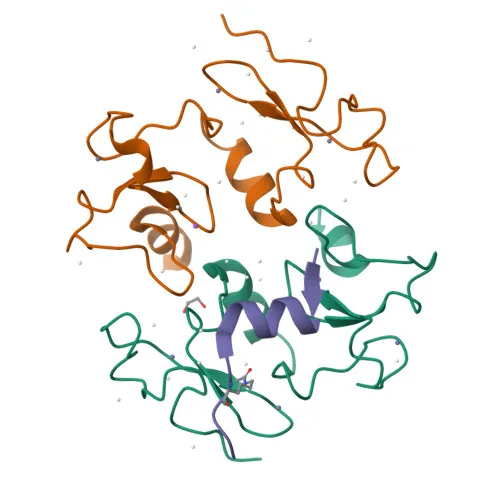
- Post-translational modifications include phosphorylation and ubiquitination, as indicated by proteomics data, and the protein contains multiple zinc-finger domains (PHD-type) that mediate histone binding.
- DPF3 belongs to the DPF family of BAF45 subunits, which are critical for lineage-specific chromatin remodeling during neurogenesis and myogenesis.
Experimental Guidance and Technical Tips
- The immunogen used is a recombinant fragment covering the N-terminal region (aa 90-200) of human DPF3. This region may contain conserved domains; cross-reactivity with mouse and rat DPF3 has been observed.
- For western blotting, the predicted molecular weight is approximately 43 kDa; consider verifying band specificity using appropriate controls (e.g., knockdown or knockout lysates).
- For ELISA, consider optimizing coating antigen and antibody dilution based on the specific plate format.
CamelBio: Your One-Stop Sourcing Bridge
CamelBio offers diagnostic manufacturers, labs, and research institutes streamlined access to validated IVD raw materials, including rabbit polyclonal antibodies like anti-DPF3 for chromatin biology and neurogenesis research. Our supply capabilities encompass optimized antibody pairs, bulk ancillary reagents, and sourcing support for rare targets, ensuring a seamless procurement experience from concept to clinic.
REQUEST A QUOTE
Our professional team will reply to you within one business day. Please feel free to contact us!